
The journal
Should I use spackle or caulk to fill nail holes?
A clear DIY answer on spackle vs caulk for nail holes, with steps, when wood filler is better, and common mistakes to avoid.
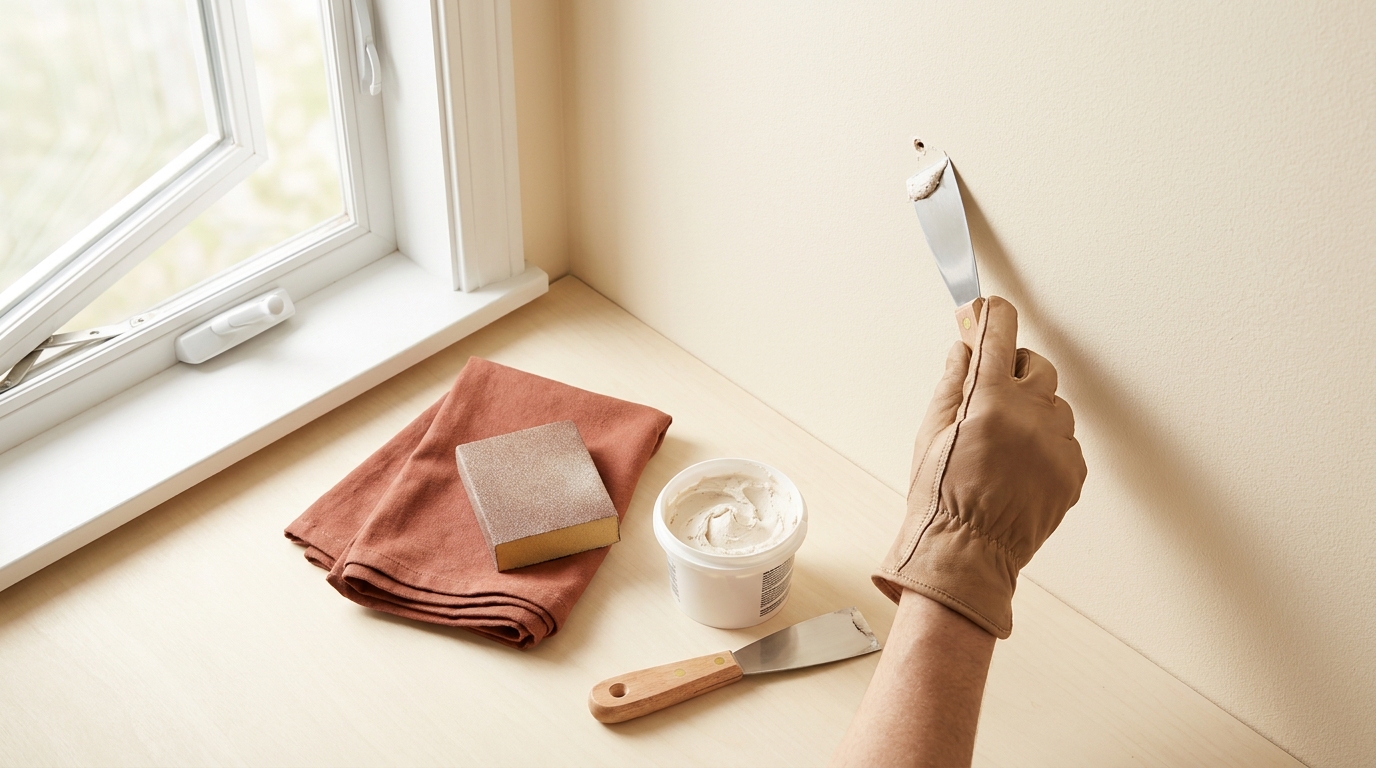
Use spackle for nail holes. Caulk is for sealing gaps and joints, not for making a sandable, flush patch. Spackle dries hard so you can sand it smooth; caulk stays flexible and isn’t designed to be sanded https://www.askthebuilder.com/spackling-and-caulking-tips/.
Why spackle beats caulk for nail holes
For tiny nail and screw holes in drywall or painted trim, a lightweight, non-shrink spackling compound is the right choice because it can be pressed into the hole, allowed to dry, then sanded flush before paint. Caulk, by contrast, is formulated to remain flexible so it can bridge gaps at seams and corners; that flexibility makes it poor at creating a crisp, flat repair and it’s not meant to be sanded https://www.askthebuilder.com/spackling-and-caulking-tips/. Manufacturers also differentiate wood fillers, spackles, and caulks for these reasons https://dap.testrpminc.com/about-dap/blog/filling-holes-and-gaps-do-i-use-caulk-wood-filler-or-spackle/.

How to fill small nail holes with spackle
What you’ll need: lightweight/non-shrink spackle, a small flexible putty knife, a fine-grit sanding sponge, and matching paint.
- Clean the hole. Brush away dust so the spackle adheres.
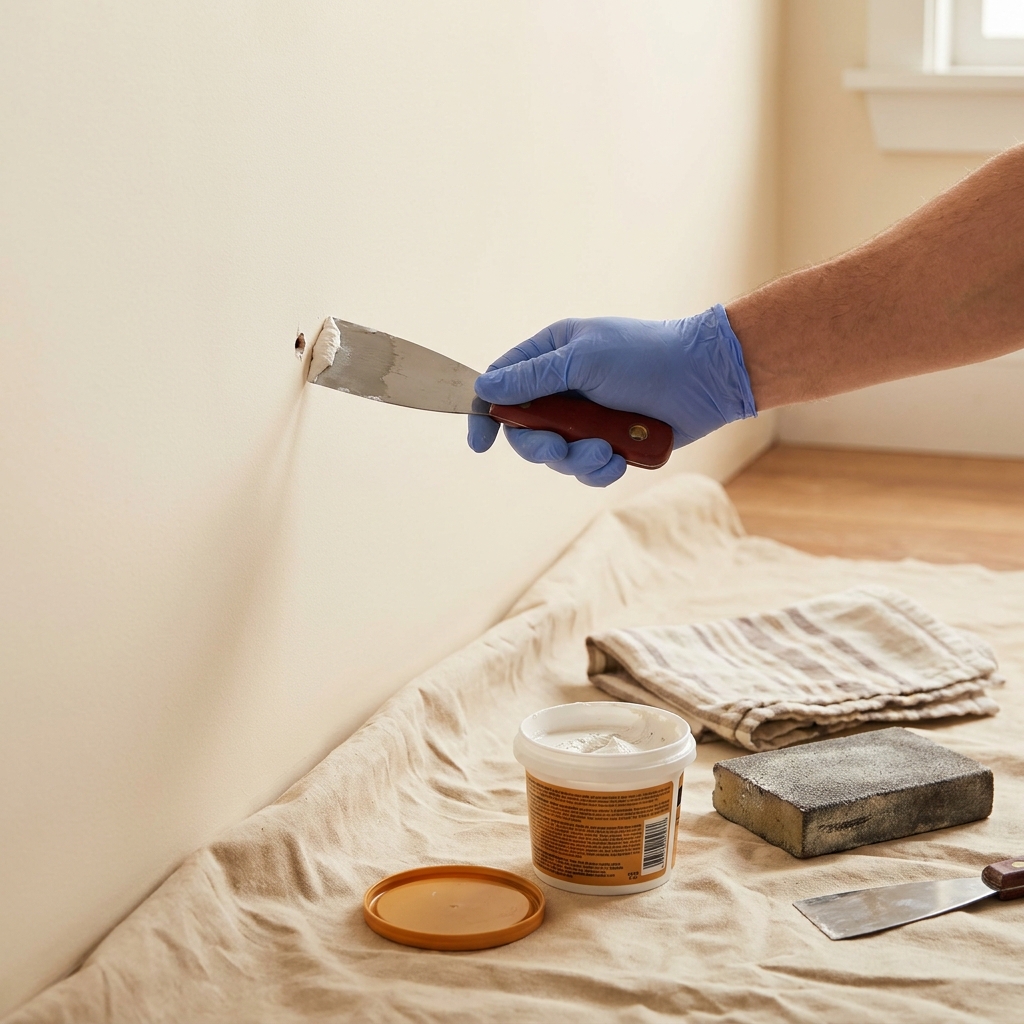
- Press in a small amount. Load about a pea-sized dab on the putty knife, flex the blade to press spackle firmly into the hole, then scrape off all excess so the surrounding surface is as clean as possible https://www.askthebuilder.com/spackling-and-caulking-tips/.
- Let it dry fully. Follow the label’s dry time before sanding or painting.
- Sand lightly. Use a fine-grit sanding block to make the patch perfectly flush; remove dust before paint https://www.askthebuilder.com/spackling-and-caulking-tips/.
- Touch up paint and feather. Dab on a small amount of matching paint and lightly feather the edges so the touch-up blends into the wall https://thediyplaybook.com/fix-nail-holes-wall/.
Tip: Using just enough spackle to fill the cavity (and wiping away the rest while wet) reduces or eliminates sanding later https://www.askthebuilder.com/spackling-and-caulking-tips/.
When wood filler makes more sense
For bare or stain-grade wood trim, choose a sandable wood filler or a color-matched filler product intended for wood so the repair can be sanded smooth and, if needed, stained to blend. Reserve caulk for joints and seams, not holes https://dap.testrpminc.com/about-dap/blog/filling-holes-and-gaps-do-i-use-caulk-wood-filler-or-spackle/ https://www.askthebuilder.com/spackling-and-caulking-tips/.
When caulk is the right product (and how to apply neatly)
Use paintable caulk to seal small gaps where trim meets walls, inside corners, and other joints that move slightly. For a clean line, cut a small opening in the tip, hold the tube at a low angle, apply a controlled bead, and smooth promptly. Proper control of the bead, angle, and tool pressure is key to neat results https://www.askthebuilder.com/spackling-and-caulking-tips/. Avoid using caulk to fill nail holes because it won’t sand to a flat, invisible patch.
Common mistakes and quick fixes
- Overfilling and leaving residue around the hole. Fix: Apply the smallest amount that fills the cavity and scrape the area clean while wet; this makes sanding faster https://www.askthebuilder.com/spackling-and-caulking-tips/.
- Painting before the spackle is dry. Fix: Wait for full dry time to prevent flashing or uneven sheen https://thediyplaybook.com/fix-nail-holes-wall/.
- Skipping sanding. Fix: A quick pass with a fine-grit sanding sponge blends the patch so it disappears under paint https://www.askthebuilder.com/spackling-and-caulking-tips/.
Working on bigger damage instead of pinholes? See our guide to patches: Do drywall patch kits work? A practical guide for DIY repairs. Need help choosing caulk for trim seams? Read What type of caulk should I use on baseboards?
Patch a nail hole with spackle: quick checklist
FAQ
Can I use caulk in a pinch for nail holes? It’s not recommended. Because caulk stays flexible and doesn’t sand well, you’re more likely to see a smear or shallow divot after paint. Spackle produces a smoother, flatter repair https://www.askthebuilder.com/spackling-and-caulking-tips/.
Do I need to prime over small spackle spots? For tiny nail holes, many touch-ups blend fine without primer; for larger patches or where sheen mismatch shows, spot-prime first to help the finish blend https://thediyplaybook.com/fix-nail-holes-wall/.

If you’re unsure about exterior patches, moisture-exposed areas, or damage larger than a simple nail hole, pause and consult a qualified pro.
Related guides
Product options for this topic
As an Amazon Associate I earn from qualifying purchases. These are researched options, not hands-on test results. Check the exact size or model, current price and availability on Amazon.
| Product option | Fit and limits to check | Retailer |
|---|---|---|
| ScotchBlue Original tape, 1.88-inch single roll | Mask edges when the surface and coating are suitable. Test a small area and follow the stated removal window, especially on delicate finishes. | View on Amazon |