Write the finish schedule first
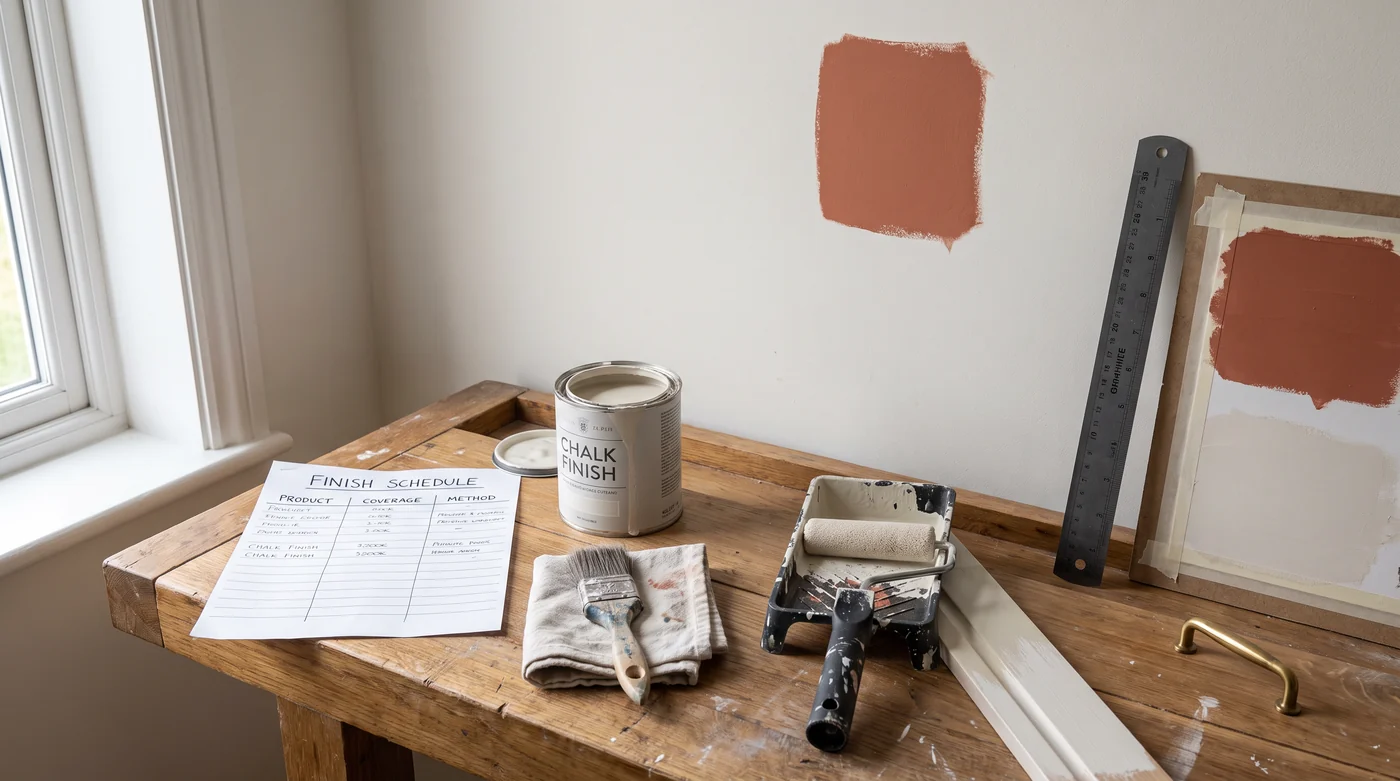
List which surfaces are included: walls, ceiling, trim, doors or cabinetry. Each line should identify the substrate, current coating, intended finish and proposed product. This prevents a room-wide quantity from hiding several different coating systems. Choose sheen and color with the room’s lighting and use in mind, but keep those preferences separate from the question of whether a product belongs on that surface.
Estimate each product with its own coverage
Measure in one unit system. Add the areas to be coated, subtract only the openings you intend to exclude, then multiply by the number of coats and divide by the product coverage per coat. Primer and topcoat get separate estimates. A label may provide a range; a smooth, sound surface and a porous or textured one need different judgment. Our planner uses the coverage you enter rather than claiming one number fits every paint.
Sherwin-Williams: paint calculator ↗ — An approximate quantity tool; take actual coverage from the selected product.
Treat the application method as a project choice
A brush helps with controlled edges; a roller covers open areas; spraying introduces its own masking, setup and cleanup requirements. Compare the whole job, including access and protection, before shopping for equipment. The paint and applicator instructions should agree about the surface, material and application method. A machine’s advertised speed does not measure how long your preparation, coating and cleanup will take.
Plan drying, recoating and return to use separately
Make separate spaces in the schedule for application, the permitted recoat interval and return to ordinary use. A surface that feels dry is not proof that its finish has reached its intended hardness. Record the actual product, conditions and next permitted action instead of writing only “paint Saturday.” Check the technical data for the chosen finish, and leave enough room in the plan for slower conditions.
Benjamin Moore: painting kitchen cabinets ↗ — A manufacturer’s product-system example, not a universal schedule.
Keep these details together.
- Manufacturer preparation instructions
- Topcoat and primer quantities separately
- Access, masking and drying conditions
Go a little deeper.
Use the publication’s reference library to connect the task to the relevant constraints.
Materials & Fixings Guide ↗Measure a paint job before buying the cans
Start with the area you intend to coat, then use the product’s own coverage figure.
Read the note ↗A practical reading noteDry, recoat-ready and ready to use are different
Build a paint schedule from the actual product milestones, then leave room for the room itself.
Read the note ↗