Read the wall before reaching for filler
Start with a photograph in even light and a second view from an angle. Mark where the defect sits: at a joint, beside an opening, behind furniture or below plumbing. Record whether it is new, recurring or unchanged. These observations help describe the problem; they do not identify its cause. A recurring stain or a patch that repeatedly opens deserves a different plan from an isolated cosmetic mark.
Separate the surface from what supports it
Paint is the finish you see. Behind it may be paper-faced board, plaster, masonry or another material. A coating that looks similar can cover very different substrates. Keep the existing finish and the support as separate fields in your notes. If either is uncertain, leave it uncertain when asking a supplier for a compatible preparation system. Photograph damaged edges without enlarging them simply to find out more.
Choose a preparation sequence that belongs together
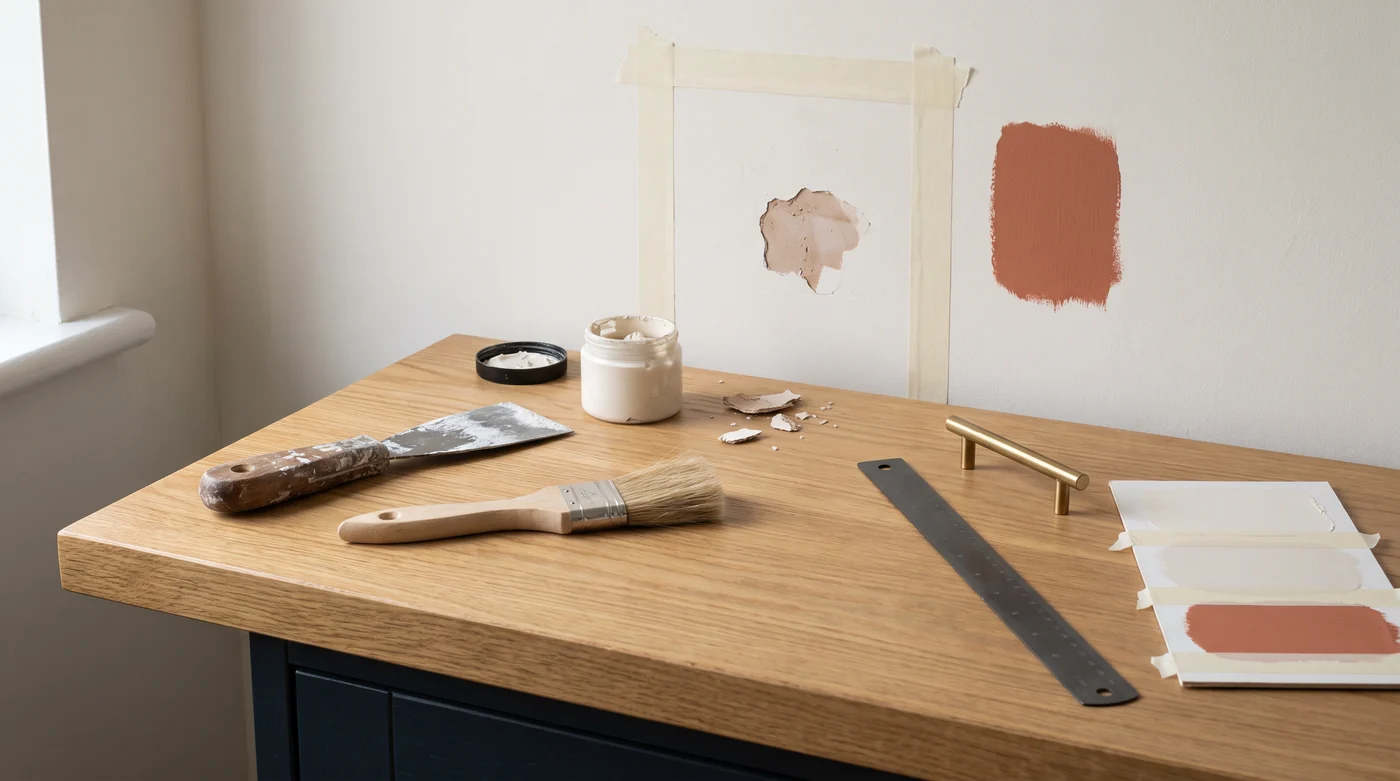
Cleaning, repair, primer and finish form a sequence. Sherwin-Williams’ wall guidance treats cleaning and preparation as part of the coating job. Translate the exact product directions into your own checklist, including the wait between stages and the condition the surface must reach. Do not combine the easiest step from several incompatible systems. A small, representative sample gives you a place to examine appearance and adhesion before repeating the work.
Sherwin-Williams: preparing walls ↗ — Manufacturer preparation guidance; the exact coating instructions control.
Resolve old-coating hazards before disturbing the surface
Sanding or scraping an old coating can create hazardous dust. For a US home built before 1978, EPA’s lead guidance is an important starting point; that date is a US screening context, not a universal rule for buildings elsewhere. Establish the appropriate assessment and work method before deciding to abrade the coating. A cosmetic goal does not make dust control optional.
US EPA: lead-safe renovations for DIYers ↗ — US guidance on disturbing old coatings; use the relevant local guidance elsewhere.
Keep these details together.
- Substrate and existing finish
- Recurring moisture or movement
- Small representative test area