
The journal
How to seal large gaps around exterior pipes safely
Identify the pipe and wall before choosing a backing, compatible sealant or flashing repair. Keep flues and rated penetrations out of ordinary DIY work.
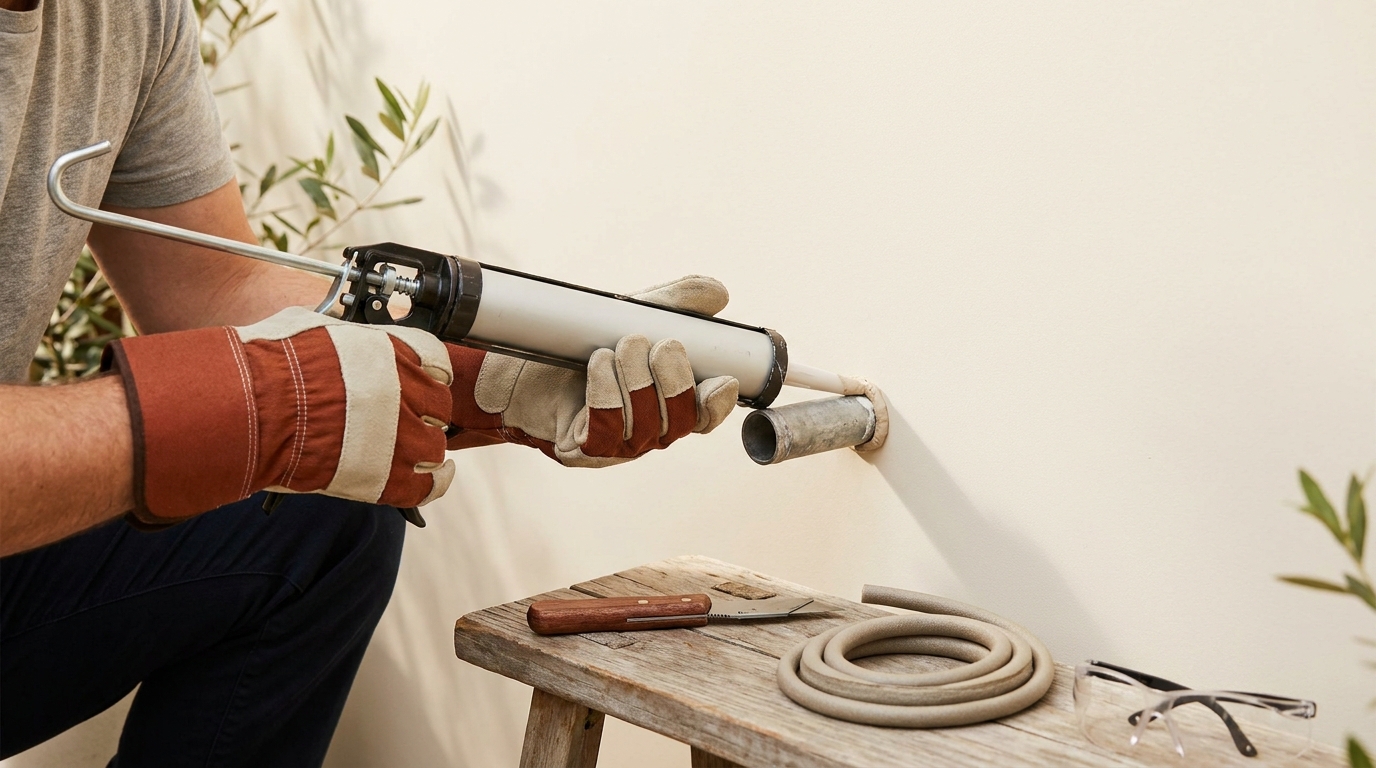
Key takeaways
- Identify the pipe and the wall assembly before choosing a filler.
- Backer rod supports a compatible sealant joint; a very large opening may need a collar, flashing or a wall repair first.
- Ordinary expanding foam is not a repair for a hot flue or a substitute for an approved firestop system.
Start with the opening, not the foam can
For an ordinary, accessible exterior pipe penetration, a suitable repair may combine backing material, an exterior sealant compatible with the pipe and wall, and a collar or flashing that sheds rain. A large hole cannot always be fixed by making a thicker bead of caulk. The opening may need a properly supported patch or a flashing detail before its edges can be sealed.
First establish what passes through it. A plumbing pipe, appliance exhaust, gas service and electrical penetration are different jobs. Do not decide a pipe is safe to seal because it happens to feel cool today. Leave combustion vents, unknown services, electrical work and fire-rated walls to an appropriately qualified professional.
The US Department of Energy's air-sealing guide describes common materials but recommends professional help around flues and similar hot penetrations. Local requirements and the equipment instructions take priority over a general repair guide.
Record what the repair has to do
Take a photograph of the entire area and a close-up before disturbing it. Record the wall material, the pipe service, the gap width at several points and the approximate depth. Look for active leakage, crumbling masonry, rotten timber, loose cladding and an existing sleeve or collar.
Separate three functions in your notes: stopping air, shedding rain and closing the physical hole. A surface bead might stop a draught but leave water entering behind the cladding. Conversely, a decorative cover can hide the opening without making an air seal. Follow the wall system's water-management detail rather than blocking drainage gaps or ventilation openings.
Before choosing materials
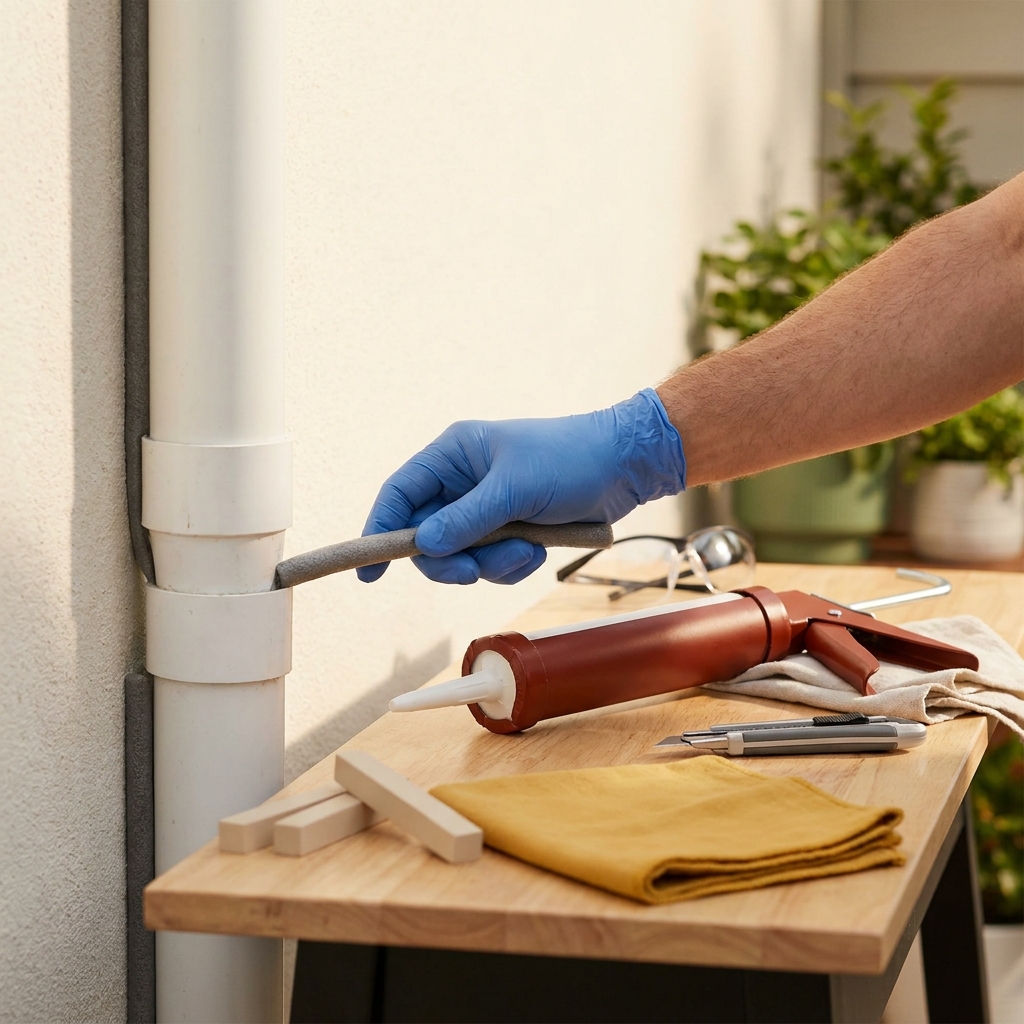
When backer rod and sealant are appropriate
Backer rod can control the depth of a sealant joint and keep the sealant from bonding to its back face. It is not structural support for a broken wall. Choose the rod type, diameter and joint geometry from the sealant maker's instructions rather than using an arbitrary gap-size rule.
Sika's weather-sealant guidance, for example, explains why an elastic joint should bond to its two sides rather than its bottom. Its dimensions and preparation requirements apply to its specified products; another sealant can require a different detail.
Check that the chosen product is rated for the exterior exposure and bonds to both actual surfaces. “Exterior” does not establish compatibility with every plastic, coating or insulation jacket. Also check curing conditions and paintability. Standard silicone is not automatically paintable, and a coating should not be used to hide a joint that has not cured.
When the opening needs a larger repair
If the remaining wall cannot support a continuous joint, stop trying to bridge the gap with sealant alone. Ask the relevant installer or building professional for a suitable patch, split collar, sleeve or flashing detail. A weather-resistant face must join the existing water-control layer correctly; putting tape over the outside can trap water or simply peel away.
Where an ordinary penetration's instructions permit expanding foam as an air-seal backing, follow the exact product's size, substrate and temperature limits. Protect it as directed. Foam is not automatically a durable exposed rain barrier, a pest-proof closure or a fire-rated system. Do not pack an unknown cavity with it.

Keep hot flues and fire-rated openings separate
ENERGY STAR's furnace-flue guidance distinguishes hot flues from ordinary plumbing penetrations and describes metal flashing and appropriate high-temperature sealing. Do not substitute construction foam because its label contains the word “fire”.
A tested firestop assembly, a flue's required clearance and an exterior weather seal are different requirements. Have a qualified installer identify the system and its permitted detail. Do not move a gas pipe, disturb appliance vent joints or cover a service access point as part of a cosmetic repair.
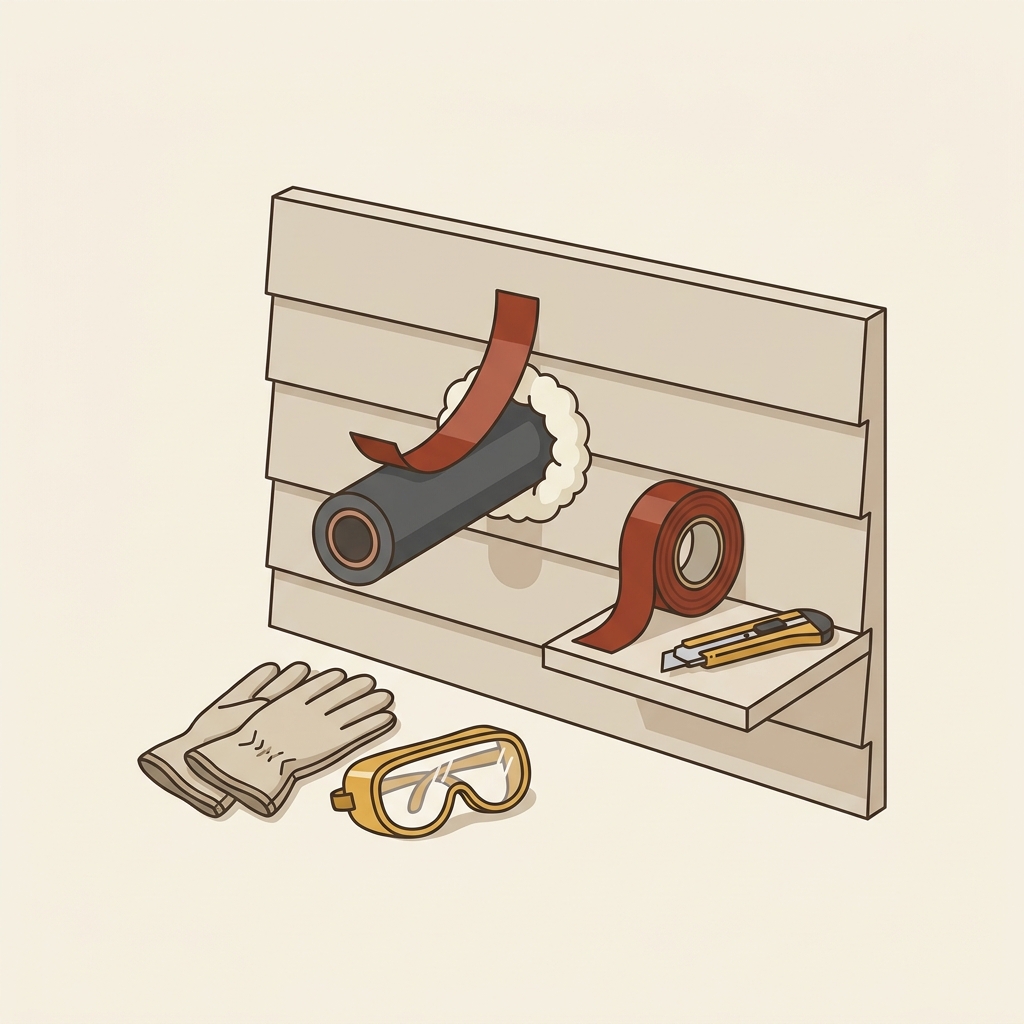
Finish with an inspection record
For a repair confirmed as suitable for DIY work, prepare and apply the selected materials exactly as instructed, using the specified protection and curing conditions. Photograph the finished joint and retain the product name and instructions. This makes a later repair easier than guessing what an old bead contains.
After the next significant rain, inspect from a safe, accessible position for fresh moisture, separation or movement. A recurring failure calls for investigation of the wall detail or leaking service, rather than another layer over the same fault. Our sealants and maintenance guide and project guides can help organise the next inspection.
Common questions
Can I fill a very large hole with caulk?
Not necessarily. Stay within the product's permitted joint geometry. A large or damaged opening may need a supported wall repair or purpose-made collar first.
Is expanding foam waterproof?
Check the exact product. Do not assume ordinary foam can replace the exterior flashing or weather seal required by the wall assembly.
What if I cannot identify the pipe?
Leave it undisturbed and ask the relevant qualified installer. Appearance and present temperature are not enough to establish its service or sealing requirements.