
The journal
Is it okay to clean water-based paint brushes in the sink?
A clear answer on when a sink rinse is allowed for water-based paint, what to check locally first, and a bucket-settling method that keeps most paint out of wastewater.
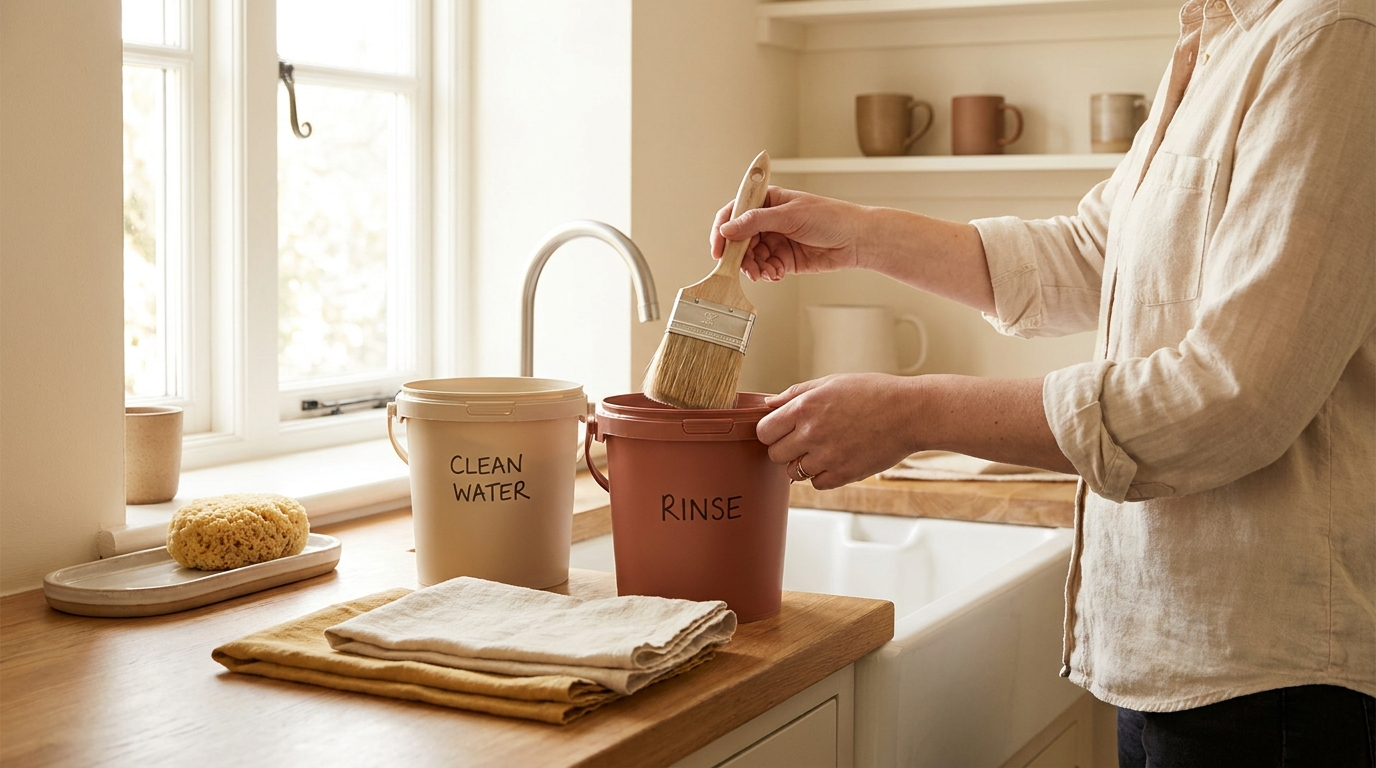
Sometimes. If your sink drains to a municipal sanitary sewer and your local authority allows small amounts of rinse water, you may clean water-based (latex/acrylic) paint residue from brushes after removing as much paint as possible. Use a bucket-settling method and never discharge to storm drains or a septic system. See Clemson University’s guidance and other industry positions for details (Clemson HGIC; Green Building Advisor).
What to check before using a sink
Confirm your drain type and local rules
- Sanitary sewer: Clemson notes that latex paint can be washed in the sink with minimal impact when handled carefully, and recommends a multi-bucket approach that lets solids settle before any water goes to a sanitary sewer (Clemson HGIC).
- Septic system: Clemson advises septic systems are not made to handle paint and that dumping anything besides human waste and toilet paper can damage the system (Clemson HGIC).
- Local requirements differ. Check your own wastewater and waste authority’s guidance; permission in another region does not establish what you may discharge at home.
Before you rinse a water-based brush in a sink
A minimal-waste bucket method for water-based paint
Clean water-based paint with soap and water, but do it in buckets so you can settle out paint solids and avoid running the tap continuously. This aligns with Clemson’s three-bucket approach and similar eco-focused advice from Resene (Clemson HGIC), (Resene). For general brush care steps, major paint makers also describe soap-and-water clean-up for latex/acrylic tools (Sherwin-Williams).
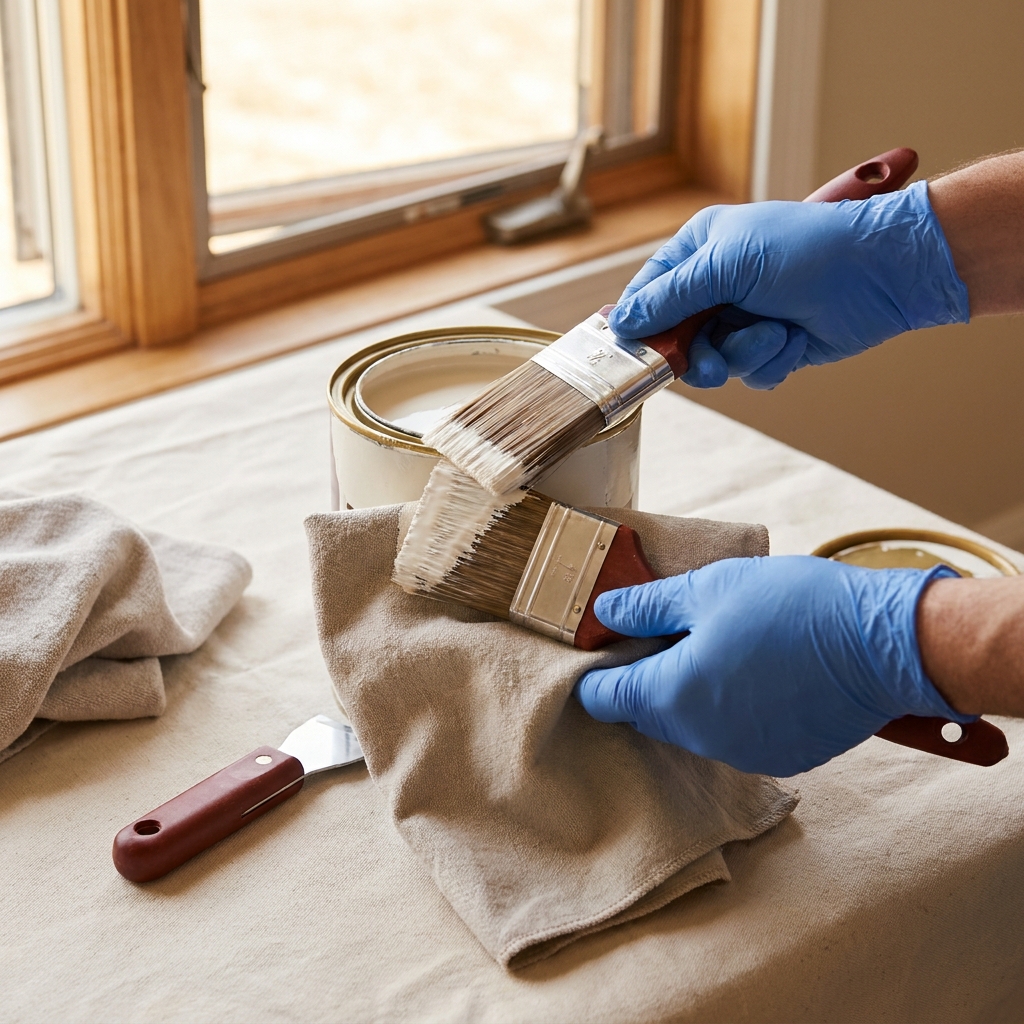
Step-by-step
- Remove most paint: Squeeze or scrape paint back into the can; wipe bristles on a rag.
- Wash in Bucket 1: Agitate the brush in a small amount of water to release remaining paint.
- Rinse in Bucket 2 (and optional Bucket 3): Move to cleaner water for a final rinse so the last bucket stays relatively clear.
- Let buckets sit undisturbed so solids settle to the bottom. Keep covered and away from kids and pets while settling (Clemson HGIC).
What to do with the rinse water and sludge
Rules vary. Follow your local waste authority and the paint label. Do not pour leftover paint, solvent, concentrated cleaner, or paint sludge into household drains, storm drains, or soil.
- If locally allowed for sanitary sewers: After settling, decant only the clearer top water from the final bucket to an indoor drain. Keep the settled paint solids separate for proper disposal per local rules (Clemson HGIC).
- If not allowed or you’re unsure: Keep the buckets covered and ask the local waste authority which collection route accepts the sludge and any prohibited rinse water, as some guidance recommends treating wash water as chemical household waste (Green Building Advisor).
- Dry latex residues where permitted: Some authorities allow fully dried latex paint solids to go in household trash; this is cited for South Carolina by Clemson. Check your local rules before using this option (Clemson HGIC).

Septic systems: don’t use the sink
Clemson advises that septic systems are not designed for paint, and dumping paint or rinse water can disrupt bacteria and lead to failure. Use non-drain methods and contact your local waste authority for disposal options (Clemson HGIC).
Worked example: one brush after a small wall touch-up
- After edging a 6 ft section with latex wall paint, scrape the 2.5 in brush on the can and wipe with a rag.
- Set out two buckets: 1 qt water in Bucket 1; 1 qt clean water in Bucket 2. Swirl and press bristles in Bucket 1 for 30-60 seconds until the water turns cloudy.
- Move to Bucket 2 for a short final rinse. Comb bristles straight and air-dry.
- Let the buckets settle according to the applicable guidance; appearance or waiting overnight does not by itself make wash water drain-safe. If your local rules allow sanitary-sewer disposal, carefully pour the clearer top water from Bucket 2 to an indoor drain, keeping settled solids in the bucket. Handle Bucket 1’s more concentrated sludge per local guidance (HHW or allowed drying of latex solids) (Clemson HGIC), (Green Building Advisor).
Useful alternatives
- If you’ll paint again tomorrow, wrap the brush in plastic to prevent drying, then resume work without washing, as suggested by Resene (Resene).
- Oil-based paints and primers: never clean into a sink. Use appropriate solvent and dispose through HHW programs; don’t pour solvents down any drain (Clemson HGIC).
Related on Home by Doing
Short FAQ
Is any amount of water-based paint always sink-safe?
No. Permission depends on your drain type and local rules. Some guidance allows occasional small amounts to a sanitary sewer after settling; others advise against flushing wash water. Never use storm drains or a septic system (Clemson HGIC), (Green Building Advisor).
Can I use dish soap when washing latex paint out of a brush?
Use the cleaner specified on the coating and brush labels. Mild soap and water are commonly used for latex/acrylic tools, but do not assume that every product described as water-based has identical clean-up requirements. Use buckets rather than running the tap so you can settle and manage the rinse water responsibly (Sherwin-Williams), (Clemson HGIC).
What’s the safe stop if I’m unsure about disposal?
Stop short of using any drain. Keep the rinse buckets covered, let solids settle, and contact your local household hazardous-waste program for instructions (Green Building Advisor).

Related guides
Product options for this topic
As an Amazon Associate I earn from qualifying purchases. These are researched options, not hands-on test results. Check the exact size or model, current price and availability on Amazon.
| Product option | Fit and limits to check | Retailer |
|---|---|---|
| Purdy XL Dale, 2½-inch brush | An angled brush to consider for trim and edges. Match brush width and bristle suitability to the coating and working space. | View on Amazon |
| ScotchBlue Original tape, 1.88-inch single roll | Mask edges when the surface and coating are suitable. Test a small area and follow the stated removal window, especially on delicate finishes. | View on Amazon |