
The journal
Can you rinse and reuse paint rollers?
Yes, you can rinse and reuse roller covers after water-based paint if you clean them promptly and capture the rinse water. Follow a simple bucket method, dry and store them correctly, and avoid putting paint or dirty water into drains or the yard.
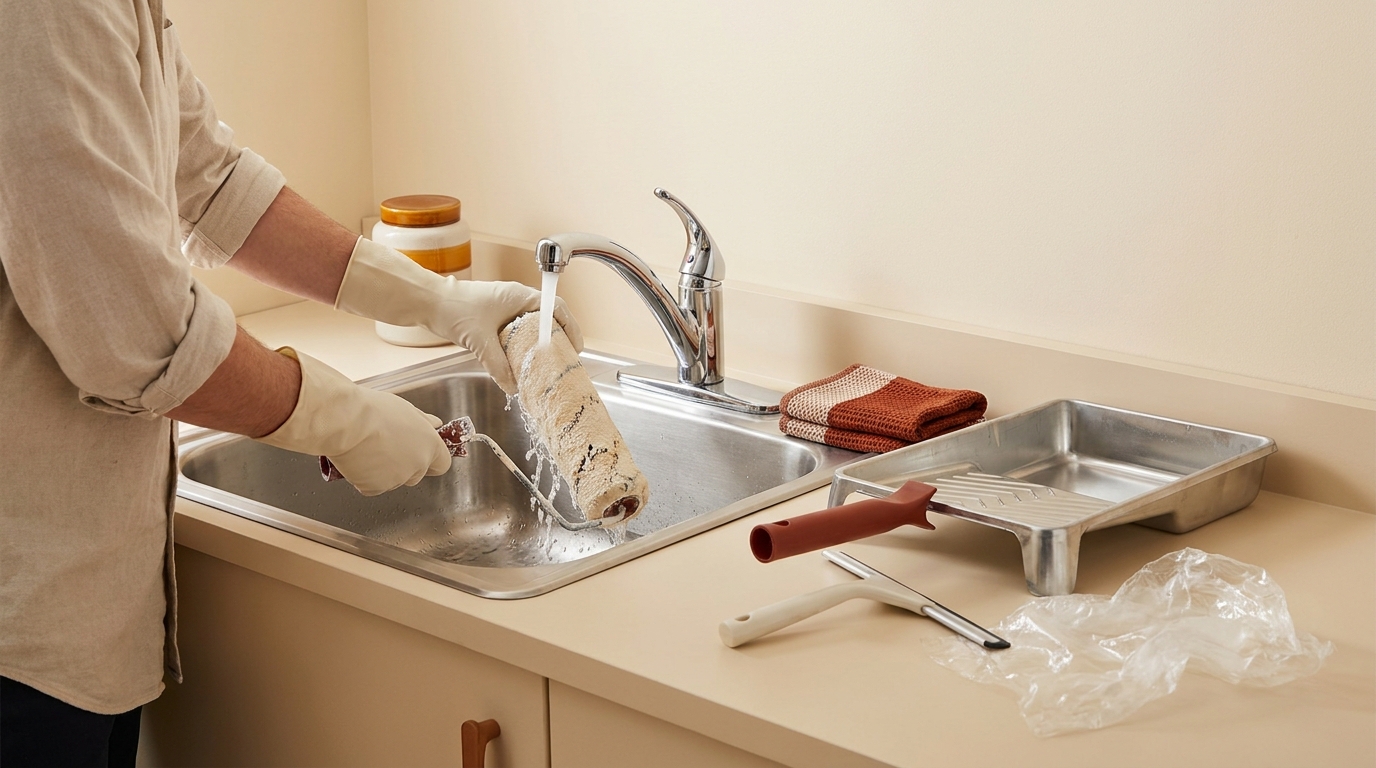
Yes. You can rinse and reuse paint roller covers after water-based (latex/acrylic) paint if you clean them promptly, capture the rinse water, and let the cover dry in shape. Do not wash paint or dirty rinse water into the yard or a storm drain, and avoid sending paint into septic systems; instead, use a contained bucket method and let paint solids settle before disposal (see Clemson HGIC).
When rinsing and reusing makes sense
Good candidates for cleaning
- Water-based paints: cleanable with water and mild soap when addressed immediately (COAT Paints).
- Rollers that still have an even, springy nap and a round core. Store rollers on their ends so they keep their profile for a smooth next coat (Two Fussy Blokes).
Out of scope here: oil or alkyd paints. Those require the solvent specified on the paint label and the used solvent must never go down any drain; manage as household hazardous waste per local rules (Clemson HGIC).
Step-by-step: clean a roller after water-based paint
What you need
- 5-in-1 or similar scraper to reclaim paint
- Three buckets partly filled with clean water
- Mild dish soap, gloves, and a rag or soft brush
Before washing, scrape or squeeze excess paint from the roller back into the can or tray to minimize waste. A 5-in-1 tool makes this quick (Clemson HGIC).
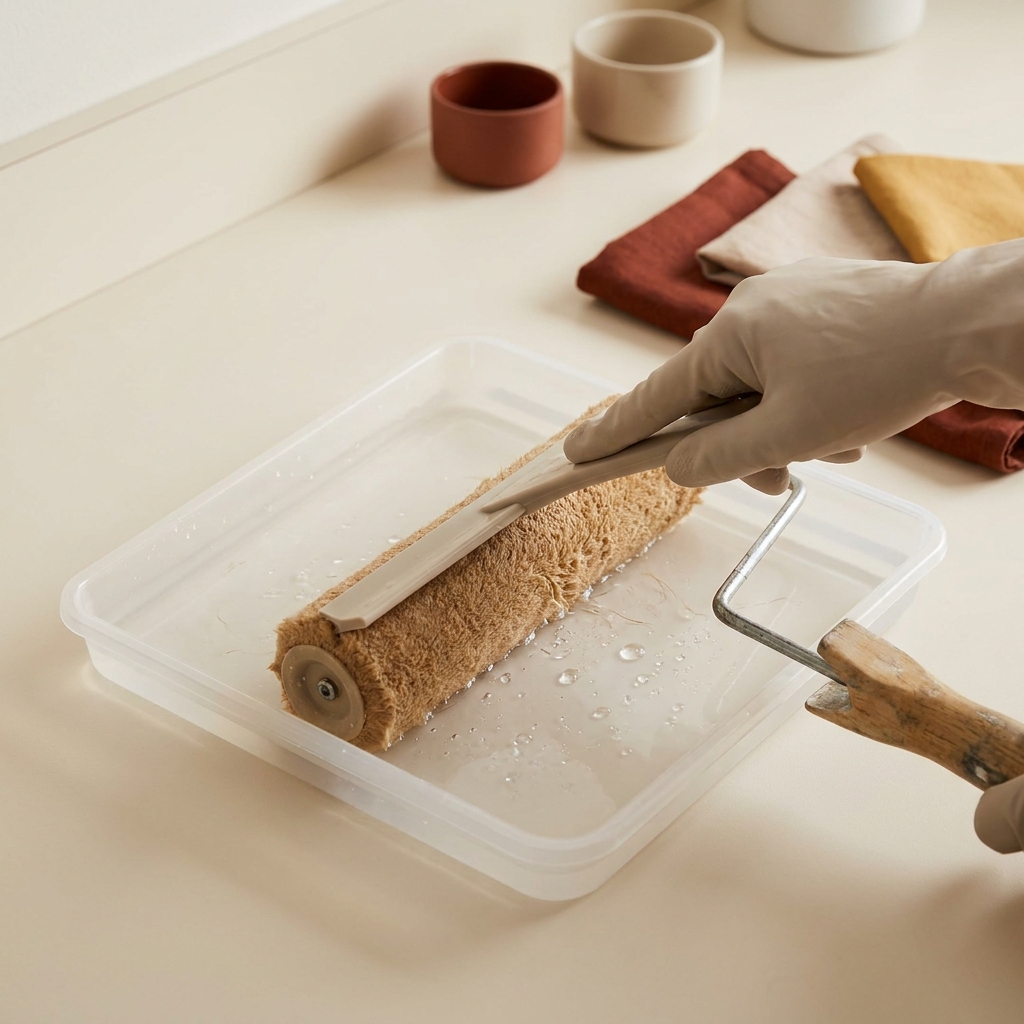
- Bucket 1: Submerge and gently work the nap with your fingers or a soft brush to release most of the paint. Add a drop of mild soap if needed. Squeeze the cover over the bucket when lifting it out.
- Bucket 2: Repeat the massage and squeeze to remove remaining color.
- Bucket 3: Final rinse. When the water from gentle squeezing looks close to clear, you’re done.
- Shake or spin out excess water, then stand the roller cover on its end to dry. Avoid flattening the nap. Store rollers upright on their ends to prevent flat spots that affect finish quality (Two Fussy Blokes).
Important water and waste notes
- Never wash any paint into the yard or a storm drain; do not send paint into septic systems (Clemson HGIC).
- Let your three buckets sit covered for about 24 hours so paint solids settle safely. Keep away from children and pets (Clemson HGIC).
- Reuse the clearer water from Buckets 2-3 for the next cleanup to reduce water use, and allow settled latex paint solids to dry fully before placing dried solids in household trash per local guidance (Clemson HGIC).
Short breaks between coats (no full clean)
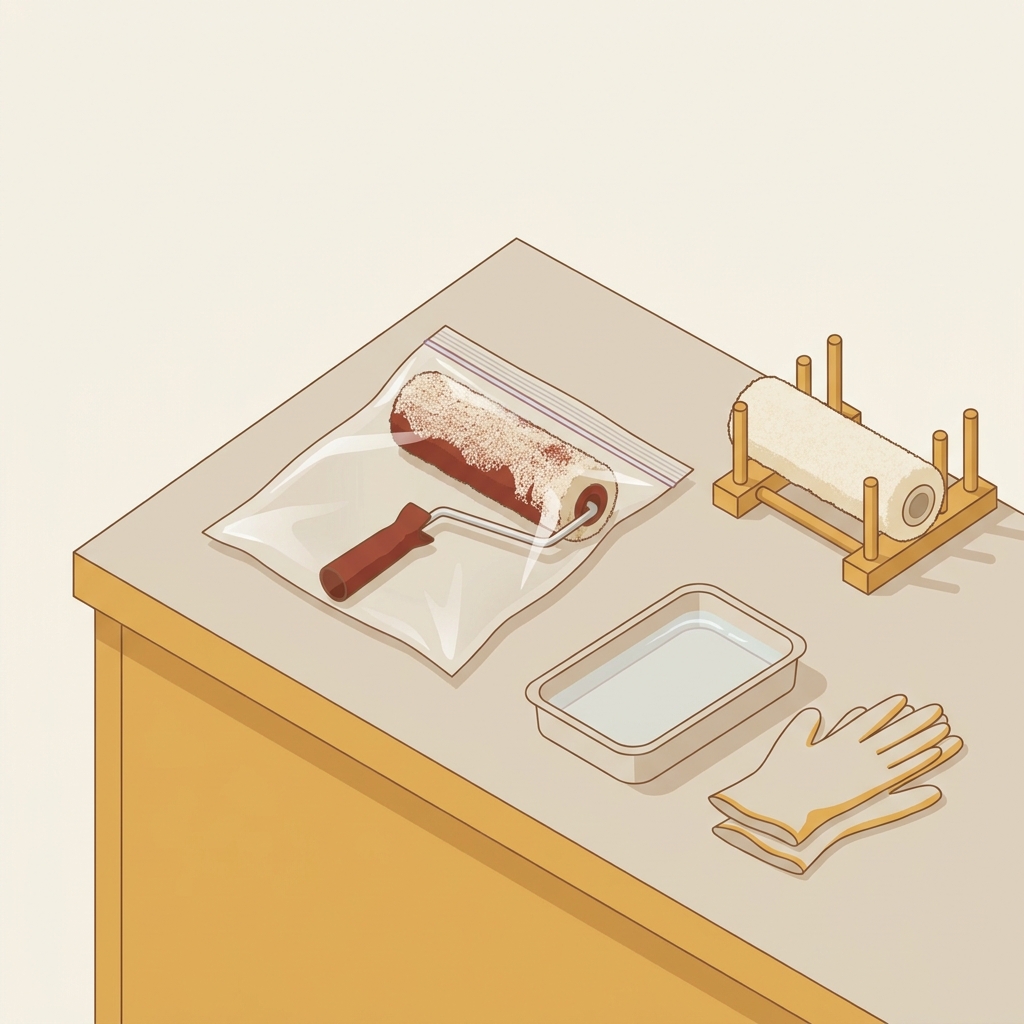
For short pauses, keep the roller moist and air-tight so the nap doesn’t crust:
Wrap a loaded roller for a short pause
These airtight methods help keep a roller fresh mid-project; resume rolling as soon as you unwrap it (Two Fussy Blokes).
How to dry and store for best results
- After cleaning, shake or spin out water, gently fluff the nap, and let the cover dry standing on its end.
- Store clean covers upright on their ends or in a holder so the nap isn’t crushed (Two Fussy Blokes).
- If a roller keeps shedding fibers or has a permanent flat spot that mars the finish, retire it and switch to a fresh cover (COAT Paints; Two Fussy Blokes).
Common mistakes to avoid
- Letting paint dry on the nap before cleaning. Clean immediately for easier reuse (COAT Paints).
- Washing outdoors with a hose. Runoff can enter storm drains or soak into soil (Clemson HGIC).
- Storing rollers horizontally while wet. This can flatten the nap and affect your next finish (Two Fussy Blokes).
Quick FAQ
Can I clean a roller at the kitchen or utility sink?
To keep paint out of drains and reduce water use, capture rinse water in buckets and let solids settle. Never wash paint into the yard or a storm drain, and avoid sending paint into septic systems (Clemson HGIC).
How many times can I reuse a roller?
There’s no fixed number. If the nap remains even and resilient and it rolls smoothly without shedding, it is generally fine to reuse. Dry and store on its end so it keeps its shape (Two Fussy Blokes).
Related from Home by Doing: Is it necessary to use primer before painting walls? and Sleeping in a freshly painted bedroom: drying versus curing.

Product options for this topic
As an Amazon Associate I earn from qualifying purchases. These are researched options, not hands-on test results. Check the exact size or model, current price and availability on Amazon.
| Product option | Fit and limits to check | Retailer |
|---|---|---|
| Purdy XL Dale, 2½-inch brush | An angled brush to consider for trim and edges. Match brush width and bristle suitability to the coating and working space. | View on Amazon |
| ScotchBlue Original tape, 1.88-inch single roll | Mask edges when the surface and coating are suitable. Test a small area and follow the stated removal window, especially on delicate finishes. | View on Amazon |