
The journal
Sleeping in a freshly painted bedroom: drying versus curing
When you can sleep in a freshly painted bedroom, why dry, recoat-ready and cured are different stages, and how to plan and ventilate a bedroom paint job.
Quick answer: can you sleep in a freshly painted room?
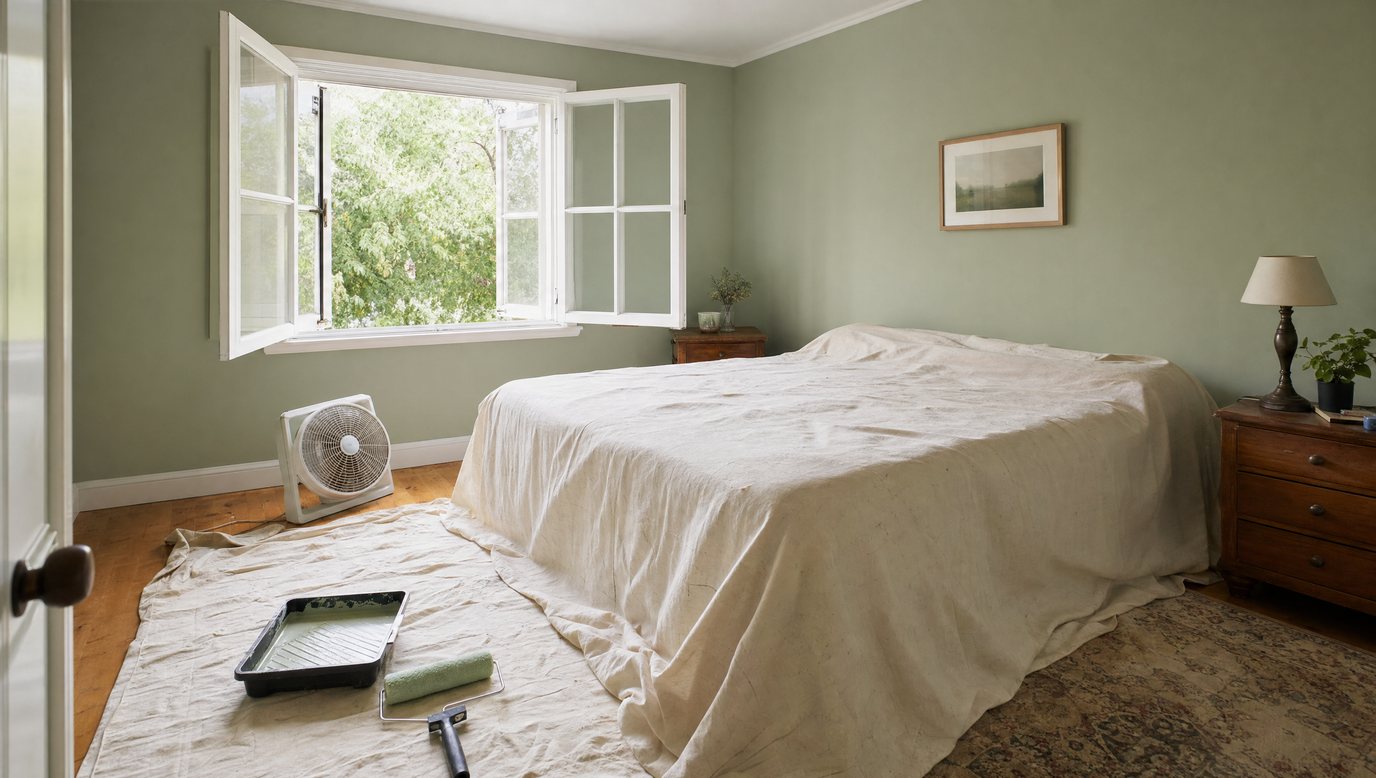
It is better not to, at least for the first couple of nights. Most paints release volatile organic compounds (VOCs) as they dry, and the EPA recommends increasing ventilation during and after painting and staying out of freshly painted rooms for two to three days where possible (EPA: healthy indoor painting practices). If you have to sleep there, choose a low-VOC paint, paint early in the day and keep the window open.
Dry, recoat-ready and cured are different stages
The can tells you when paint is dry to the touch and when it can be recoated. Neither means the film has finished hardening, and it keeps releasing some vapour for longer. Our note on dry, recoat and cure times explains how to read those labels.
| Stage | What it means | For the bedroom |
|---|---|---|
| Dry to the touch | The surface no longer feels wet | Still airing out; keep the window open |
| Recoat-ready | The next coat will not lift the first | Painting continues; sleep elsewhere |
| Cured | The film has hardened fully | Scrub and move furniture against it freely |
Why ventilation matters
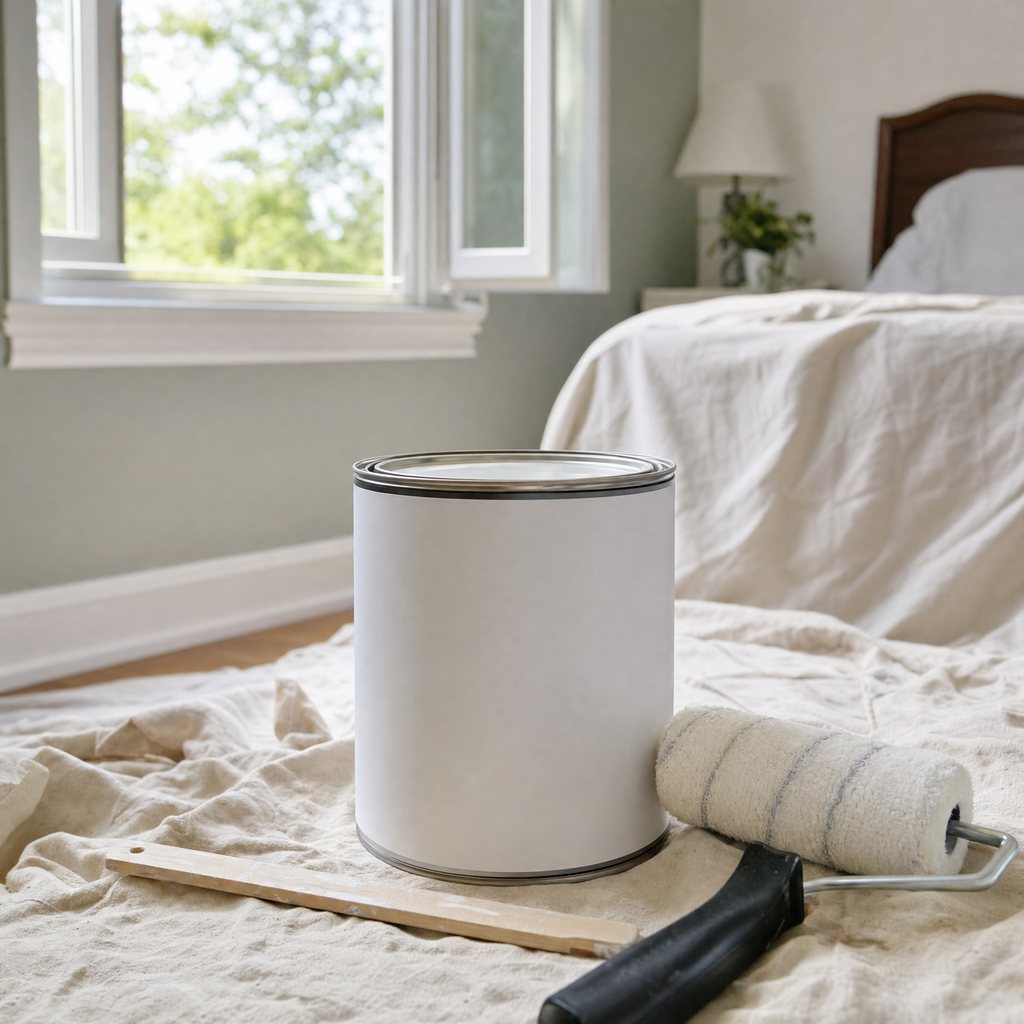
The EPA notes that indoor VOC levels can be much higher than outdoors, and that some people notice eye, nose and throat irritation or headaches after exposure (EPA: volatile organic compounds and indoor air). Fresh air carries vapours out of the room faster. A window fan blowing out, with a door or second window open for incoming air, works better than an open window alone.
Planning a bedroom paint job
- Choose a water-based, low-VOC paint. It emits less, which matters most in a room you sleep in.
- Prime only where needed. Our guide to primer before painting helps you skip unnecessary coats.
- Start early in the day so the room has daylight hours to air out.
- Sleep elsewhere for two to three nights if you can, keeping ventilation going.
- Store open cans and wet brushes outside the bedroom.
Choosing the colour is the fun part. TalkAboutSleep collects calm bedroom colour ideas if you are still deciding.
Frequently asked questions
How long after painting can I sleep in the room?
Where possible, wait two to three days with good ventilation, as the EPA suggests. Low-VOC paint and early-day painting shorten the wait.
Is zero-VOC paint safe to sleep with?
It emits far less, but fresh air still helps while it dries, and tints can add some VOCs.
Does the paint smell mean it is unsafe?
Smell shows vapours are still leaving the paint. Keep ventilating; the smell fading is a sign the room is airing out.