Make three spaces in the plan
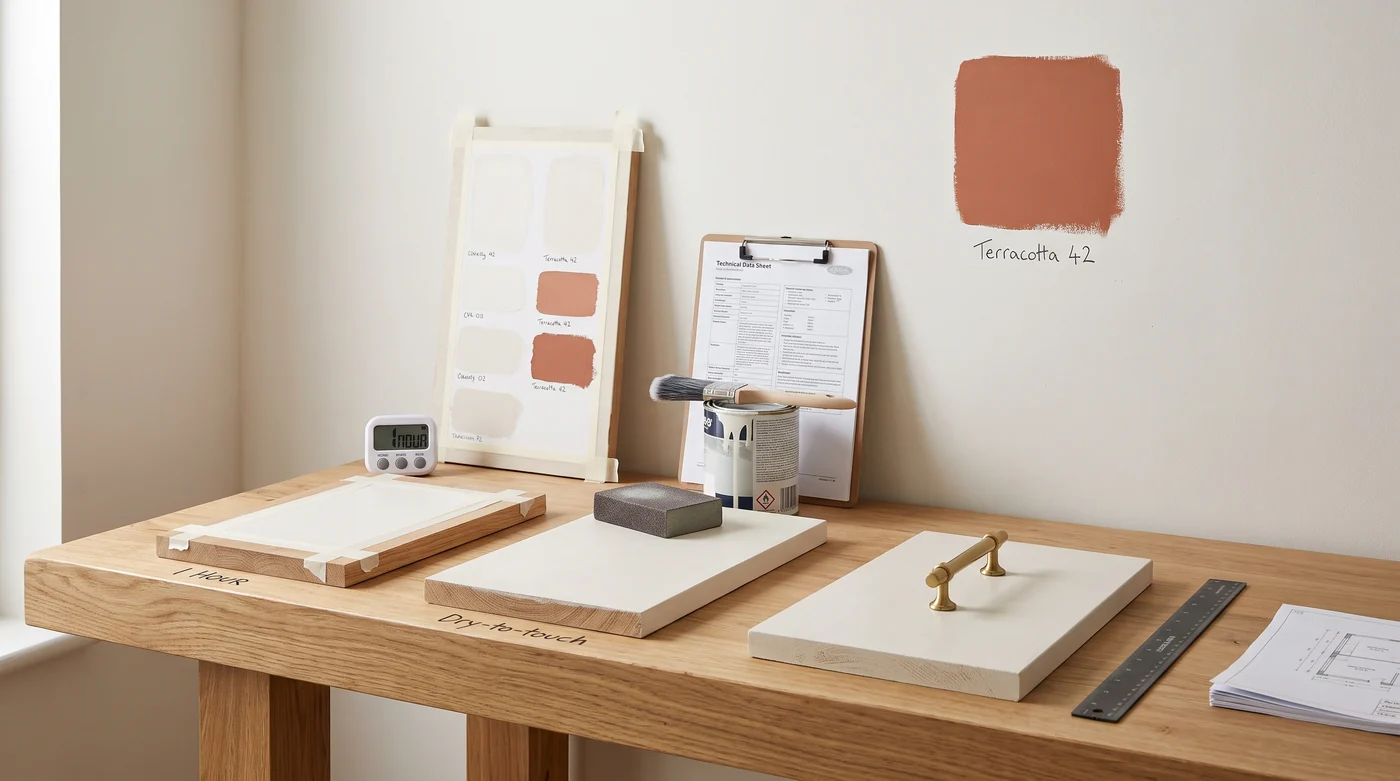
A finish project needs a time to apply the product, a permitted next-coat interval and a point when the surface can return to its intended use. Those may be different. Put each on the project sheet so a convenient weekend deadline does not silently replace a manufacturer instruction. Include the exact finish and variant, not only the color name.
Use the technical data for your paint
Read the current product label and technical data together. The quoted conditions are part of the timing information. If the room or substrate conditions differ, a headline time does not automatically transfer. Benjamin Moore’s cabinet guidance distinguishes installation and use from the continuing development of hardness and adhesion. That is a useful distinction to retain, without applying its schedule to another coating.
Benjamin Moore: painting kitchen cabinets ↗ — A manufacturer’s product-system example, not a universal schedule.
Plan what happens around the wet finish
Where will doors or small components rest? Which room needs to stay accessible? When can masking be removed under the relevant instructions? A project can stall because there is nowhere to put coated pieces even when the application itself is straightforward. Draw the working and drying areas before removing hardware or opening cans.
Write an observation, not a shortcut
Record when the coat went on and the conditions you can actually observe. If a product has not reached the condition required for the next step, revisit the schedule rather than hiding it under another coat. Keep cleaning, normal use and heavy wear as separate questions where the manufacturer does. Your final note should let someone understand why the surface was returned to use on that date.
Keep substrate identification, product instructions, measurements, preparation photographs and observed results together. We do not turn a generic checklist into a structural or installation specification.