
The journal
Do all washing machines have filters you need to clean?
A clear answer on washer filters, how to check your model, and safe steps to clean a pump strainer when you have one.
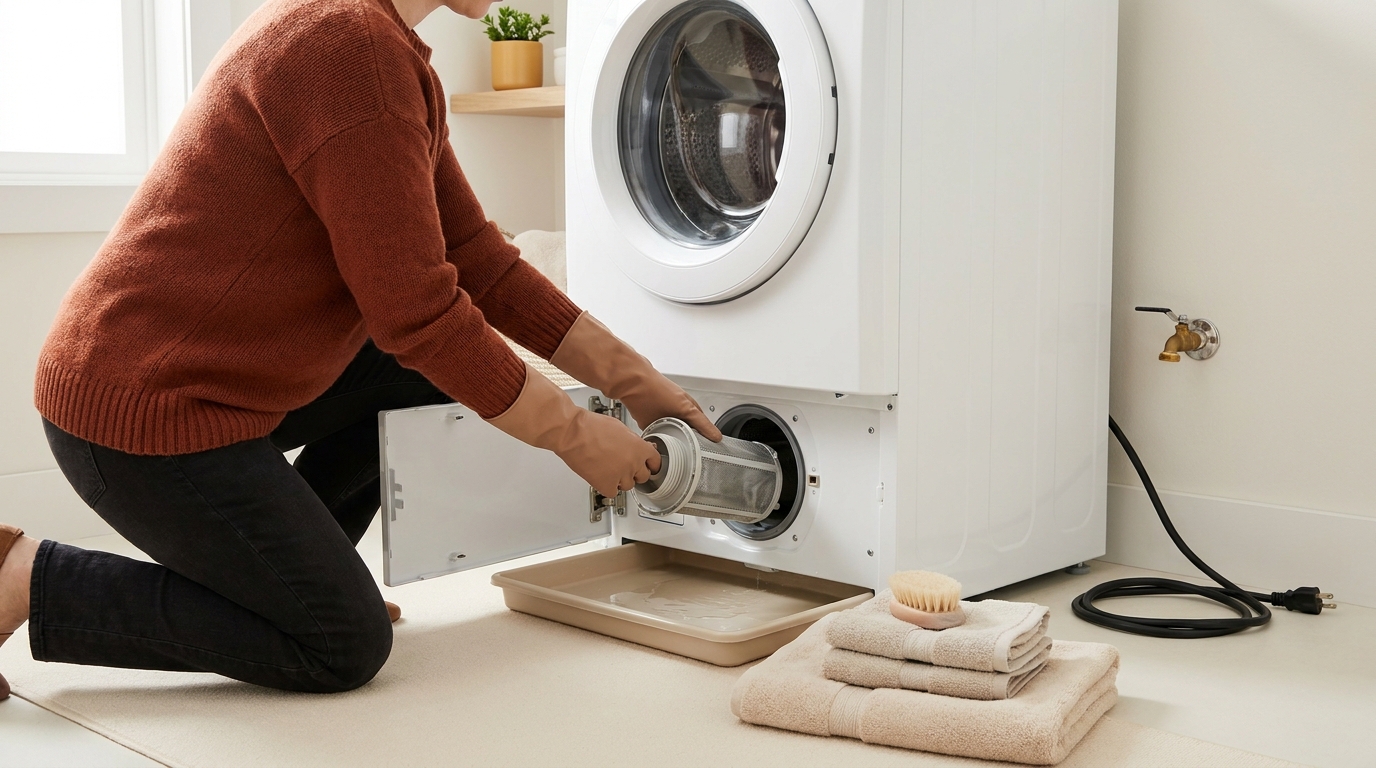
No. Not all washing machines have a user-cleanable filter. Many front-load washers use a pump strainer to catch debris before the drain pump, but on some models the strainer is not intended for owner access. When it is accessible, it’s often behind a small lower-front panel, though location and access vary by model (see this Houzz forum discussion with photos and technician input: https://www.houzz.com/discussions/2414454/does-your-front-loading-washer-have-a-filter).
Where filters are (and when they aren’t user-serviceable)
Many front-load designs include a debris strainer on the drain-pump inlet. Some brands provide a small access door at the lower front so owners can remove lint, coins, and small objects; others require service access and are not meant for routine owner maintenance (Houzz).
If your washer has no visible lower-front access door, it may still have an internal strainer, but reaching it could require removing panels. In that case, follow your model’s manual or contact a technician rather than forcing panels open.
How to check your own washer quickly
- Unplug the washer and pull it out slightly for safe access.
- Front-loaders: Look for a small square or rectangular door near the bottom front. That’s often where the pump strainer is housed (Houzz).
- If there’s no door and your manual shows no owner access, your model may not have a user-cleanable part. Avoid prying panels.
- If you’re unsure, search your model number plus “drain pump access” in the manufacturer’s support pages.
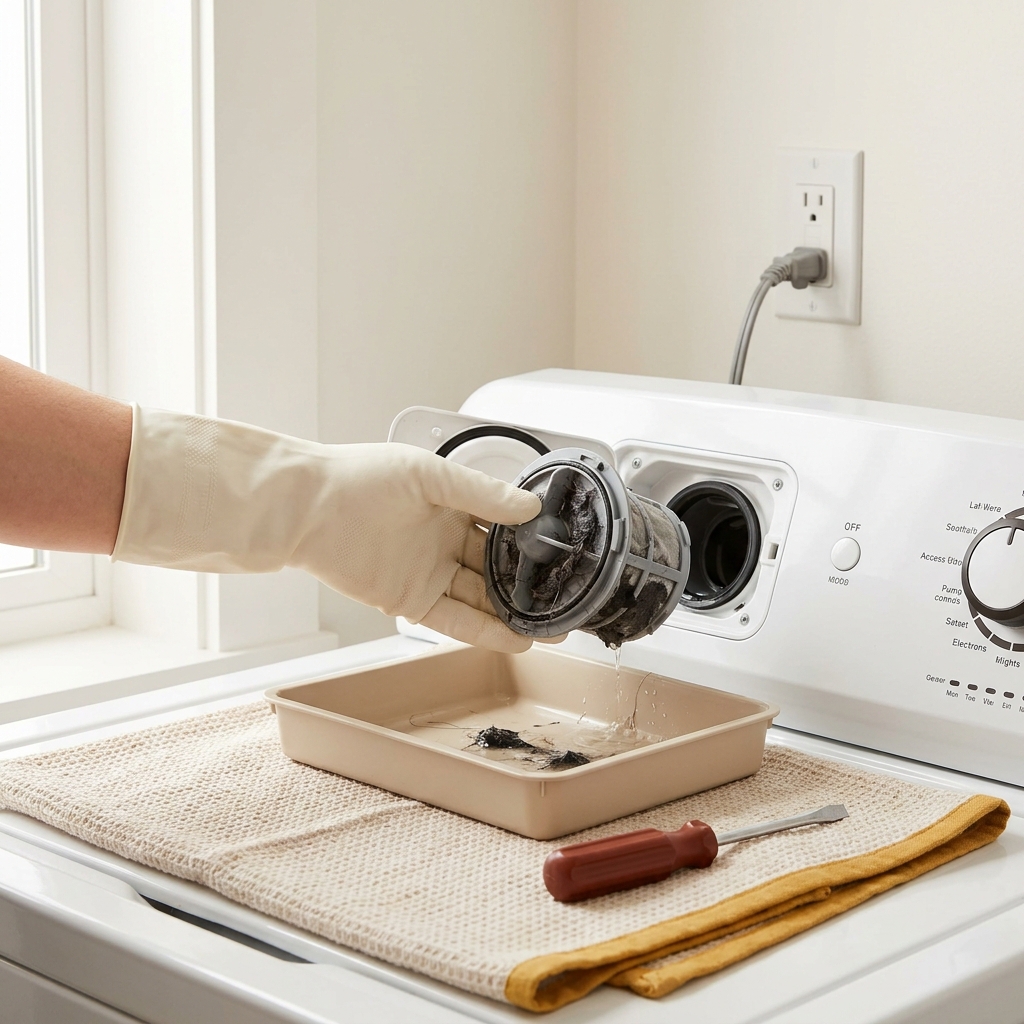
How to clean a pump strainer safely (when present)
These general steps are for front-load washers that clearly provide owner access to the pump strainer. Always follow your exact manual if it differs.
- Unplug the washer. Place towels and a shallow tray under the access door to catch water.
- Open the lower access door. If there’s a small drain tube, empty residual water into a container first.
- Loosen the strainer cap slowly (it may be a twist-out plug). Expect some water.
- Remove lint, hair, and debris. Rinse the strainer under running water.
- Shine a light into the pump cavity and carefully remove any visible strings or objects from the impeller area.
- Reinstall the strainer fully and close the access panel. Plug the washer back in and run a short drain/spin to check for leaks and proper draining.
Get set to clean a front-loader pump strainer
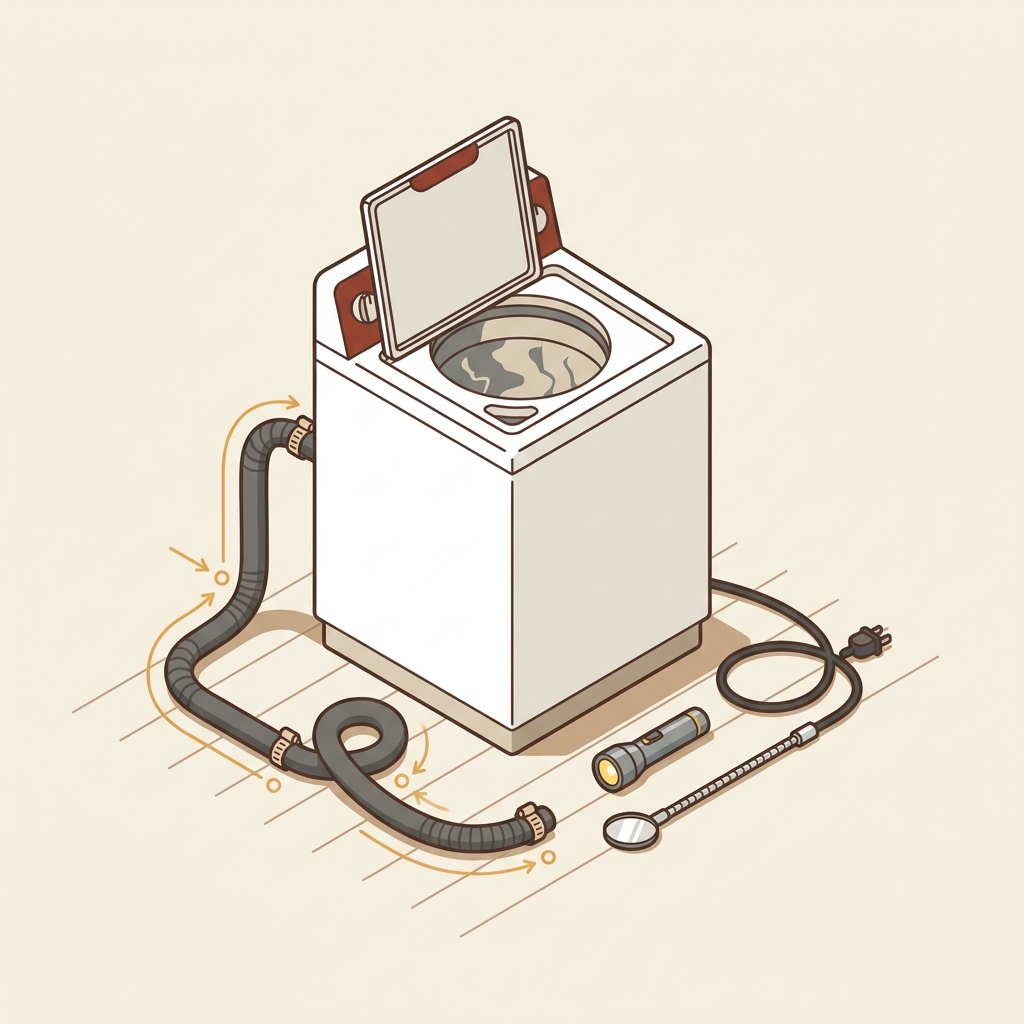
If you can’t find a filter or access door
- Your model may not have a user-accessible strainer. Don’t remove main cabinet panels unless your manual instructs it.
- Check the external drain hose for kinks or a blocked end. Ensure it isn’t pushed too far into the standpipe.
- Run a short rinse and spin to test draining after any hose adjustments.
When to call a technician
Modern machines vary widely in how their pumps and access points are built. Internal access can involve electronics, special tools, and procedures that are better handled by an experienced tech (Craftsmanship Magazine). Call a pro if:
- There’s no user access and draining is still slow or incomplete.
- You hear grinding or humming from the pump after basic checks.
- Panels must be removed beyond a small lower-front door.
Quick, practical pointers
- Front-loaders often place the pump strainer behind a lower-front door, but not always (Houzz).
- If there’s no obvious access, assume owner maintenance isn’t intended. Focus on hose checks and the manual’s troubleshooting steps.
- If you retrieve debris and draining improves, recheck after a few cycles and monitor for leaks.
More practical home care
Tackling humidity near laundry areas? These guides can help:
FAQ
How do I know if my front-loader has a user-accessible strainer?
Look for a small access door near the lower front of the machine. That’s where many models place the pump strainer, though some hide it internally (Houzz).
What if my washer has no access door at the front?
It may not have a user-cleanable strainer. Check the manual for your model. Focus on simple checks like the external drain hose, and contact a technician if draining issues persist (Craftsmanship Magazine).

Related guides
Related guide from Talk About Sleep
For a bedding load after appliance maintenance, check the fabric instructions in Can I wash linen sheets in the washing machine?.