
The journal
Can I clean a faucet aerator without removing it?
Yes, you can improve a faucet’s flow without removing the aerator by soaking the tip in vinegar and brushing, but it’s a partial fix. Here’s how to try it safely, plus when removal is the better choice.
Quick answer
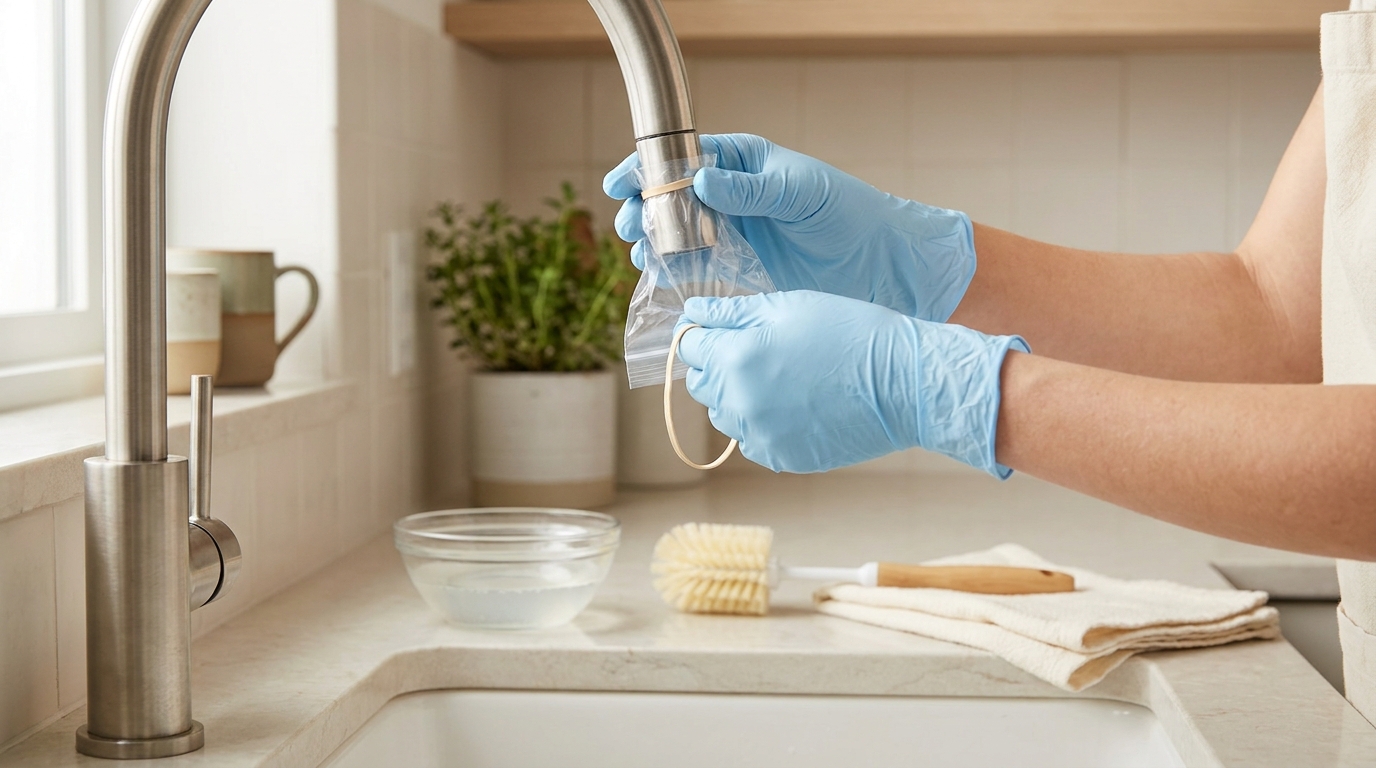
Yes, you can clean a faucet aerator without removing it by securing a small vinegar-filled bag over the faucet tip, letting it soak, brushing the face, and flushing the faucet. This often improves flow caused by surface limescale, but it will not flush debris trapped behind the screen. For a thorough clean, plan to remove and rinse the aerator parts. Guidance from Ruvati notes the in-place method works but is less effective than removal https://www.ruvati.com/how-to-clean-a-faucet-aerator/, and Denver Water recommends periodic removal and cleaning, especially after construction work on water lines https://www.denverwater.org/tap/big-benefits-cleaning-and-updating-faucet-aerators.
What to have on hand for an in-place clean
In-place cleaning: simple steps that often help
- Fill a small plastic bag with enough white vinegar to cover the aerator face. Secure it around the faucet tip so the aerator is submerged.
- Let it soak. A practical window is about 1 to 2 hours for this in-place method to loosen mineral deposits https://www.ruvati.com/how-to-clean-a-faucet-aerator/.
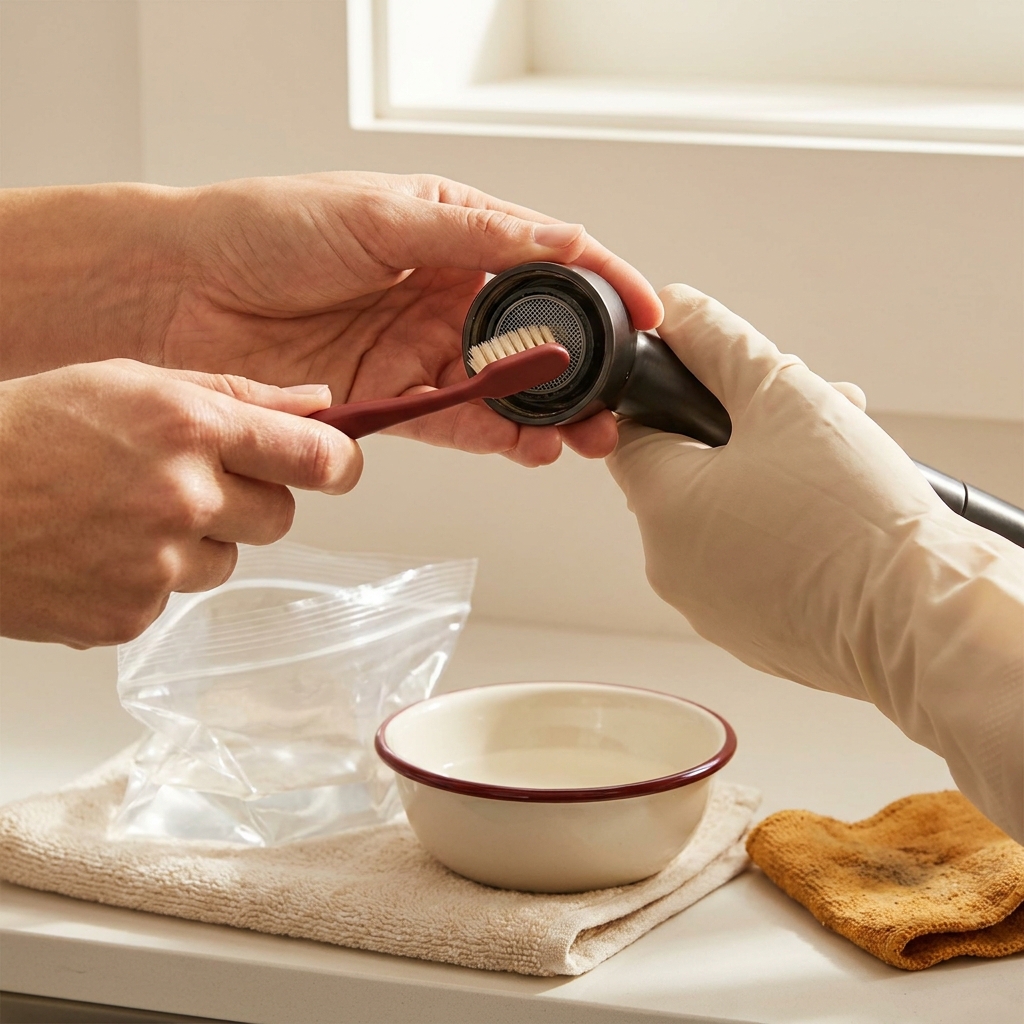
- Remove the bag and gently scrub the aerator face with a soft toothbrush.
- Run the water for several seconds to flush loosened scale.
Important limitation: without removing the aerator, debris inside the faucet spout and behind the screen is not flushed out, so results can be temporary https://www.ruvati.com/how-to-clean-a-faucet-aerator/.
When removal is the better choice
Remove and clean the aerator if the stream is still weak or sprays sideways after an in-place soak, and for maintenance about every six months or after water line work or a main break that could send debris into your plumbing https://www.denverwater.org/tap/big-benefits-cleaning-and-updating-faucet-aerators.
How to remove and clean thoroughly
- Identify your aerator style. Many screw onto the outside of the spout; “hidden” or recessed aerators screw inside and typically need a small key to unscrew. Keys often come with the faucet and can be purchased or requested from the manufacturer https://www.denverwater.org/tap/big-benefits-cleaning-and-updating-faucet-aerators.
- Protect the finish. Wrap a rag around the aerator before using pliers or a wrench to avoid scratching the faucet https://www.denverwater.org/tap/big-benefits-cleaning-and-updating-faucet-aerators. Ruvati also suggests padding tool jaws to prevent damage https://www.ruvati.com/how-to-clean-a-faucet-aerator/.
- Disassemble the aerator parts (screen, housing, gaskets), soak and scrub. Soak times vary: Denver Water suggests about 5 minutes in vinegar, then brush and rinse https://www.denverwater.org/tap/big-benefits-cleaning-and-updating-faucet-aerators. For heavy scale, longer soaks are often used in practice; Ruvati notes extended vinegar soaking can help stubborn deposits before brushing and reassembly https://www.ruvati.com/how-to-clean-a-faucet-aerator/.
After reassembly, hand-tighten, then run the faucet to check for leaks and a steady, even stream.
Quick checks after any cleaning
- Run hot and cold for several seconds to flush loosened debris.
- Watch the spray pattern; it should be centered and even. Persistent side-spray or a thin stream usually means debris remains behind the screen. Remove, rinse and brush the parts again, or replace the aerator.
Common mistakes to avoid
- Scratching the finish with bare tools. Always pad plier jaws or wrap a rag around the aerator before using tools https://www.denverwater.org/tap/big-benefits-cleaning-and-updating-faucet-aerators https://www.ruvati.com/how-to-clean-a-faucet-aerator/.
- Expecting an in-place soak to clear trapped grit. It helps with surface limescale but won’t flush internal debris; remove the aerator if problems persist https://www.ruvati.com/how-to-clean-a-faucet-aerator/.
- Skipping post-construction cleaning. After line work or a main break, remove and clean aerators to clear sediment and reduce exposure to particles, including lead flakes from old plumbing https://www.denverwater.org/tap/big-benefits-cleaning-and-updating-faucet-aerators.

Step-by-step: try this in-place aerator clean
Related reading
- Should I use plumber’s putty or silicone to seal my sink drain? Practical guide
- How to seal large gaps around exterior pipes safely
FAQ
Do I need a special tool for a recessed aerator?
Yes. Hidden or recessed aerators typically require a small aerator key. Keys often come with the faucet, and you can buy one or request one from the manufacturer https://www.denverwater.org/tap/big-benefits-cleaning-and-updating-faucet-aerators.
How often should I clean my aerator?
About every six months, and after any construction work that affects your water service, according to Denver Water https://www.denverwater.org/tap/big-benefits-cleaning-and-updating-faucet-aerators.
Is vinegar safe for every faucet finish?
Finishes vary. Test in a small spot first and follow your faucet maker’s care guidance before using any cleaner.