
The journal
How to wash a cooker hood filter
Straightforward steps to wash a metal cooker hood grease filter, plus what to do with charcoal odor filters and when a dishwasher is OK.
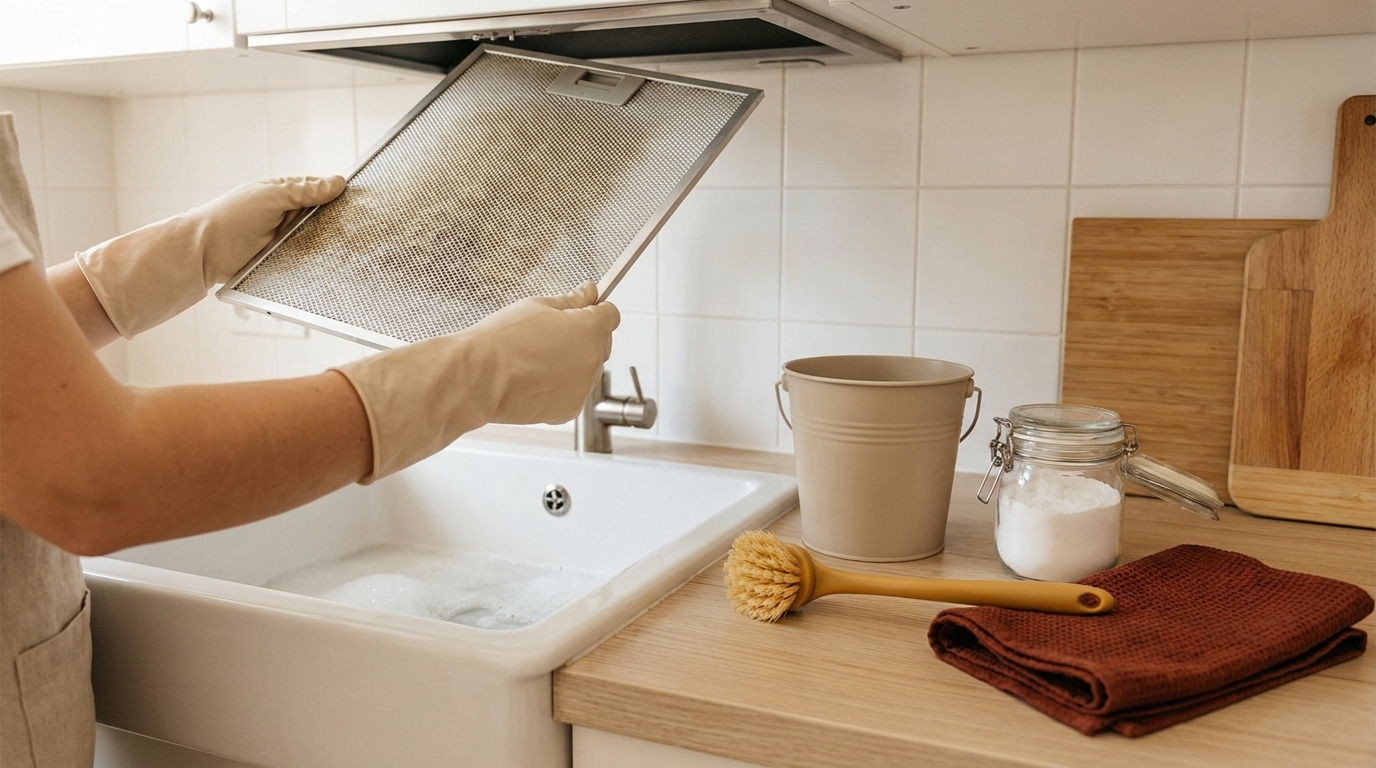
Wash a metal grease filter by removing it, soaking it in hot water with a degreasing detergent (baking soda helps), gently scrubbing, rinsing well and air-drying completely before reinstalling. Standard charcoal or odor filters are not washable and are typically replaced; some long-life versions can be washed or heat-regenerated if your model allows it. Always check your hood manual for model-specific guidance (Hauslane: How to Clean a Range Hood Filter; Elica: Clean and degrease filters).
Know your filter before you wash
- Washable metal grease filters (aluminum mesh or stainless baffle) are designed to be cleaned and reused (Hauslane; Elica).
- Charcoal/odor filters in recirculating hoods are usually replacement-only. Some brands also offer long-life odor filters that can be washed and oven-dried, or ceramic filters that can be heat-regenerated; follow your model’s instructions (Elica; Faber Hoods guide).
Step-by-step: wash a metal grease filter
What you’ll need
- Very hot or boiling water
- Degreasing dish soap or kitchen degreaser
- Baking soda (optional but helpful)
- Soft brush or non-abrasive sponge and rubber gloves
- Towelled drying area
Safety first
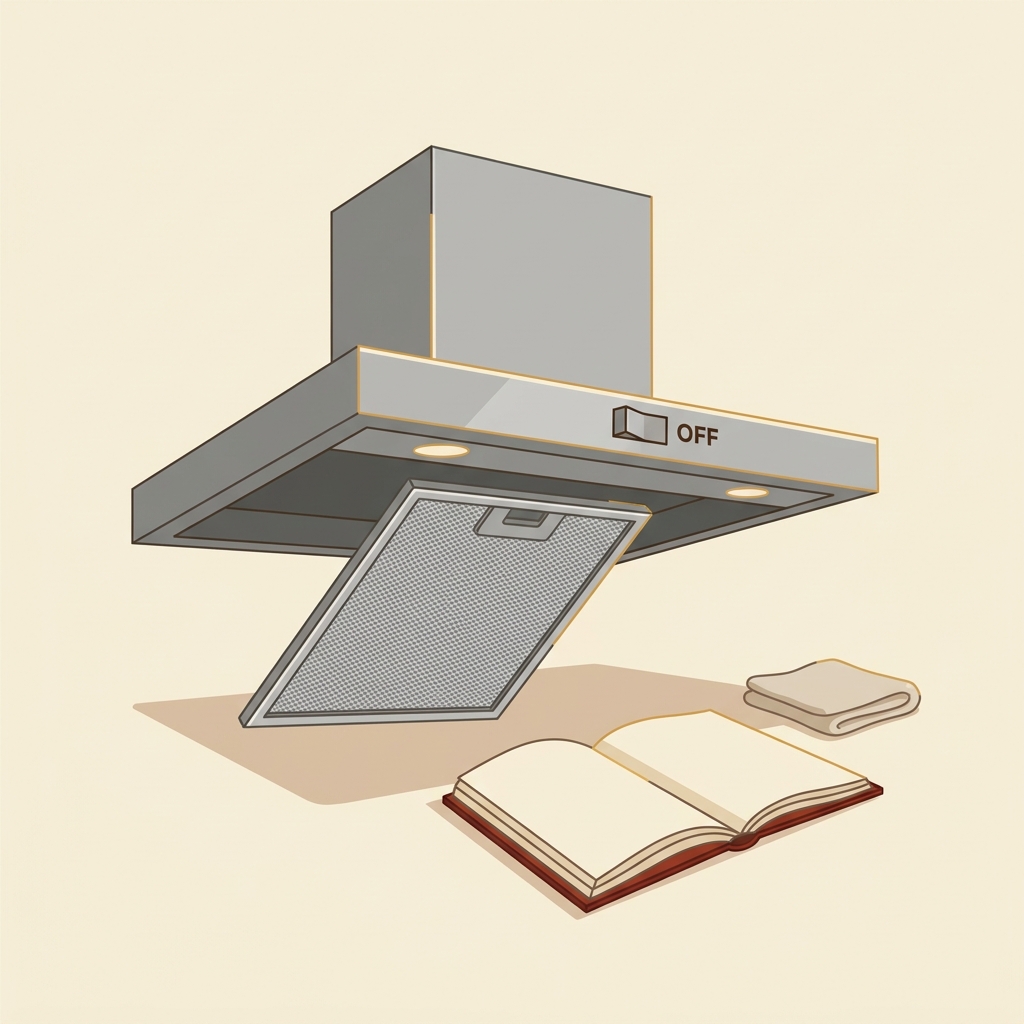
- Unplug or switch off the hood and let surfaces cool. Make sure everything is dry before restoring power (Hauslane).
Wash sequence
- Remove the filter. Most hoods have a latch or loop on the underside. Support the filter as you release it.
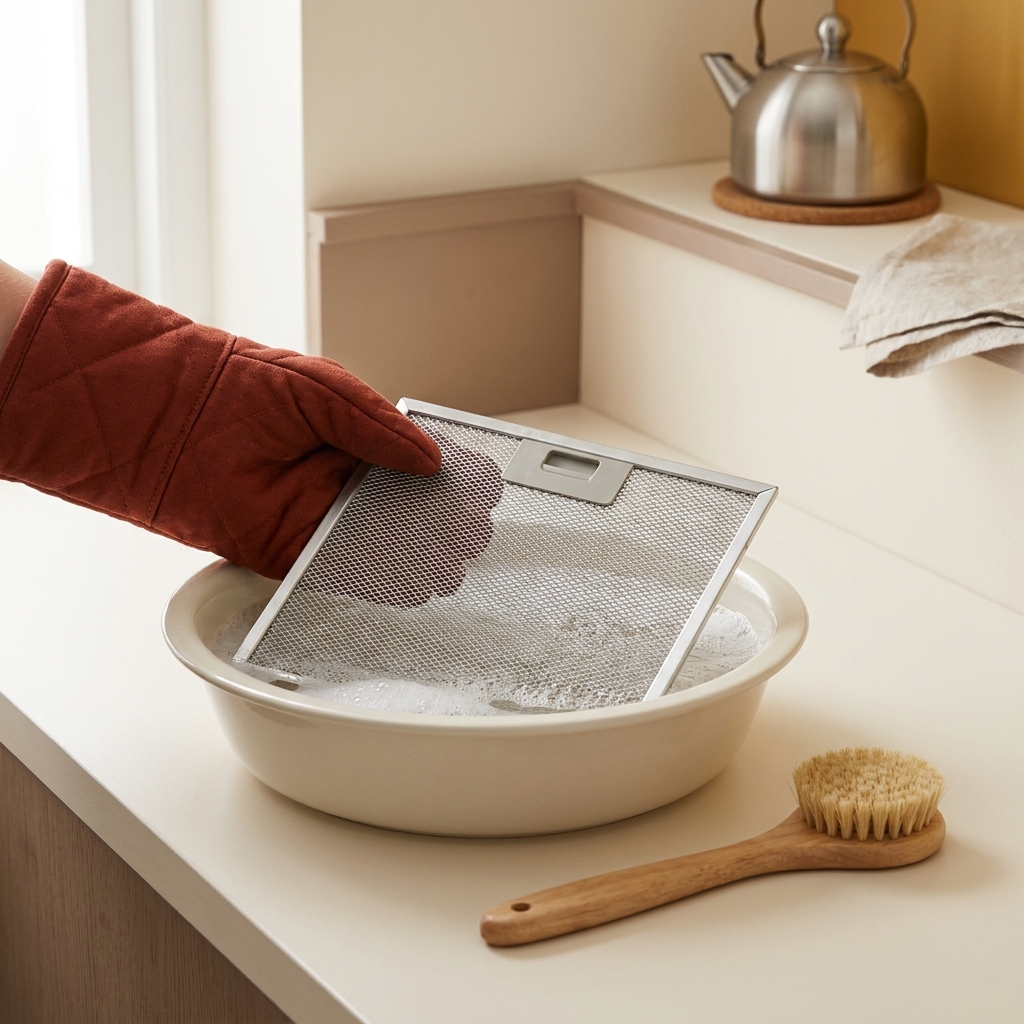
- Prepare a hot soak. Fill a sink or tray with hot or boiling water, add a generous squirt of degreasing dish soap and about 1/2 cup baking soda if available. Boiling water makes cleaning easier (Hauslane).
- Soak for around 10 minutes to loosen grease (Hauslane).
- Gently scrub. Use a soft brush/sponge and light pressure to avoid deforming the mesh; rub delicately to prevent surface damage (Elica).
- Rinse thoroughly under hot running water until suds are gone.
- Dry fully. Pat dry, then air-dry completely on a towelled surface before reinstalling (Hauslane).
- Reinstall and test. Restore power and run the fan briefly.
Can you use a dishwasher?
Many metal filters, especially stainless baffle types, can go in the dishwasher if your manufacturer allows it. Some brands recommend lower-temperature cycles for metal mesh filters. Always follow your manual’s direction (Elica; Faber Hoods).
What about charcoal/odor filters?
- Standard charcoal filters are not washable. Replace them when saturated (Hauslane; Elica).
- Exceptions: some long-life odor filters can be washed every 2-3 months and then dried in an oven, and certain ceramic filters can be heat-regenerated. These are model-specific procedures, so confirm details in your manual (Elica; Faber Hoods).
How often to wash the filter
- Regularly is best. A monthly clean keeps grease manageable and airflow efficient (Hauslane).
- Some manufacturers suggest every 2 months for aluminum filters; adjust based on how often and what you cook (Faber Hoods).
Grease buildup can reduce performance and increase fire risk; staying on top of cleaning helps safety and efficiency (Hauslane).
Common mistakes to avoid
- Don’t use abrasive pads or harsh scraping that can deform mesh or scratch finishes. Rub delicately and use non-abrasive tools (Elica).
- Don’t reinstall a damp filter. Moisture can drip into the hood and attract grime. Dry completely before power is restored (Hauslane).
Quick cooker hood filter wash checklist
Related quick cleans
- Can I clean a faucet aerator without removing it?
- Do all washing machines have filters you need to clean?
FAQ
Is boiling water necessary for the soak?
No, hot water works, but boiling water makes grease removal easier and faster (Hauslane).
How long should I soak the filter?
About 10 minutes is usually enough to loosen grease before gentle scrubbing (Hauslane).
Can I wash a charcoal filter?
Standard charcoal filters aren’t washable. Replace them when saturated. Some long-life or ceramic types can be washed or heat-regenerated if your manufacturer specifies it (Elica; Faber Hoods).