
The journal
How to test a spirit level: the 180 degree flip
A clear, reliable method to test a spirit level using the 180 degree flip, including vertical (plumb) checks, how to read the bubble accurately, and when it’s safe to adjust.
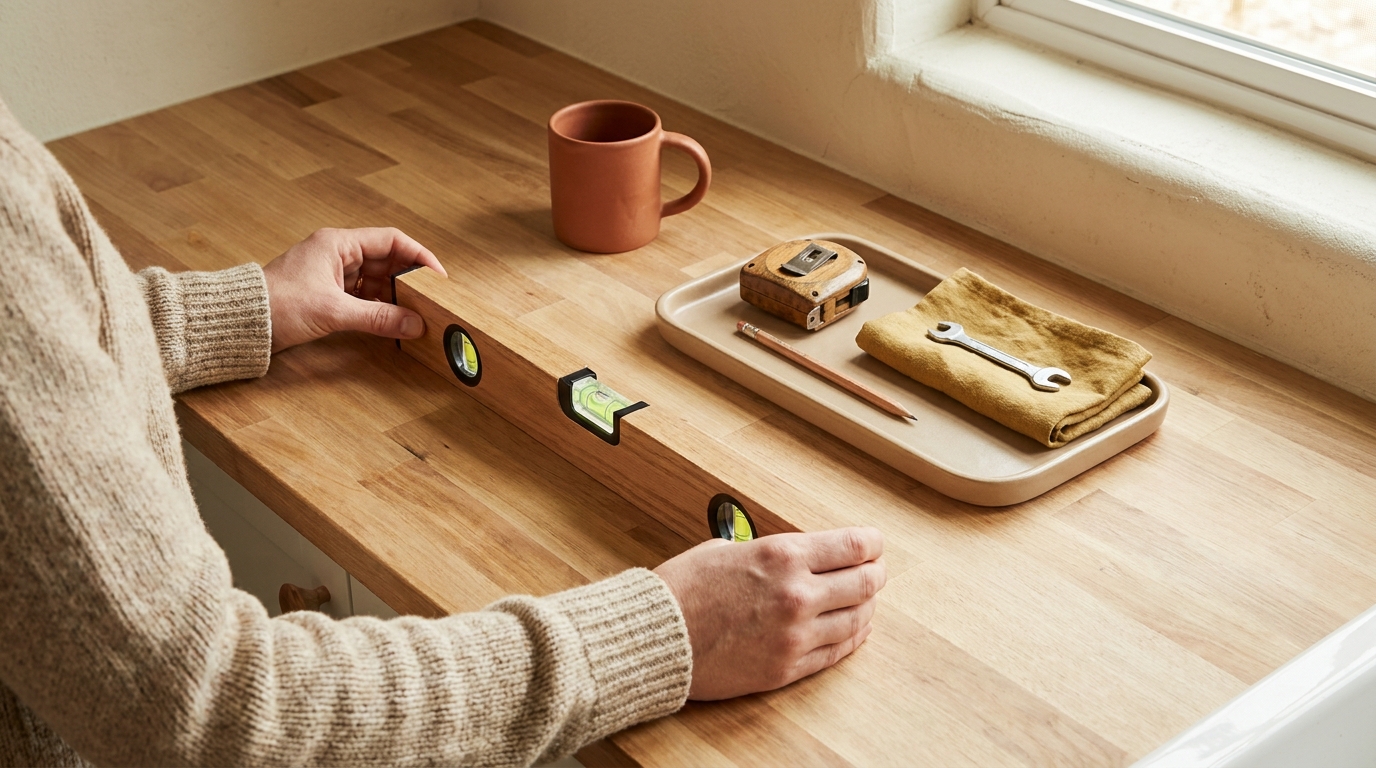
A simple field check is the 180 degree reversal: place your level on a marked reference, take a bubble reading, rotate the level end for end, realign to the same marks, and compare. If the bubble shows the same position both times, the level is accurate; a different position indicates error. This same reversal method applies to the vertical (plumb) vial too. Source: Johnson Level: Q&A on Levels.
Step-by-step: horizontal (level) vial test
Mark, read, rotate, compare
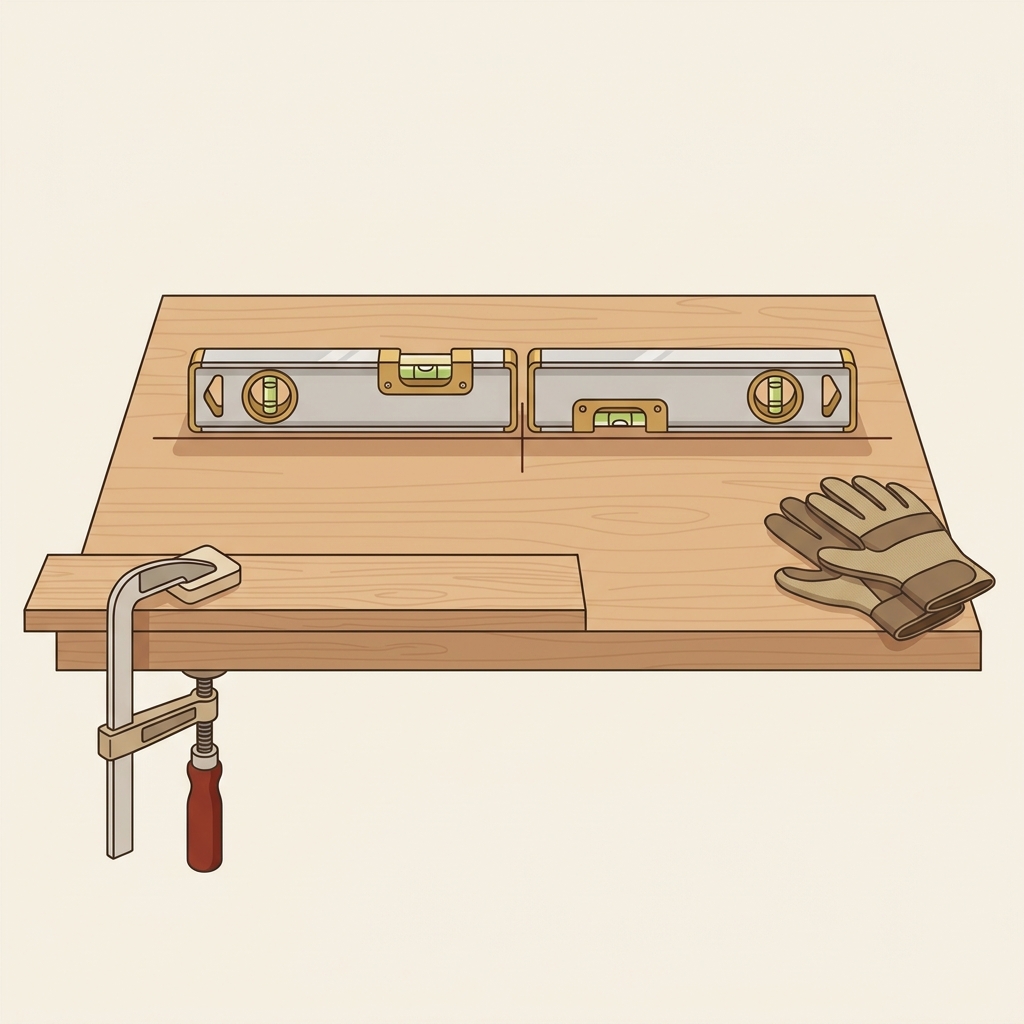
- Choose a firm, flat surface (bench, countertop). Make two reference marks: one at an end of the level and one along its side near the vial so you can put it back in the exact place. Source: Johnson Level: Q&A on Levels.
- Look straight at the vial and note the bubble position relative to the lines to avoid parallax error. Source: Freemans Group: Spirit level guide.
- Rotate the level 180 degrees end for end.
- Realign it to the same marks and read the bubble again. If the bubble matches the first reading, the level passes this field check within what you can observe; if it differs, repeat carefully to confirm. Source: Johnson Level: Q&A on Levels.
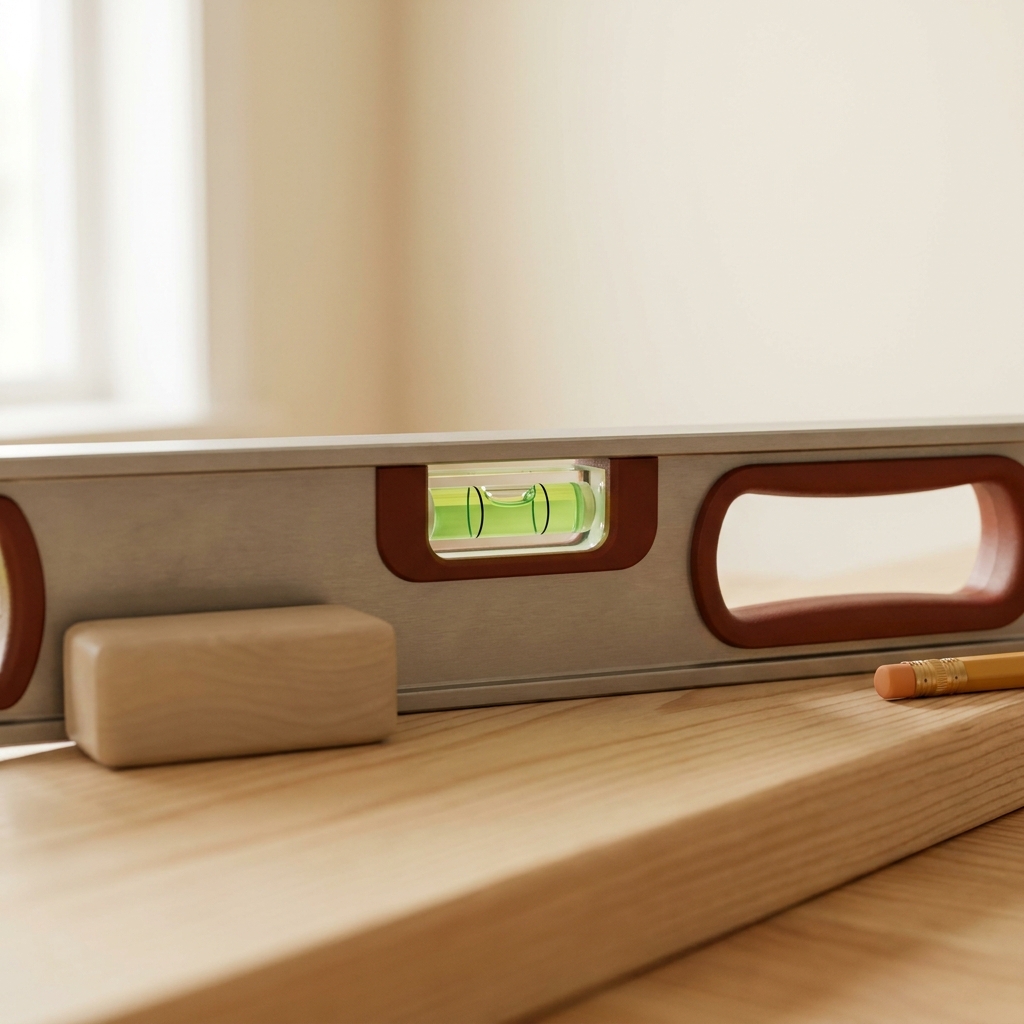
Test the vertical (plumb) vial
Use the same self-check principle against a flat wall:
- Hold the level to a vertical surface and make two marks: one at an end and one along the side near the vial. Take the first reading. Source: Johnson Level: Q&A on Levels.
- Rotate the level 180 degrees side to side (or as your manufacturer specifies) and realign to the same marks. Compare the second reading to the first; identical means accurate. Source: Johnson Level: Q&A on Levels.
Interpreting results and avoiding false failures
- Repeat to rule out setup errors. If the bubble moves the same way each time on a given surface, the surface itself may be out; test on a different reference. Source: Speedy Hire: How to use a spirit level.
- Read at eye level. Viewing at an angle can shift where you think the bubble sits. Source: Freemans Group: Spirit level guide.
- Keep contact faces clean. For the horizontal check, keep the measuring face down; for plumb, follow the manufacturer’s working-edge reversal instructions. Debris or swapping edges can change readings. Source: Speedy Hire: How to use a spirit level.
Can you calibrate a spirit level?
Sometimes. It depends on the model:
- Many levels have no user adjustment. If yours doesn’t, rely on the test to decide whether to service or replace. Source: Plywoodetc: Check and calibrate a spirit level.
- Some models provide a vial adjustment screw. If your manufacturer specifies adjustment, turn the screw in small increments so the bubble matches in both orientations, re-running the 180 degree test after each change. Sources: RS: How to use a spirit level; Speedy Hire: How to use a spirit level.
If repeated careful tests never agree, or a vial/frame is visibly damaged, follow the maker’s service guidance or replace the tool. Source: Plywoodetc: Check and calibrate a spirit level.
When to test and what’s “accurate enough”
- Test before critical work and after any knock or drop. Source: Speedy Hire: How to use a spirit level.
- Accuracy tolerances vary by model; many professional levels specify accuracy in mm/m. Check your level’s specification rather than assuming a universal figure. Source: Plywoodetc: Check and calibrate a spirit level.
Planning to install shelves after checking your level? See our practical wall guides: Can you put shelves on a plaster wall? and Which drywall anchor is strongest?
Run a marked-reference level accuracy check
FAQ
Do I need a perfectly level surface to test?
No. You are comparing the level to itself. What matters is whether the bubble shows the same position before and after reversal on the same marked spot. Source: Plywoodetc: Check and calibrate a spirit level.
How do I test the plumb vial correctly?
Use a flat wall, mark your position, take a reading, rotate the level 180 degrees side to side, realign to the marks, and compare. Matching readings indicate accuracy. Source: Johnson Level: Q&A on Levels.