
The journal
How to use a spirit level vertically (to check plumb)
Practical steps to hold and read a spirit level’s vertical vial, avoid common mistakes, and verify your tool’s accuracy before you fasten anything.
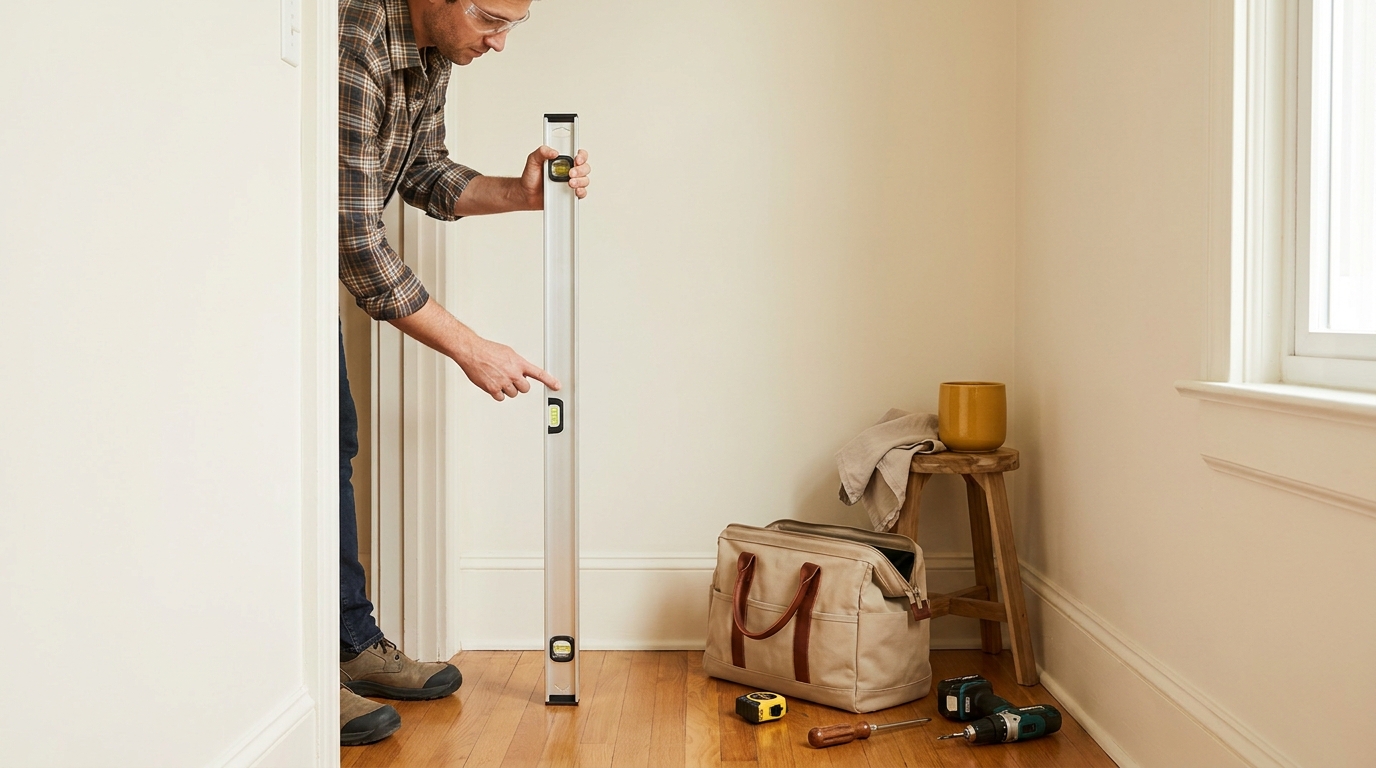
Short answer: hold it flush and read the vertical vial
To check if something is plumb, hold the spirit level vertically with its flat edge fully contacting the surface. Wait for the bubble to settle, then read the vertical vial: if the bubble is centered between the two lines, the surface is plumb. Keep the edge clean and your eyes level with the vial for an accurate reading (Speedy Hire).
Prepare the tool and the surface
- Choose a level with a dedicated vertical vial. Most spirit levels include separate vials for horizontal and vertical checks (Speedy Hire).
- Wipe dust and debris from the level’s contact edge and from the work surface so the level sits flat without rocking (Speedy Hire).
- For tall checks, use a safe platform so your eye is level with the vial when you read it (Speedy Hire).
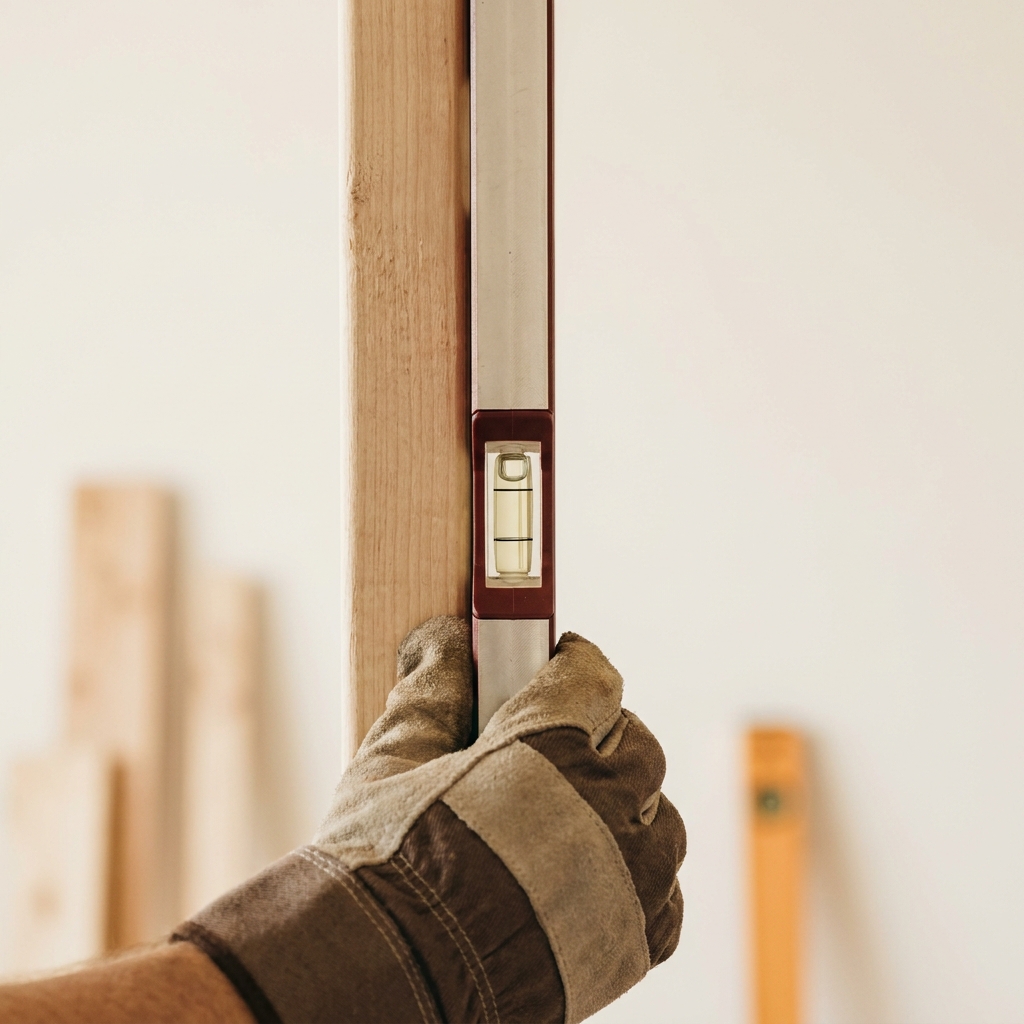
Step-by-step: use a level vertically to check plumb
- Place: Hold the level’s flat edge flush against the surface you are checking, with the vertical vial visible.
- Settle: Wait a moment for the bubble to stop moving, then bring your eyes level with the vial for a true read (Speedy Hire).
- Read: Bubble centered between the vial marks = plumb. If it’s off-center, adjust the workpiece position and re-check until the bubble centers (Speedy Hire).
- Confirm: On critical items, take readings at two or three heights along the same edge to ensure consistency.
Using a laser as a vertical reference (optional)
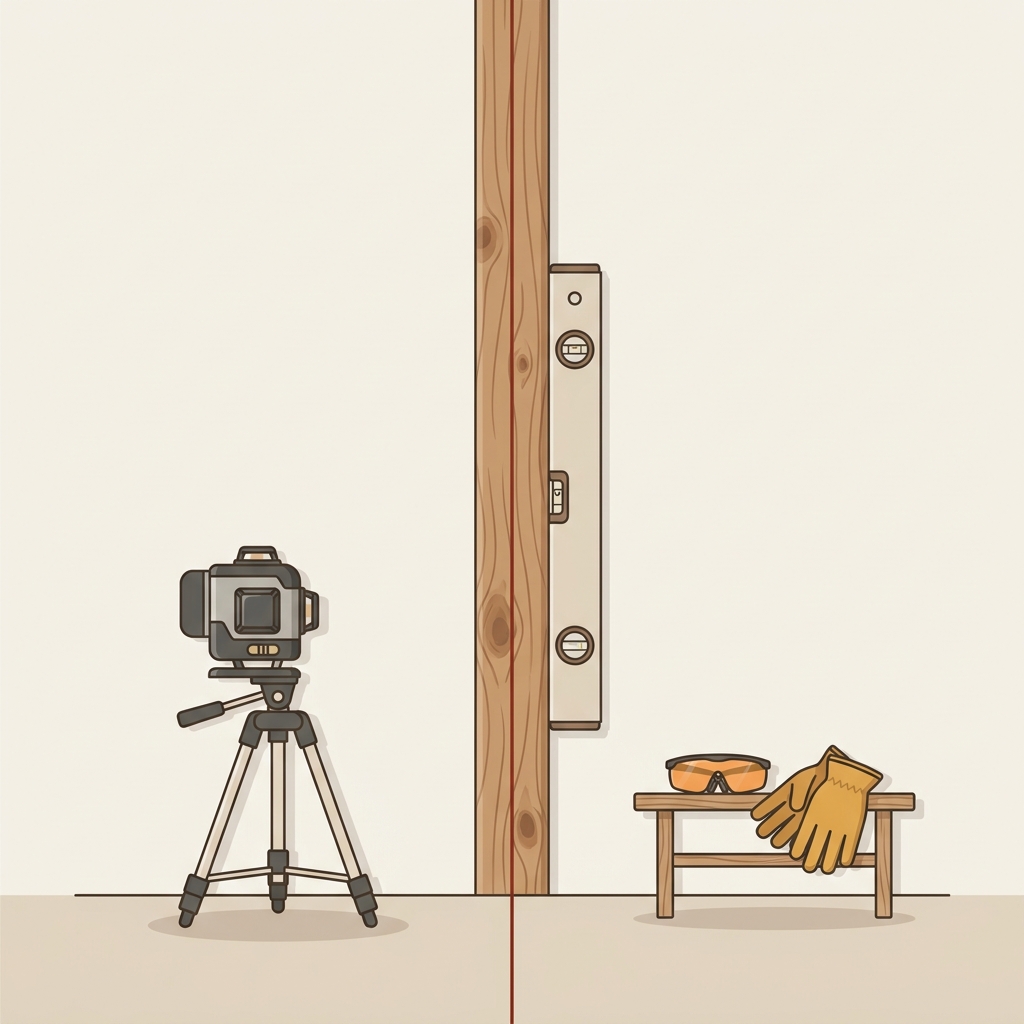
If you’re working alone or setting a tall member, a cross-line laser can project a steady vertical line to align parts. Cross-line lasers provide a vertical line that is useful for placing posts; you can then spot-check locally with the spirit level as you fasten (Pave Tool).
Verify your level reads accurately
Johnson Level’s illustrated accuracy check distinguishes horizontal end-for-end reversal from the working-edge reversal used for plumb vials. Use the directions for your level and measuring face.
Check the vertical vial separately: mark the tool’s position against a flat vertical surface, note the reading, then reverse it working-edge for working-edge on the same marks as the maker illustrates. Compare the plumb-vial readings; a horizontal-vial test on a bench does not check the vertical vial (Pave Tool). Many bubble levels are not user-calibratable and should be replaced if inaccurate; some models include an adjustment screw for calibration, in which case follow the manufacturer’s instructions and re-test after adjustment (Pave Tool, Speedy Hire).
Common mistakes to avoid
- Rocking or gaps under the level: Dirt or bumps create false readings. Clean the contact edge and surface first (Speedy Hire).
- Reading the wrong vial: Use the vertical vial for plumb checks (Speedy Hire).
- Parallax error: Don’t read from above or below; align your eyes with the vial line for accuracy (Speedy Hire).
Quick checklist for vertical (plumb) checks
Related reading from Home by Doing: Which drywall anchor is strongest? and Mount a headboard to the wall: studs, fixings and height.