
The journal
How to clean dirty window sills: practical steps that work
A simple method to clean dirty window sills: vacuum first, then use mild soap and water on most surfaces, keep wood barely damp, and dry thoroughly. Tips for stuck grime, tracks, and safe product choices.
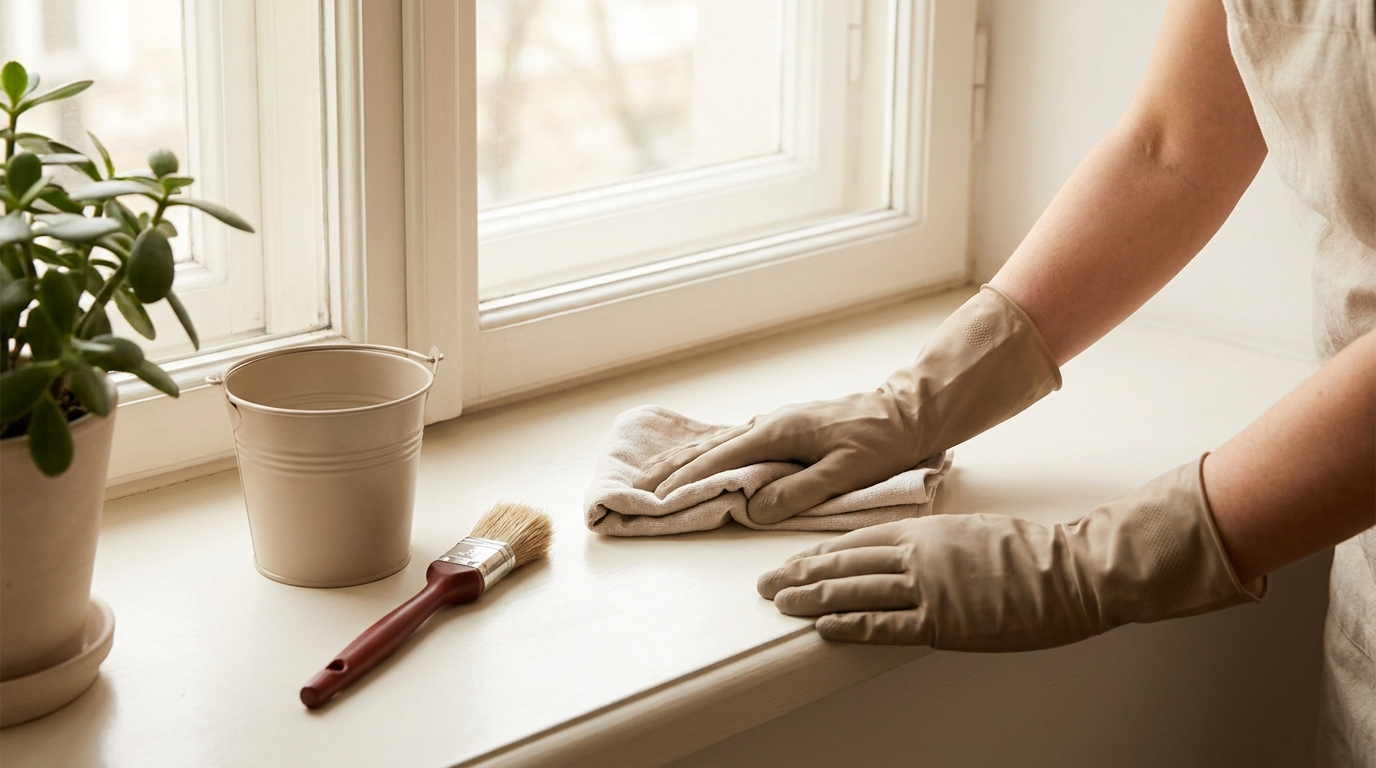
Vacuum away loose dust and grit, then wipe the sill with warm water and a little mild dish soap. Keep painted or stained wood only slightly damp and dry it immediately; for vinyl or aluminum, an all-purpose cleaner can help. Use a small brush for corners, then finish with a dry cloth. For heavy buildup in tracks, a baking soda and vinegar fizz can loosen grime before wiping clean Exovations: clean tracks and sills GlassStones: sills and tracks guide.
What you need
- Vacuum with crevice tool
- Soft microfiber cloths and paper towels
- Small brush or old toothbrush; cotton swabs for tight spots
- Bucket of warm water + a few drops of mild dish soap
- Optional for stuck grime: baking soda and white vinegar
- Optional tools: plastic scraper/putty knife; handheld steam cleaner for stubborn dirt
Notes on cleaners: dish soap and water is a safe default on most sills; avoid soaking wood and dry well. For vinyl or aluminum, a mild all-purpose cleaner is fine. Vinegar solutions help with mineral residue but avoid vinegar on natural stone surrounds; test first GlassStones: sills and tracks guide.
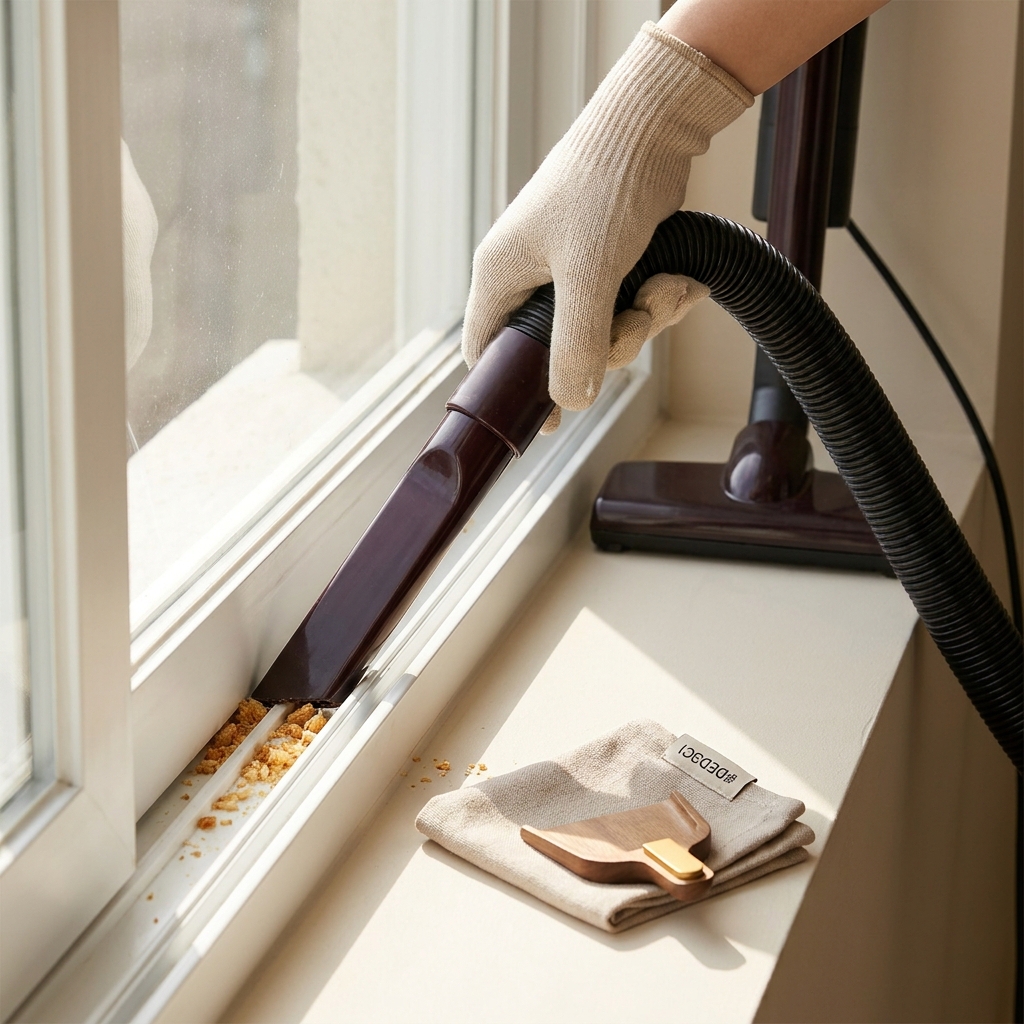
Step-by-step: routine sill cleaning
- Clear and dry-clean: remove items from the sill. Vacuum edges, corners and the window track to remove loose grit so you don’t smear mud when wet-cleaning Exovations: clean tracks and sills.
- Mix and test: add a few drops of mild dish soap to warm water. If you’re unsure about a finish, test in a hidden spot first Exovations: clean tracks and sills.
- Wipe the surface: use a damp (not dripping) microfiber cloth to lift soil. On painted or stained wood, keep moisture minimal and work gently; follow with a clean damp cloth to remove residue, then dry thoroughly Exovations: clean tracks and sills GlassStones: sills and tracks guide.
- Detail the edges: scrub corners and grooves with a small brush; use cotton swabs for tight areas and a plastic scraper to lift stuck paint drips or old grime without gouging the surface GlassStones: sills and tracks guide.
- Final dry: buff with a dry cloth so moisture doesn’t attract fresh dust, especially on wood GlassStones: sills and tracks guide.
Stuck grime and dirty tracks
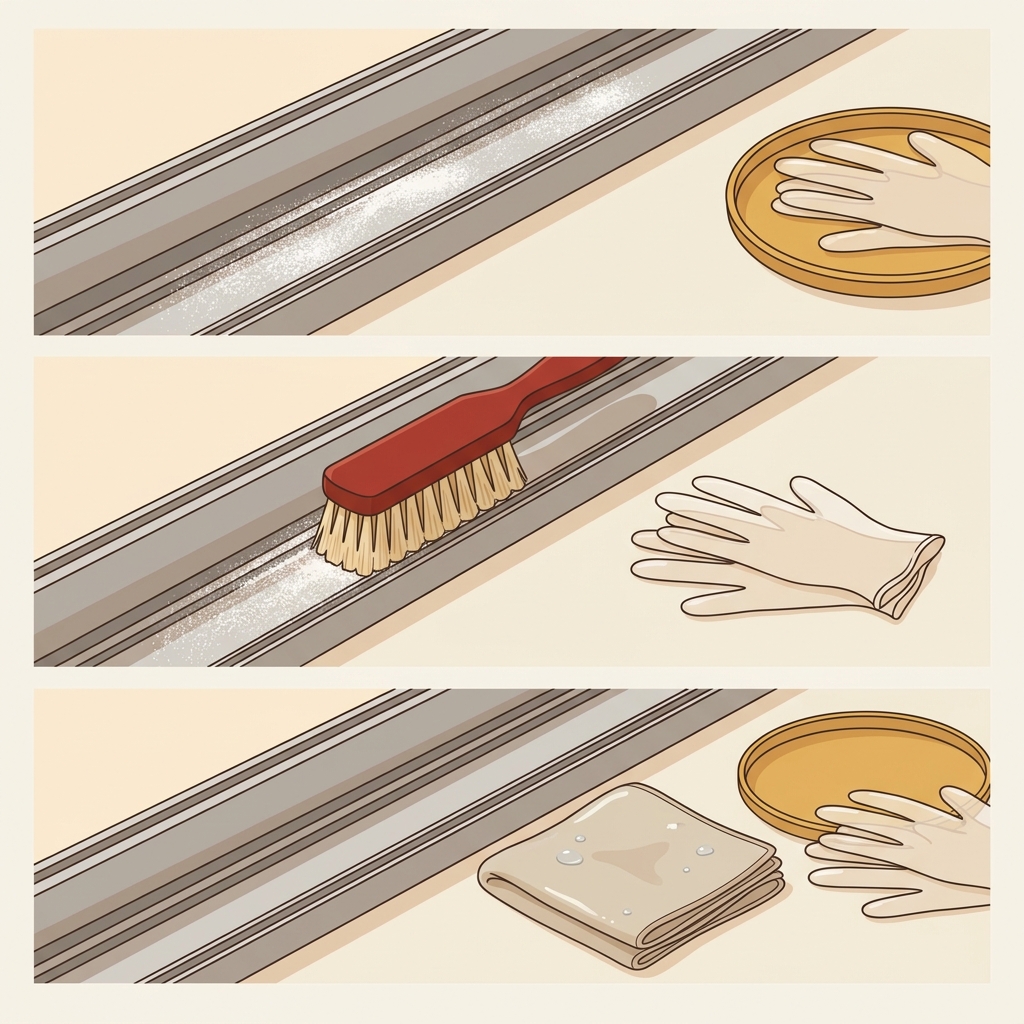
For heavy buildup in window tracks, sprinkle baking soda on the worst areas, then add a little white vinegar to create a fizz. Let it sit 5 to 10 minutes, scrub with a toothbrush, and wipe the slurry away with a damp cloth. Rinse your cloth often and dry the track well. A flat tool wrapped in a paper towel can clean along edges. As an optional finish, apply a light silicone or PTFE lubricant to the track once it’s clean and completely dry to improve sliding, if your window manufacturer allows it Exovations: clean tracks and sills GlassStones: sills and tracks guide.
When to use steam
A handheld steam cleaner can loosen stubborn dirt on sills and tracks without chemicals. Direct steam briefly at buildup, wipe away residue, and dry the area to prevent moisture from lingering Window Hero: windowsill cleaning.
Material-specific tips
- Painted wood: mild soap and water; avoid harsh chemicals that can dull paint. Wipe, then dry well Exovations: clean tracks and sills.
- Stained or natural wood: use a wood-safe cleaner or barely damp cloth. Never soak; dry immediately to reduce risk of warping or finish damage Exovations: clean tracks and sills.
- Vinyl or aluminum: mild all-purpose cleaner is fine. Wipe and dry to avoid water spots or corrosion concerns on metal Exovations: clean tracks and sills.
- Mineral deposits: use a vinegar-water wipe on compatible materials; avoid vinegar on natural stone surrounds GlassStones: sills and tracks guide.
If you spot mold
For small mold spots on non-porous sills, a diluted bleach solution can treat the area. A commonly used mix is 1/3 cup bleach per 1 gallon of water; apply carefully, scrub, rinse, and dry. If mold is extensive, returns quickly, or you see persistent moisture or leaks, pause cleaning and consult a professional Window Hero: windowsill cleaning. To reduce future moisture, see our guide on stopping condensation on windows overnight.
Common mistakes to avoid
- Skipping the dry vacuum: wetting grit first creates a stubborn slurry that’s harder to remove Exovations: clean tracks and sills.
- Over-wetting wood: can swell fibers and damage finishes; always dry promptly Exovations: clean tracks and sills GlassStones: sills and tracks guide.
- Using vinegar on natural stone: it can etch or dull the finish; avoid or test elsewhere first GlassStones: sills and tracks guide.
If cleaning reveals cracked or failing caulk around the frame, you may need to refresh the seal; start by learning whether to remove old silicone before reapplying new remove old silicone before new?.

Quick checklist: spotless, dry window sills
FAQs
How often should I clean window sills?
A light vacuum and wipe monthly is a good starting point; increase frequency if dust, pollen, or condensation build up quickly Exovations: clean tracks and sills.
Is vinegar safe for every sill?
Usually fine on vinyl, aluminum, and painted wood, but avoid natural stone surfaces because vinegar can etch or dull them GlassStones: sills and tracks guide.
Can I steam clean window sills?
Yes, for stubborn dirt. Use brief passes, then wipe and dry thoroughly to avoid lingering moisture Window Hero: windowsill cleaning.