
The journal
The safest way to clean the inside of furniture drawers
Empty the drawer, vacuum debris, wipe with a barely damp microfiber and mild dish soap solution suited to the finish, then dry and air before refilling.
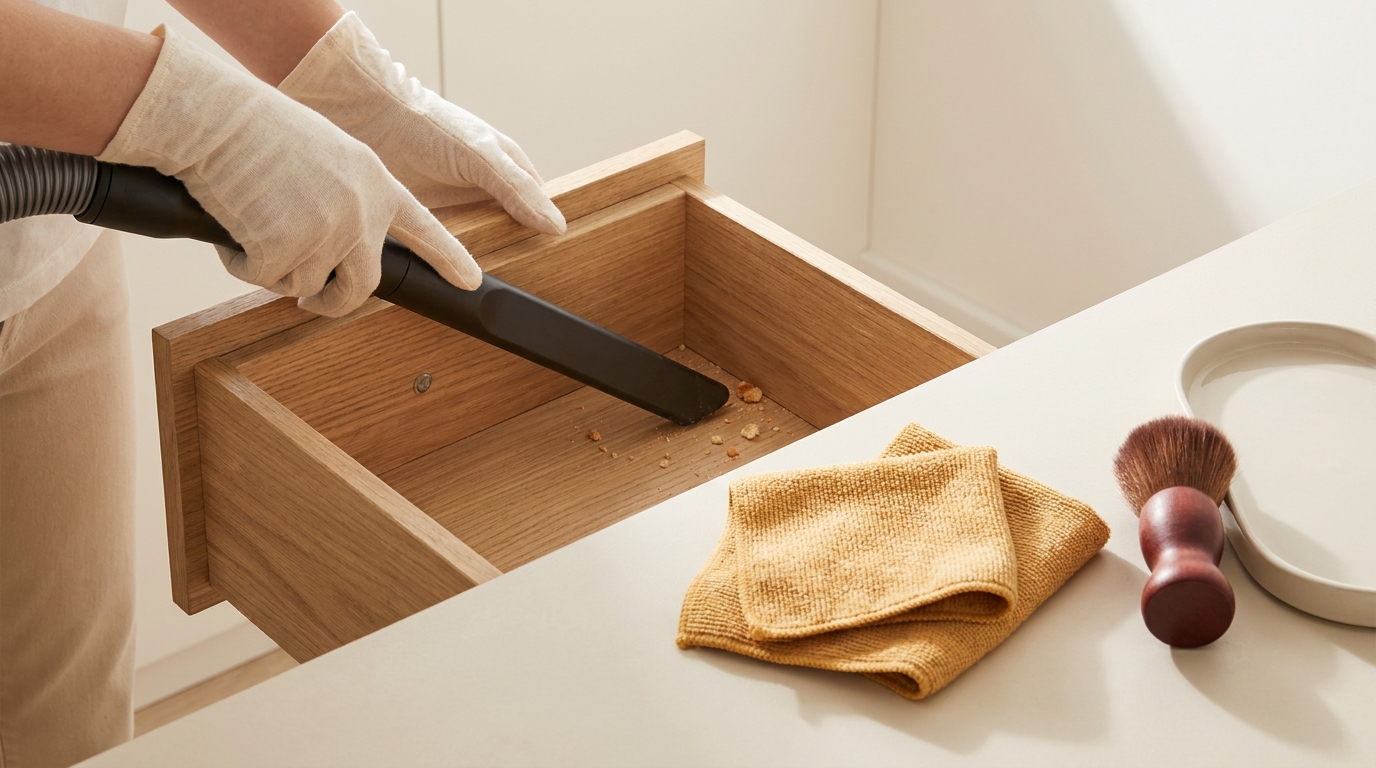
The best way to clean the inside of furniture drawers is to empty them completely, vacuum out dust and crumbs, then wipe with a barely damp microfiber cloth and a mild dish soap solution that suits the drawer’s finish. Dry immediately and leave the drawer open to air before refilling. Identify whether the interior is sealed/finished or raw wood first, and always follow any maker care label you find inside the furniture (Homes & Gardens; Compass Self Storage wood furniture guide).
Before you start: identify the finish and check labels
Cleaning method depends on the surface. A quick way to gauge if a surface is sealed: place a tiny drop of water on a hidden spot. If it beads, the surface is likely sealed; if it absorbs, the wood is raw or oil-finished and will be more sensitive to moisture. Use minimal water on any wood, and be especially cautious with unfinished interiors. Always test in an inconspicuous area first (Compass Self Storage wood furniture guide).
Tools and simple prep
- Vacuum with a crevice or narrow nozzle to reach corners and runners (Homes & Gardens).
- Microfiber cloths for lint-free wiping (Homes & Gardens).
- Mild dish soap and warm water for a gentle cleaning solution; wring cloth nearly dry (Homes & Gardens; Compass Self Storage wood furniture guide).
- Soft plastic scraper or soft sponge for sticky spots (use lightly).
- Dry towels for immediate drying.
Avoid harsh chemicals like bleach or ammonia and do not soak wood. Keep liquids off joints and bare edges as far as possible (Compass Self Storage wood furniture guide).
Step-by-step: a safe clean that works
1) Empty and inspect
Remove everything, including liners. Sort items so only clean, dry items go back. Check for labels or care instructions and note any damage.
2) Vacuum first
Use a crevice tool to remove dust, crumbs and lint from corners, joints and runners. Dry removal prevents smearing debris during wet wiping (Homes & Gardens).
3) Wipe with a barely damp cloth
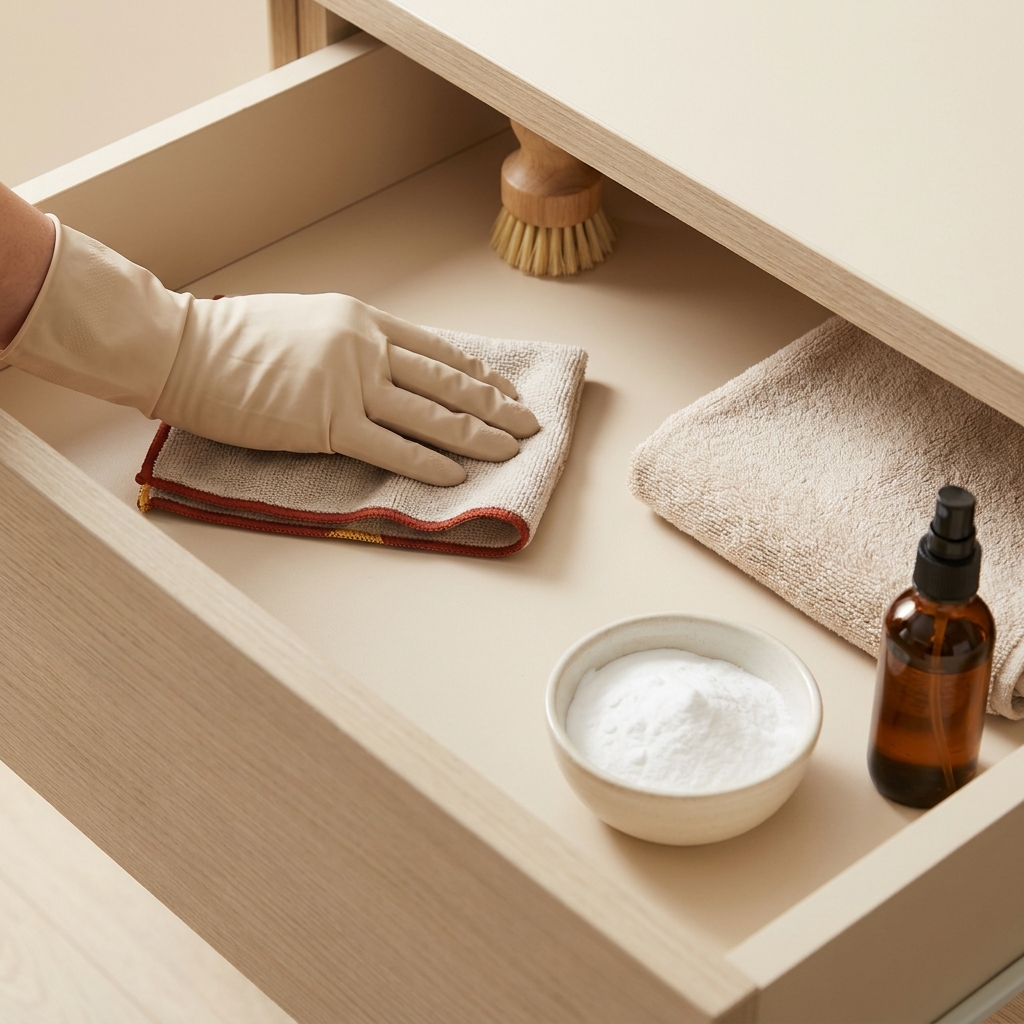
Mix a few drops of mild dish soap into warm water. Dip and wring a microfiber cloth until barely damp. Wipe the base and sides with light, even strokes; follow the wood grain where present. Re-wring often so you never leave standing moisture (Homes & Gardens; Compass Self Storage wood furniture guide).
4) Treat sticky spots gently
Soften residue with your damp cloth and lift with a soft plastic scraper or sponge. Avoid abrasive pads. If needed, make a slightly soapy solution, test on a hidden area, and dab rather than scrub hard (Compass Self Storage wood furniture guide).
5) Rinse cloth, dry, and air
Lightly go over surfaces with a clean, slightly damp cloth to remove any soap residue, then towel-dry immediately. Leave the drawer open to air until fully dry before refilling (Homes & Gardens).
Optional: deodorize
For musty smells, sprinkle a light layer of baking soda across the interior, let it sit for a while, then vacuum or wipe it out and air the drawer thoroughly (Homes & Gardens).
Fixing common issues: residue, odors, and liners
- Sticky residue: Use a barely damp soapy microfiber and gentle lifting with a soft scraper. Repeat light passes instead of aggressive scrubbing to protect finishes (Compass Self Storage wood furniture guide).
- Musty odors: After cleaning, apply baking soda as above and allow extended airing before refilling (Homes & Gardens).
- Damaged or wet liners: Replace torn or saturated liners; liners can trap moisture and odor if not dried properly.
Routine care and when to stop
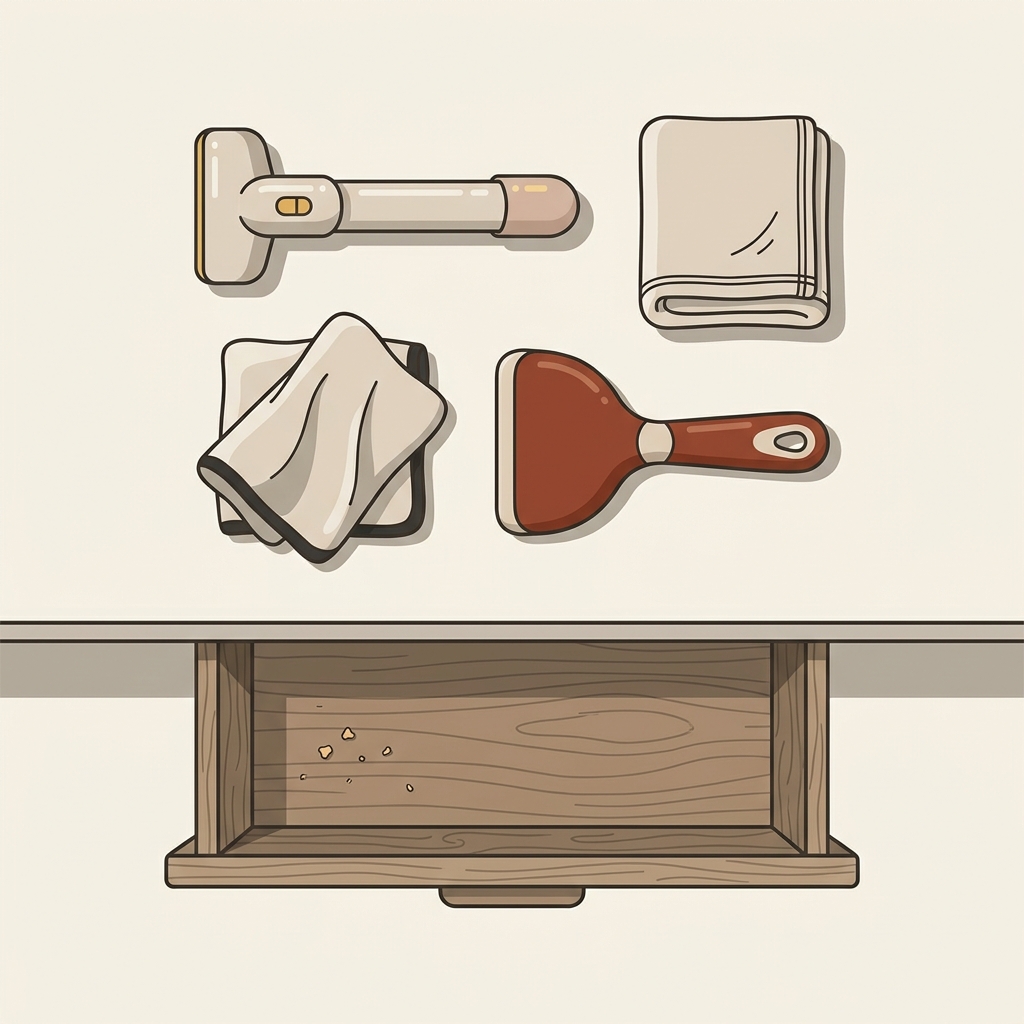
Light maintenance goes a long way: a quick vacuum of corners and an occasional barely damp wipe prevents grime and odors from building up (Homes & Gardens). If wood seems swollen, joints loosen, or drawers start sticking due to humidity, reduce moisture exposure and let the piece dry in a stable environment. Wood expands in humidity and contracts in dry conditions, which can stress joints and make drawers harder to open (Compass Self Storage wood furniture guide).
Before you refill the drawer: quick checks
Related reading on Home by Doing
- Stop furniture from scratching floors: protectors and safe moves
- Can you use wood glue to fix a stripped screw hole?

FAQ
Can I use vinegar inside drawers?
A mild, diluted vinegar solution can lift oily residue on many sealed finishes, but it is not essential. If you try it, keep the cloth barely damp, test first, and dry immediately. Avoid strong chemicals and never soak wood (Compass Self Storage wood furniture guide).
How often should I clean drawer interiors?
A quick clean every few months helps, and more often for high-use drawers or when you notice dust or odors (Homes & Gardens).