
The journal
Why cupboard door knobs keep coming loose
Find out whether a cupboard knob has a loose mounting screw, poor clamping, damaged threads or a worn fixing, then choose the repair for that fastener.
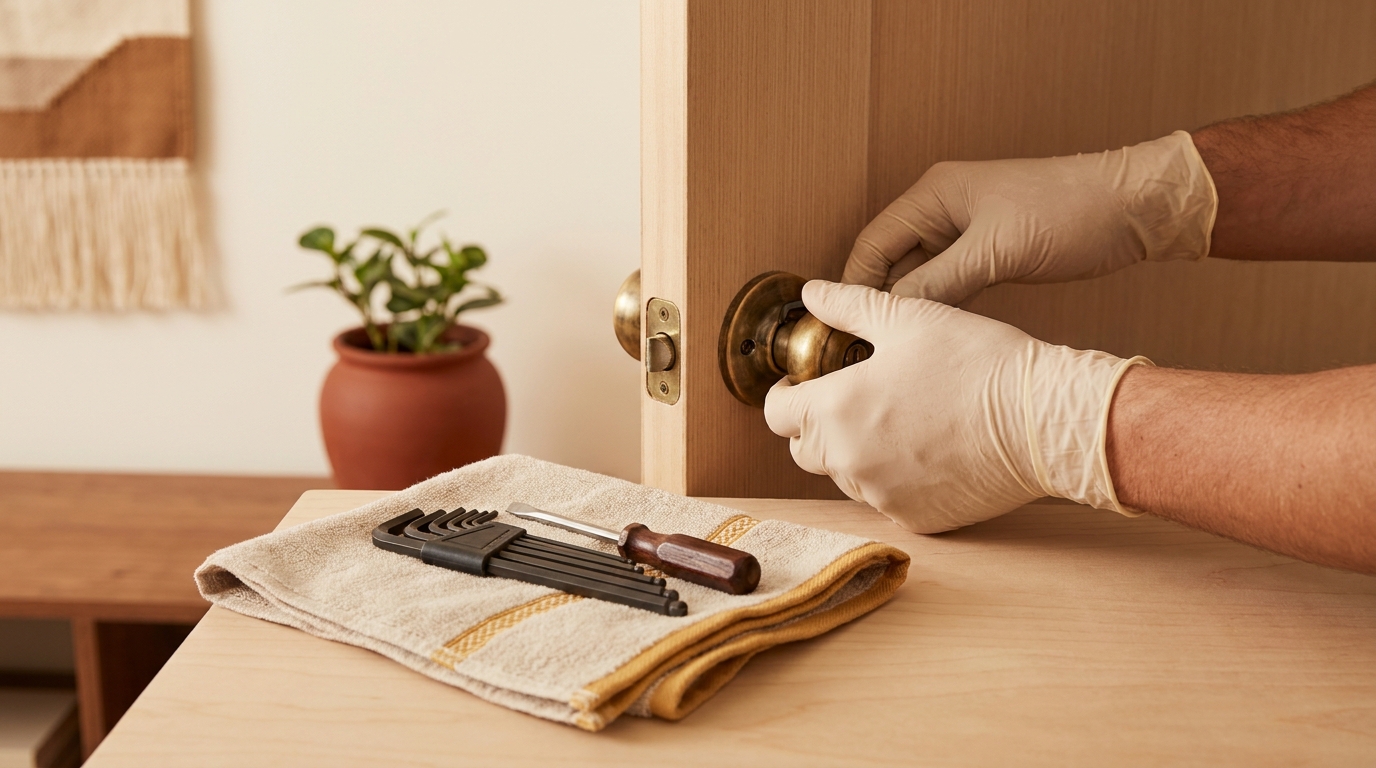
On cupboard doors and drawers, repeated knob movement can come from a mounting screw backing out, an incorrect screw length, damaged threads, or a panel that no longer clamps properly. Find the moving joint before adding adhesive or filler. A machine screw passing through the cupboard front is different from a wood screw threaded into it.
Identify what is moving
Hold the knob while gently checking the inside mounting screw. Is the screw turning with it, is the knob moving around the hole, or is a separate part of the handle loose? On some designs there is also a small set screw. The LuxHandles guide explains the distinction between through-mounted machine screws and edge-fixed wood screws.
If a screw is meant to pass through the board, that hole is clearance, not the threaded joint. Packing it with toothpicks does not repair stripped threads inside a knob. Conversely, a wood screw needs a sound pilot hole in suitable material. Do not apply the same fix to both.
Check clamping before choosing a repair
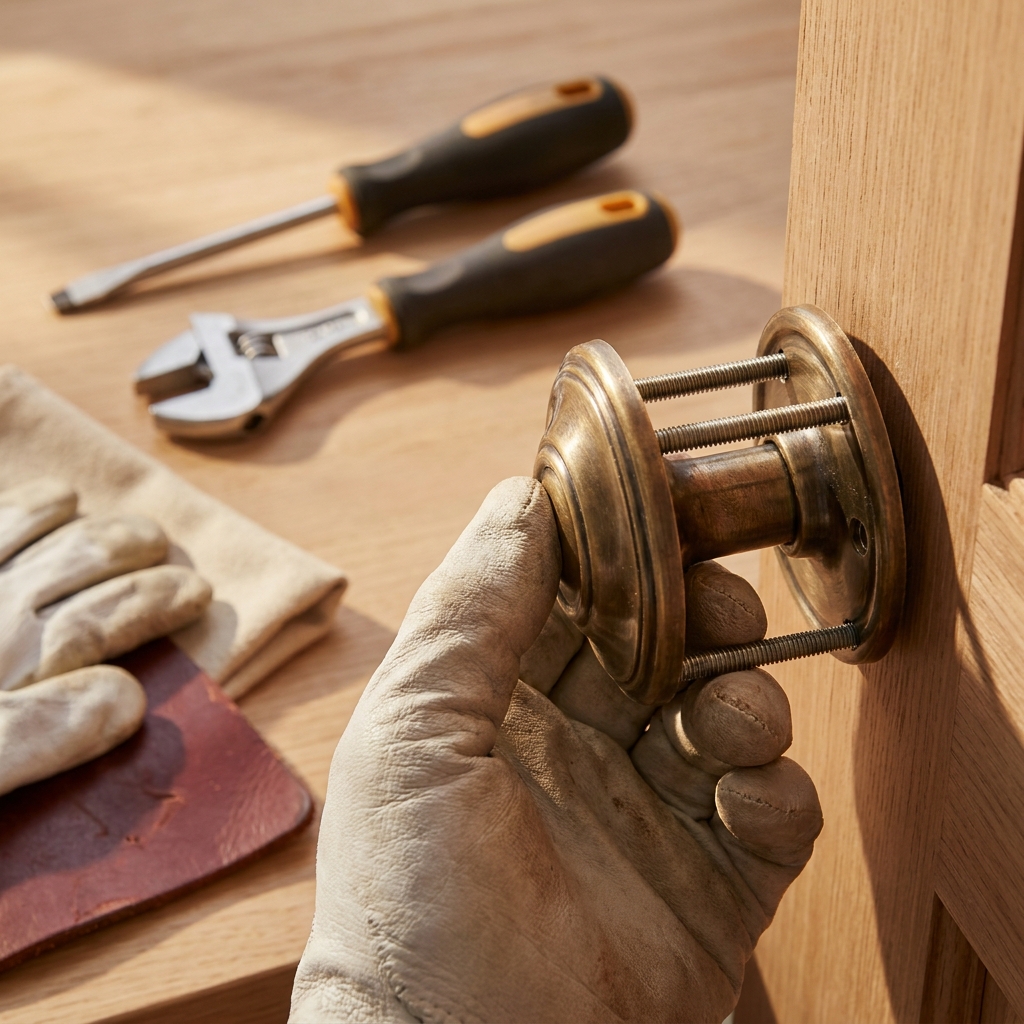
- Support the knob from the front and hand-tighten the correct inside screw without twisting the knob against the finish.
- If it still moves, remove the screw and check its thread and length against the hardware maker’s directions.
- A screw that bottoms out in the handle can feel tight while the handle remains loose. A short screw may barely engage. Use the specified length for the complete panel thickness.
- Inspect the knob’s threaded insert, screw and panel. Replace damaged hardware or seek a suitable panel repair if the face is crushed or the hole is badly enlarged.
Hapny Home’s fitting guide describes holding hardware aligned and tightening from inside with a hand screwdriver. Extra force is not a substitute for the right fixing.
Use threadlocker only where compatible
For a sound metal-threaded joint that repeatedly backs out, the hardware maker may permit a removable threadlocker. Loctite’s door-knob guide describes its removable Blue 242 product. That is not a universal instruction for every cupboard knob: confirm material compatibility, the specified grade and amount, and the product’s cure instructions first.
Keep adhesive off finishes and do not use threadlocker as wood filler or to rebuild a damaged insert. A permanent glue can prevent later removal without solving the underlying clamping problem. If the maker does not approve a product, use its recommended fastener or replacement part instead.
Keep the fix specific to the hardware
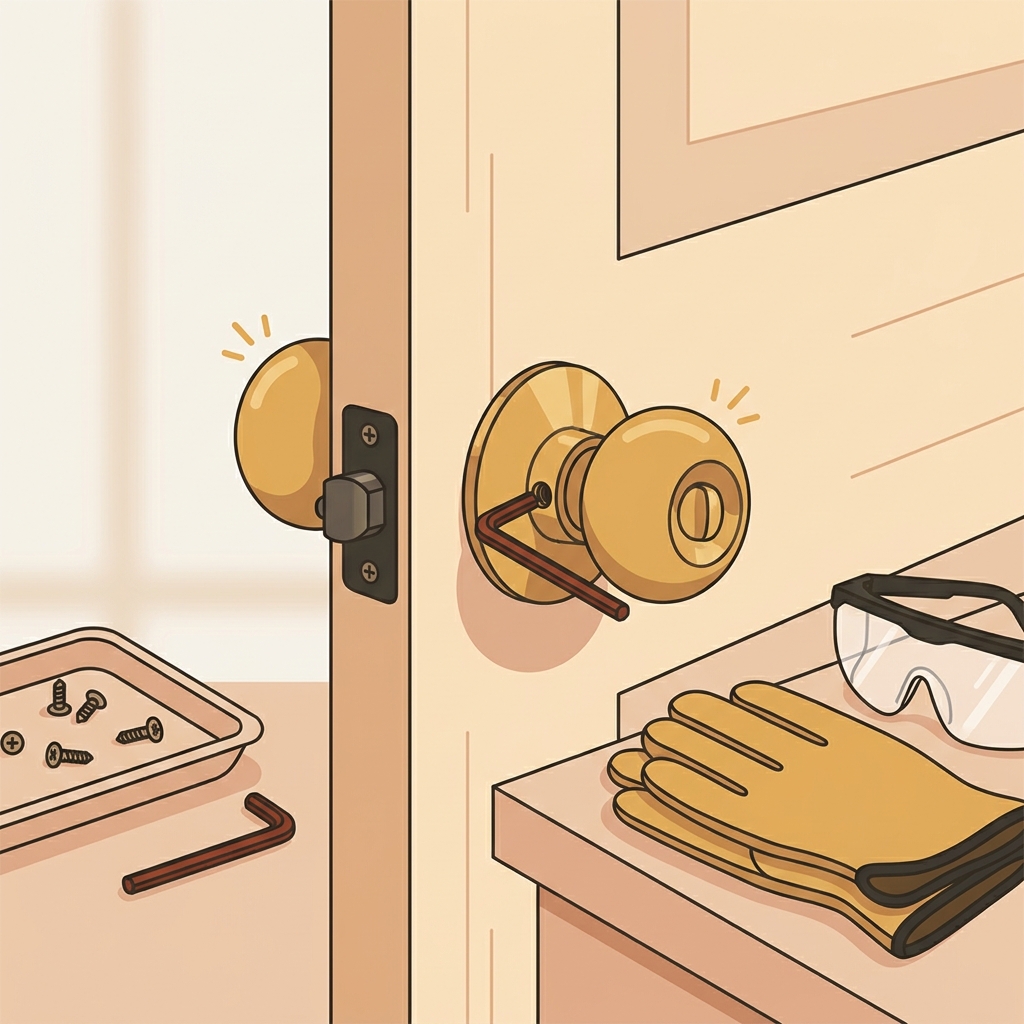
For a true wood-screw fixing, repair and re-pilot only with a method suitable for the panel and loading. For a machine-screw fixing, restore correct clamping and replace damaged mating threads. Do not drill a larger hole or add a washer at random to conceal a fault. A thin, damaged or split cupboard front may need a more substantial repair.
After reassembly, gently check for movement and operate the door normally. Recheck if play returns. A clear record of the handle model, screw specification and the moving joint makes manufacturer support more useful than repeatedly tightening the same part harder.
Find the cause of a recurring loose knob
For a different finish or damaged handle, see how to replace kitchen cupboard handles. For a sound pull that sits crooked, use our alignment guide.

Sources and further reading
- How to Install Cabinet Handles
- Cabinet Door Handles: Easy Fix for Loose Screws American Express Apple Pay Diners Club Discover Google Pay Maestro Mastercard PayPal Shop Pay Union Pay Visa
- How to Install Cabinet Knobs, Cabinet Handles & Pulls American Express Apple Pay Mastercard PayPal Shop Pay Union Pay Visa
- How to fix a door knob: A secret weapon that will lock it in place!