
The journal
How to align cabinet handles (and tighten them so they stay straight)
A practical way to re-align and tighten loose cabinet handles so they sit level and stay put, plus what to fix when they won’t stay straight.
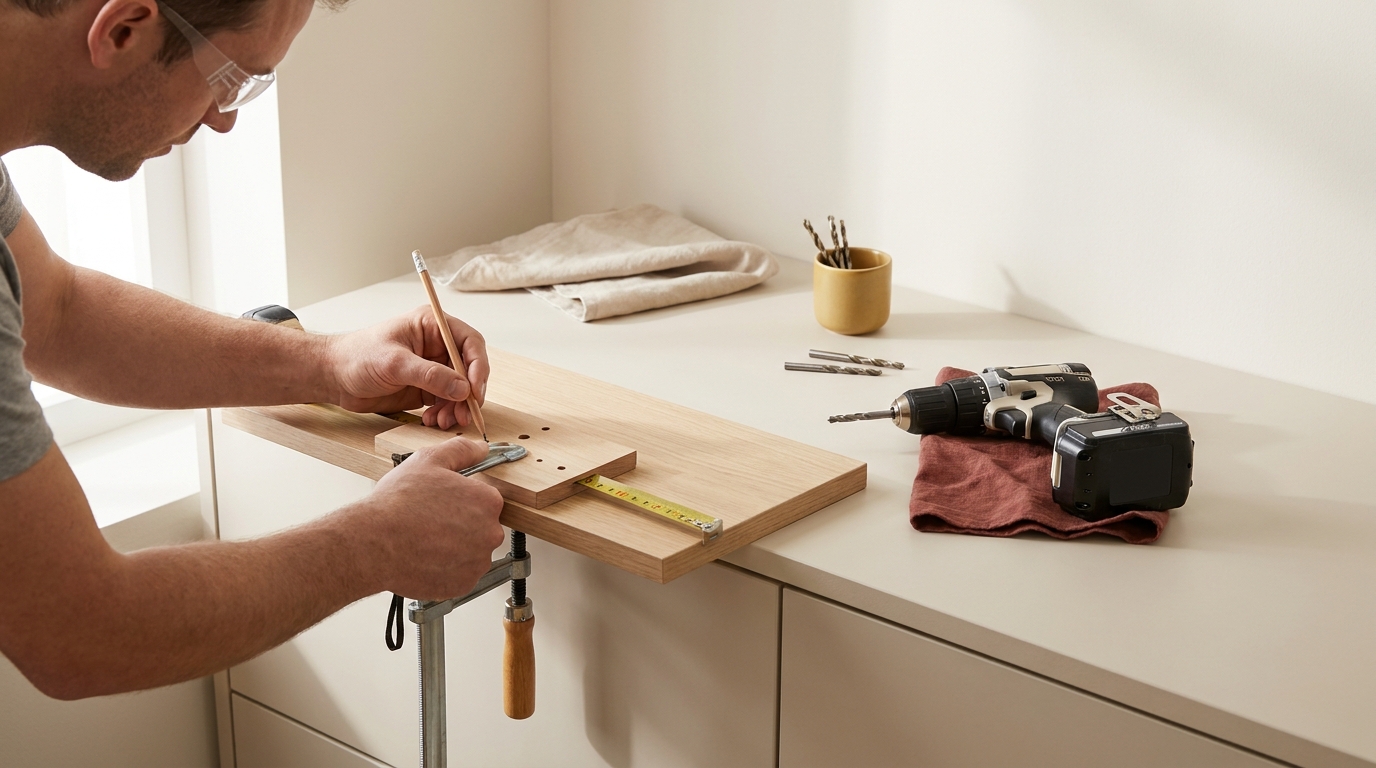
Short answer: Loosen each handle slightly, square it to a consistent reference line, then tighten the screws evenly until snug (not forced). If the handle still skews, fix the cause first: confirm you have the right screw type and length, repair any worn holes, and only then re-tighten. A simple template or level helps keep a whole run visually aligned across drawers and doors (KraftMaid placement guide; Doors For Pros alignment tips).
What you’ll need
- Screwdriver that fits your handle screws
- Small level or a straightedge/template
- Painter’s or masking tape and a pencil
- Ruler or combination square
- Optional for fixes: drill, bits matched to your screws, wood filler or a backplate (LuxHandles on screw types, over‑tightening and repairs)
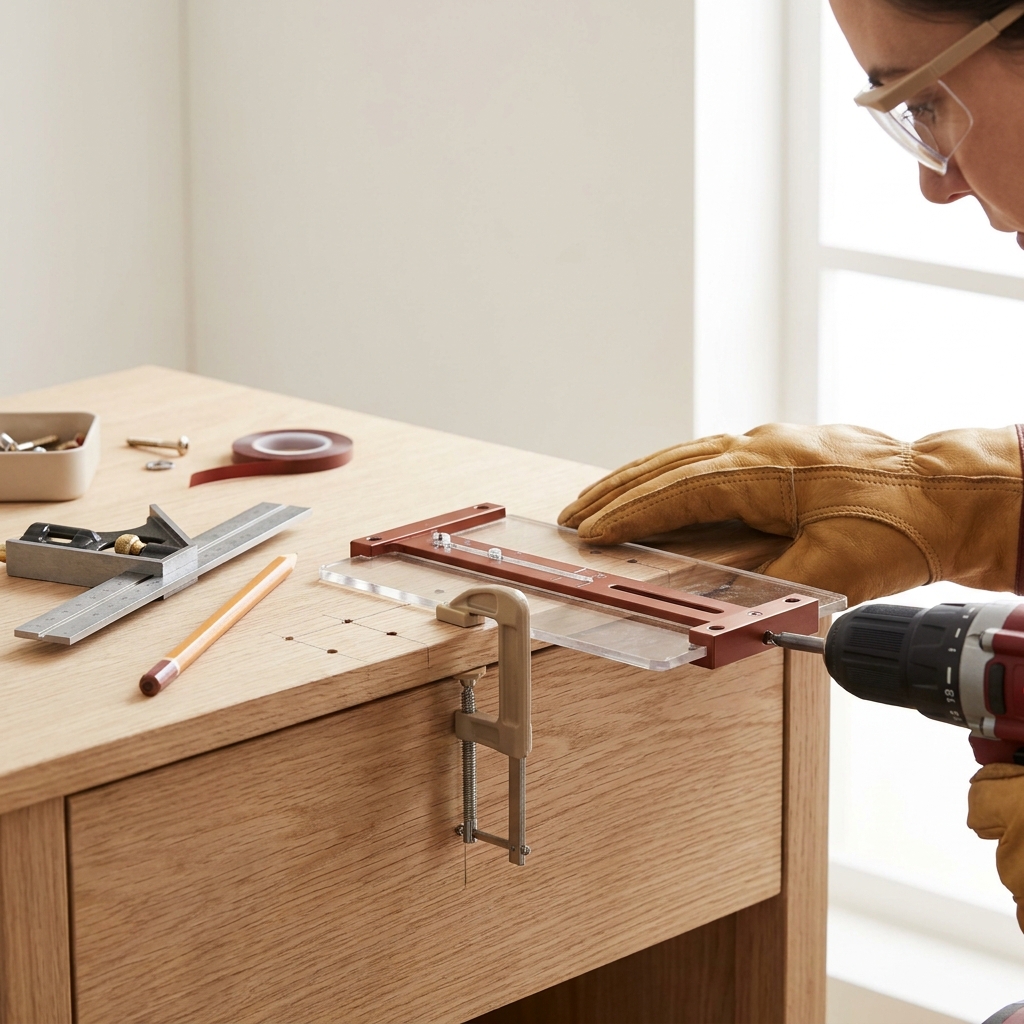
Quick alignment for existing (loose) hardware
- Pick a reference line. For doors, use the stile center or a steady offset from the rail; for drawers, use the horizontal centerline or a consistent distance from the top rail so every piece reads the same (KraftMaid placement guide).
- Loosen both screws just enough to move the handle. Nudge it until the bar or knob base is square to your line or level.
- Tighten evenly and stop at snug. Alternate between the two screws on a pull so the handle stays square. Over‑tightening can crush the board or split a thin front; aim for “snug, not forced” (LuxHandles).
- Step back and sight across the run. Adjust before final torque if a small skew shows (Doors For Pros).
If it won’t stay straight, fix the cause
1) Confirm screw type and hole sizing
- Most face‑mounted cabinet knobs and pulls use machine screws through a clearance hole in the front. The hole should be slightly wider than the screw so it passes through cleanly and threads into the hardware on the front (LuxHandles).
- Edge‑fixed pulls use wood screws that bite the cabinet. Those pilots must be narrower than the screw’s thread to hold properly (LuxHandles).
2) Check screw length
If a machine screw is too short, it barely grabs and loosens; too long, it can bottom out before clamping. Screw diameter, thread type and length are hardware-specific. Measure the complete panel thickness and use the handle maker’s specified engagement; do not treat one supplier’s M4 screw size as universal. Match screw length to your door thickness so the handle clamps firmly without forcing (LuxHandles).
3) Repair worn or mis-drilled holes
- Minor misplacement or chipping: add a backplate to cover and re-clamp the handle square (LuxHandles).
- Stripped wood screw holes: repair the substrate and re‑pilot, then re‑tighten. See our practical fix steps: Can you use wood glue to fix a stripped screw hole?
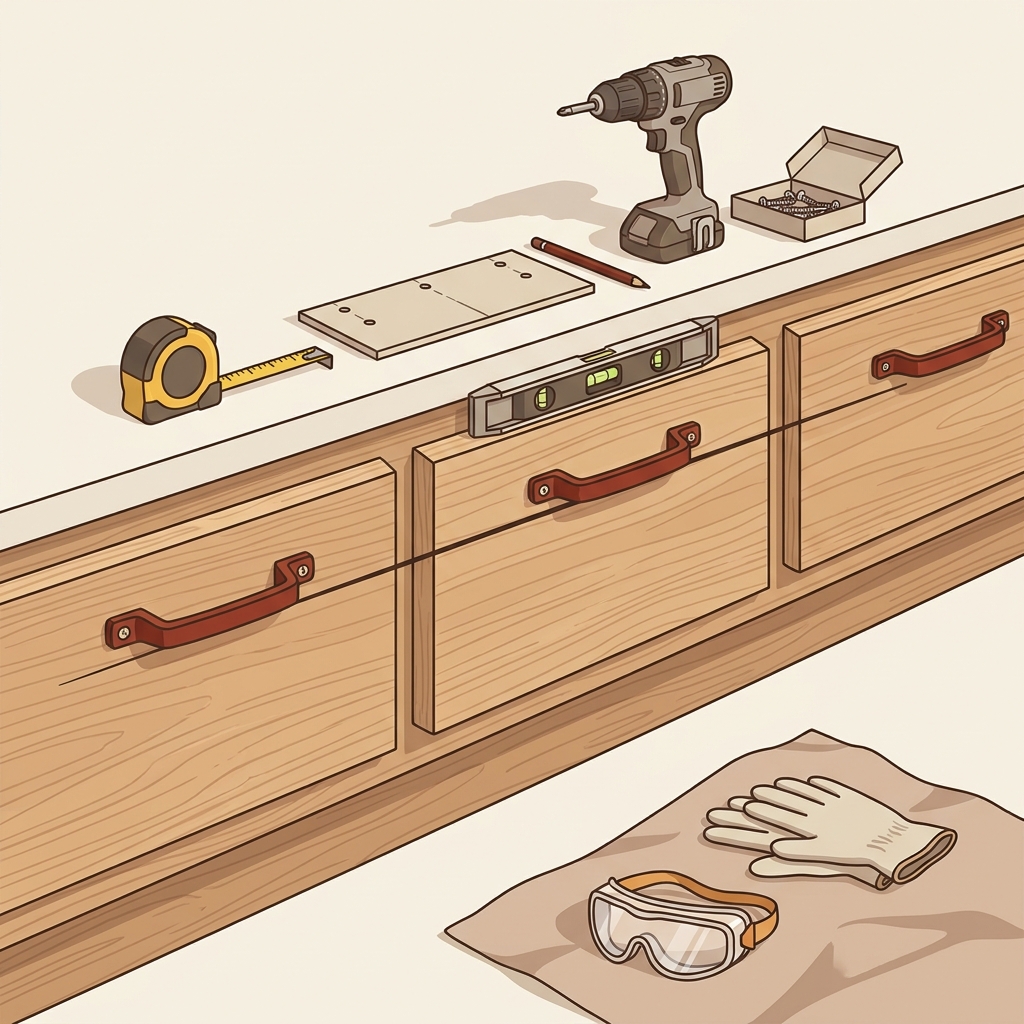
Re-drilling to realign (when needed)
- Mark consistently. Use your chosen reference line so all pieces match. For framed doors, many installers hit the stile center and rail edge; for drawers, center left‑to‑right and either center vertically or set a consistent distance down from the top rail (KraftMaid).
- Tape the surface and drill cleanly. Mark carefully, use a suitable bit and clamp a backing block where the bit exits to reduce breakout; tape alone is not a substitute for backing. Drill a test hole in scrap first (LuxHandles).
- Keep the drill perpendicular. A small drill guide, a square, or a steady hand helps you avoid angled holes that twist a pull out of level (Doors For Pros).
- Match the bit to the screw. For machine screws (e.g., M4), use a clearance hole that lets the screw pass through freely; for wood screws, pilots must be narrower than the thread (LuxHandles).
Keep a whole run straight
- Use a simple cardboard or commercial template to transfer hole positions across identical drawers and doors. It saves time and keeps sight lines true (Doors For Pros).
- On mixed sizes, hold a consistent visual convention rather than chasing exact measurements per piece. Consistency of the rule reads “aligned” to the eye (KraftMaid).
Tighten-and-align checklist for cabinet handles
FAQs
Why do my cabinet handles keep loosening?
Common causes are over‑tightening that crushes the board, screws that are too short to clamp, or worn pilot holes that no longer hold. Match screw length to the front thickness and repair worn holes before re‑tightening (LuxHandles).
What’s the simplest way to keep a bank of drawers aligned?
Make one accurate template and reuse it, then tighten each pull evenly and check with a level or straightedge across the faces (Doors For Pros).
Related reading: Can you use wood glue to fix a stripped screw hole? • Tighten a loose lever door handle: a quick practical fix