
The journal
Is inset or overlay cabinet better?
A clear answer in the context of hinge overlay: what inset, full overlay and partial overlay mean, how they affect look, fit, storage and cost, plus a quick checklist to choose with confidence.

Neither inset nor overlay is universally better. In a common face-frame cabinet, inset fronts fit within the opening while overlay fronts cover part or most of the frame. The choice changes the appearance, hinge arrangement and fitting tolerances. It does not by itself establish quality, storage capacity or the clear opening available for a pull-out. Compare the actual cabinet construction, hardware and quote.
First, what “overlay” means for cabinet hinges
The examples below concern common face-frame door layouts. Frameless and specialist inset systems also exist, so use the maker’s construction drawings and hinge specifications rather than selecting hardware from a style name alone.
Hinge overlay describes how far a door overlays the face frame or cabinet edge when closed. That’s the core difference between the common door types:
Inset, full overlay and partial overlay
- Inset: the door and drawer fronts fit inside the face frame opening and finish flush with the frame, leaving a consistent reveal around each front (Atelier Design Society).
- Full overlay: the fronts sit over the frame and cover most of it, creating a more continuous exterior surface (Atelier Design Society).
- Partial overlay: the fronts cover part of the frame, leaving more frame visible between doors and drawers (Bucks County Cabinetry).
Because inset sits inside the frame while overlay sits over it, the hinge system and adjustment approach differ. Asking your maker which hinge type is used and what reveal they hold is part of a good order review (Craft Kitchen & Bath).

Is inset or overlay better for you? Decide by what changes in use, look and build
Look and lines
- Inset highlights the face frame and creates tailored, furniture-like lines. It often reads classic or transitional but can be restrained and contemporary with simple profiles (Atelier Design Society).
- Full overlay minimizes visible framing for a cleaner, more continuous surface. Partial overlay keeps more frame visible for a familiar, traditional pattern (Atelier Design Society; Wineteer Construction).
Cost and tolerances
- Inset typically costs more because every door and drawer front must be precisely sized and installed with even reveals; small errors show because the frame remains exposed (Atelier Design Society; Craft Kitchen & Bath; Wineteer Construction).
- Overlay is usually more budget-friendly and visually more forgiving because it covers most or part of the frame (Atelier Design Society; Wineteer Construction).
Usable opening and access
- Check the clear opening with the door fully open and the actual hinges fitted, particularly for narrow cabinets and pull-outs (Bucks County Cabinetry; Wineteer Construction).
- Box construction, face-frame width, hinge projection, opening angle and the selected organiser determine access. Overlay alone does not guarantee a larger opening or more storage (Wineteer Construction).
A concrete example: a tight base-cabinet run
If a 12-inch base cabinet needs a baking-sheet pull-out, that pull-out depends on the clear opening. Check the organiser’s required clear width, height, depth and door-opening clearance against each actual cabinet model. Nominal cabinet width and the door style are not enough to establish a fit. In a showroom, open both examples and confirm the measurements before ordering (Atelier Design Society; Wineteer Construction).
Common pitfalls to avoid
Spec the overlay and hinges together
Overlay choice drives hinge selection and adjustment range. Before you sign, confirm: inset, full overlay or partial overlay; reveal size; hinge type; and how the installer handles uneven walls and floors. These checks help identify compatibility and fitting questions before installation (Craft Kitchen & Bath).
Plan for seasonal wood movement with inset
Wood expands and contracts with humidity. Tight inset reveals may need occasional hinge tuning over time, and painted edges can show wear first. That isn’t a reason to avoid inset; it’s a reason to choose suitable materials and maintain reasonable indoor humidity (Craft Kitchen & Bath).
When you’re ready to fit handles accurately after install, see our practical guide on how to align cabinet handles, or learn the basics of replacing cupboard handles before drilling new holes.
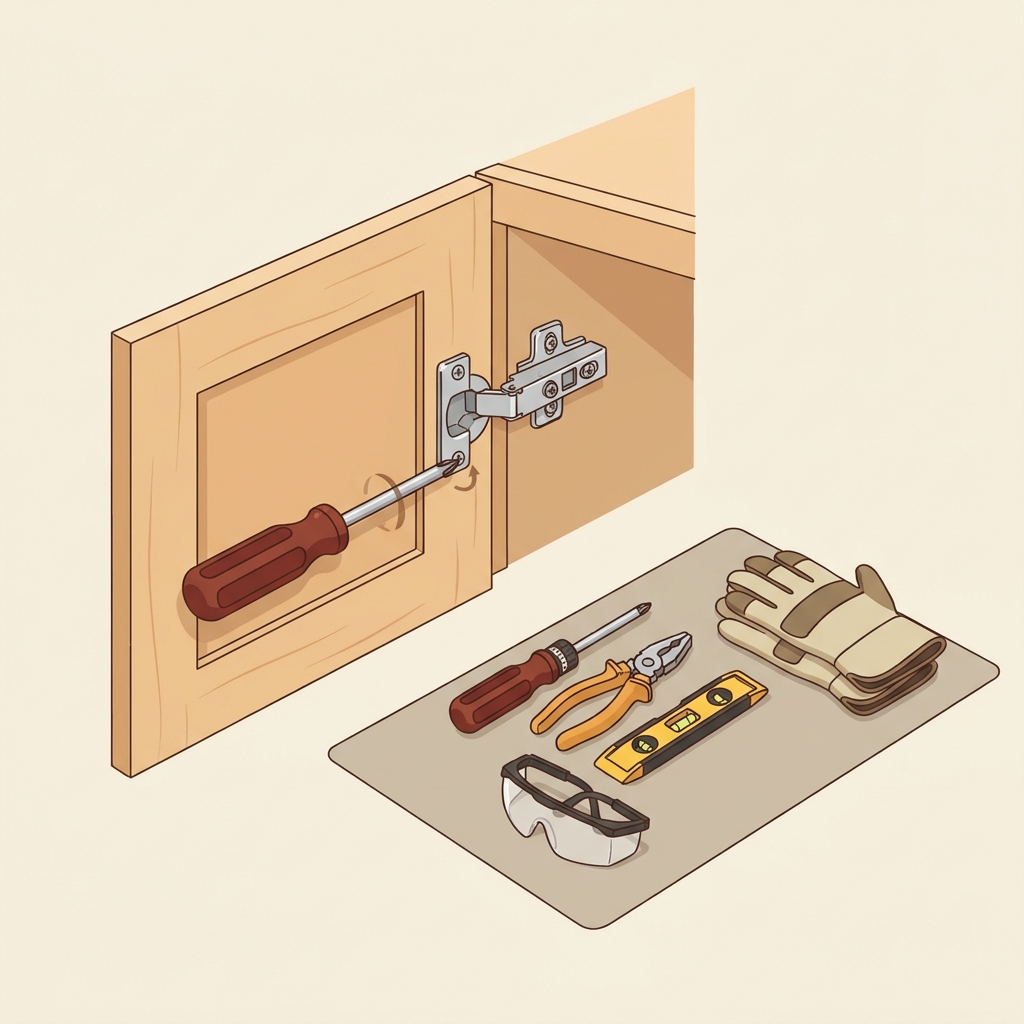
Showroom checklist: decide inset vs overlay with hinge overlay in mind
Quick FAQs
Does overlay always give more storage?
No. Door style alone does not establish storage capacity or access. Compare the actual box, frame, hinges and organiser requirements, and measure a representative cabinet with its door open (Wineteer Construction).
Is overlay lower quality than inset?
No. Both can be premium. Inset often costs more because it requires tighter tolerances, not because overlay is low quality. Craftsmanship and materials drive longevity either way (Atelier Design Society).
If you’re undecided after comparing samples, ask your cabinet maker to show doors side by side with the planned hinge and reveal. Verifying these details makes the order and installation requirements clearer.

Related guides
Sources and further reading
- Atelier Design Society — Full Overlay vs. Inset Cabinets: What’s the Difference?
- Wineteer Construction — Inset vs Overlay Cabinets: Key Differences, Pros & Cons
- Bucks County Cabinetry — What Are Cabinetry Overlays? Inset vs. Overlay vs. Frameless
- Craft Kitchen & Bath — Inset Overlay Cabinets: What Fits Your Kitchen?