
The journal
How to remove a rounded‑off screw
Practical, safe ways to remove a stripped screw head : start with friction and pliers, then use a slot, an extractor, or drill the head off as a last resort.
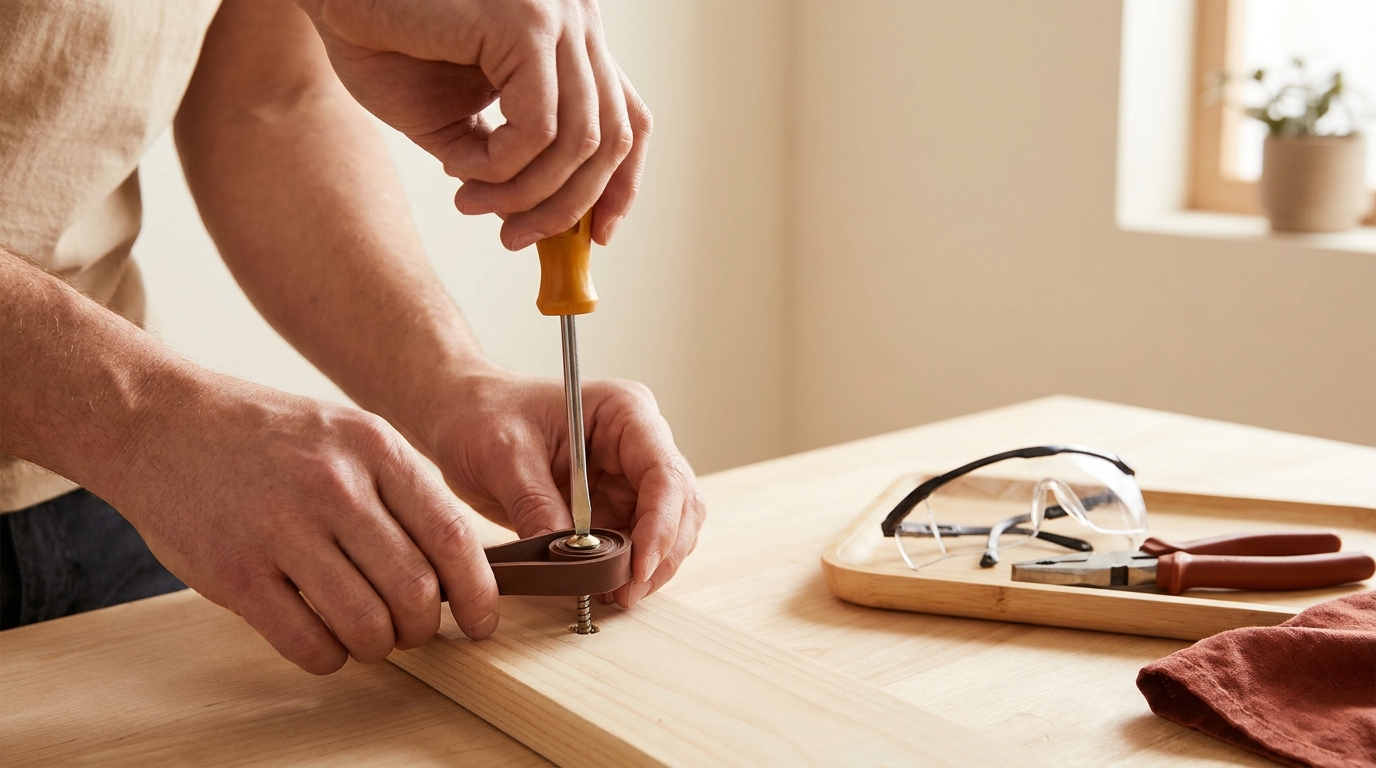
Try a correctly fitting manual screwdriver first, with a wide rubber band for extra grip on a lightly damaged recess. If the head protrudes, screw-removal or locking pliers may grip its outside. For a recessed or badly damaged head, an appropriate extractor may help, but its instructions and the surrounding material determine the method. Stop if you cannot work without damaging the fitting or risking a hidden service.
Before using a cutting or drilling tool
Secure the work and wear the protection specified by the tool maker, including suitable eye protection. Check what is behind the screw and do not drill near live electrical circuits. Isolate equipment appropriately before repair. Some extractors must be turned by hand: IRWIN’s safety guidance explicitly limits its screw extractors to hand application. Do not assume every extractor belongs in a power drill.
What to try first
Boost friction on lightly rounded heads. Lay a wide rubber band or strong tape over the recess, seat the correct bit fully, press down hard, and turn slowly by hand. The rubber fills the chewed edges so the bit can bite AHS: rubber band or tape.
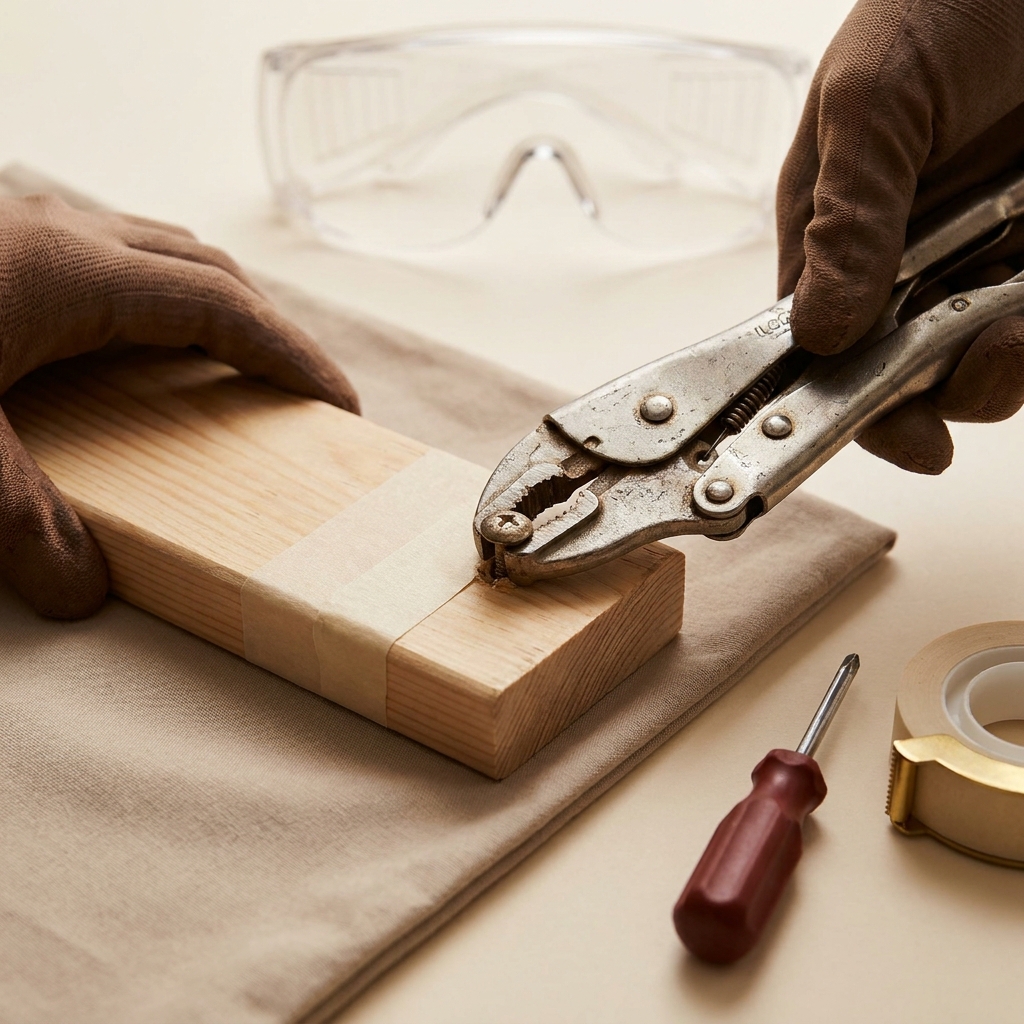
If the screw head protrudes, skip the recess entirely: clamp the rim of the head with locking pliers (vise-grips) and turn counterclockwise, easing up as it loosens to avoid marring the surface AHS: plier method.
Quick checks before you escalate
If the recess is too damaged: choose the next method carefully
Cut a shallow slot
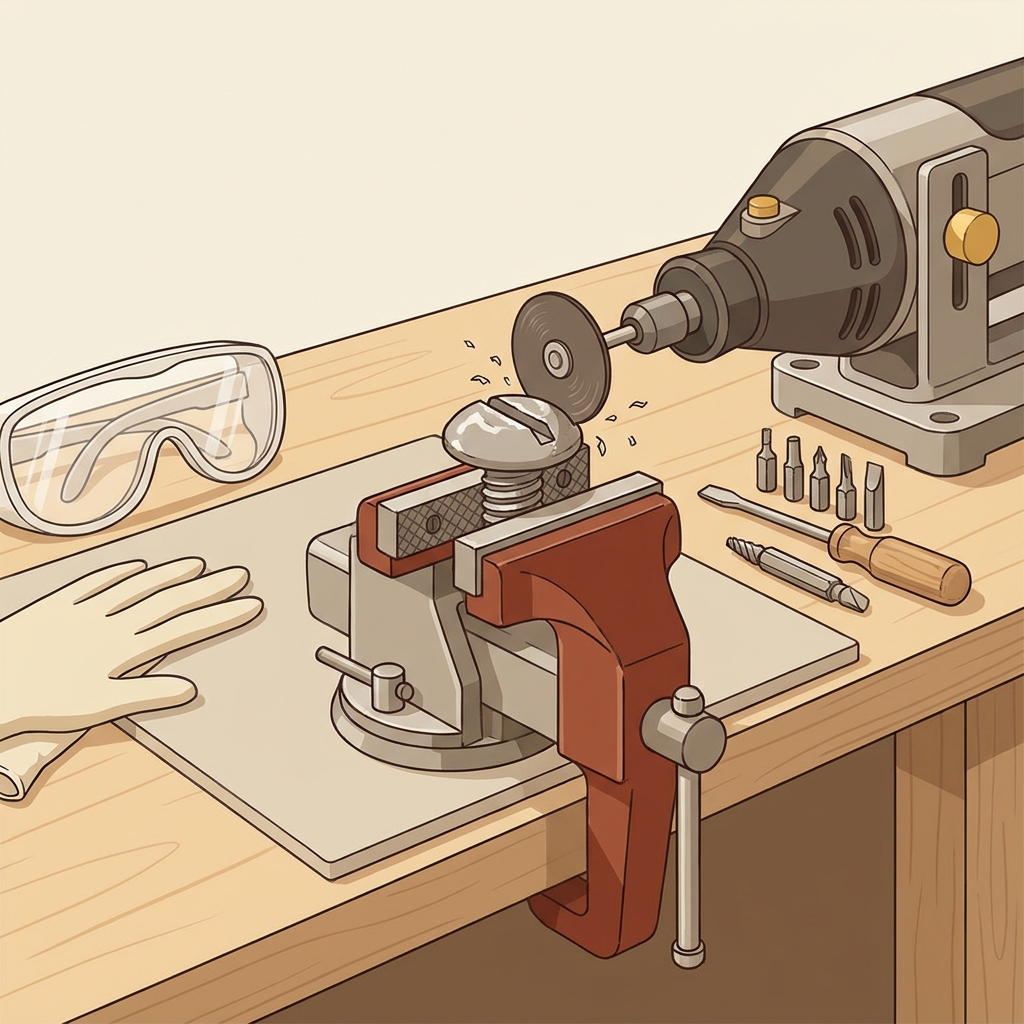
Only consider cutting a slot when enough of the head is accessible for a suitable metal-cutting disc without cutting the fitting or surrounding material. This is an advanced option, not a default for a flush or recessed head. Use the tool maker’s protection and keep the area clear of flammable material; if access is poor, leave it to a competent repairer ASP Limited: rotary slot technique.
Use a screw extractor correctly
Choose an extractor and pilot size specified for the screw and material. Follow that exact kit’s drilling, direction and turning instructions; hand-only and power-compatible designs differ. Keep it straight, use controlled force, and stop if it slips or appears damaged ASP Limited: extractor steps Kirchner Building Centers: pilot for extractor and eye protection.
Last resort: drill the head off
When nothing else works, drill the head off so you can remove the part and grip the shank. Center the bit on the head and step up in sizes until the head separates from the shank; remove the part, then twist the exposed shank out with pliers. Go slowly to avoid wandering and gouging the surface Haze Guitars: drill off the head, then pliers.
Example: a rounded cabinet hinge screw
Support the door before loosening its hinge. Try the correct manual bit and a small piece of rubber first. If the head is recessed in the hinge, do not cut through the hinge or cabinet to reach it. Use an appropriate extraction method only if its instructions and access allow it; otherwise ask a repairer. Replace the damaged screw with the correct size after removal.
If the hole is now worn, repair it before refitting. For wood, see our guide: Can you use wood glue to fix a stripped screw hole?
Common mistakes and safe stops
- Using the wrong driver size or not seating it fully is a prime cause of stripping; keep the driver aligned at 90 degrees and apply steady pressure ASP Limited: causes and prevention.
- Over-aggressive rotary cutting or drilling can mar the surface. Mask, stabilize the work, and drill in small steps Haze Guitars: controlled drilling.
- Avoid using heat near finishes, plastics, or electronics; it can damage components and coatings ASP Limited: avoid heat.
Stop and call a pro if the fastener is part of gas, plumbing, or live electrical equipment, or if you cannot proceed without risking damage.
Related reading on fastening and hardware care: Why cupboard door knobs keep coming loose.
FAQs
Should I use lubricant on a stuck metal screw?
A compatible penetrating oil may help with some seized metal fasteners, but check the product and surrounding finish first. It is not appropriate for every material or electrical assembly. Keep flammable products away from heat and sparks and follow their labels AHS: remove a stripped screw from metal.
Can I reuse the screw after removing it?
No. Replace it. A stripped head will be harder to remove next time and may not hold as securely ASP Limited: do not reuse stripped screws.
What if none of these methods work?
If you have tried friction, pliers, a slot, an extractor, and careful drilling and the screw still will not come out, seek a professional who can use advanced techniques without damaging the material ASP Limited: when to call a professional.

Related guides
Product options for this topic
As an Amazon Associate I earn from qualifying purchases. These are researched options, not hands-on test results. Check the exact size or model, current price and availability on Amazon.
| Product option | Fit and limits to check | Retailer |
|---|---|---|
| Klein Tools 32500 11-in-1 screwdriver | Several common bit shapes in one hand tool for household assembly. Match the bit to the fastener; this is not an insulated electrical-work tool. | View on Amazon |
| RYOBI PCL206B drill/driver, tool only | A cordless drill/driver option within the ONE+ system. This listing is tool-only: check compatible battery and charger requirements. | View on Amazon |