
The journal
Why we use a countersink drill for wood screws
A clear, practical explanation of why and when to use a countersink drill in wood: flush screw seating, clean hole edges, bit choices and a safe, step‑by‑step process.
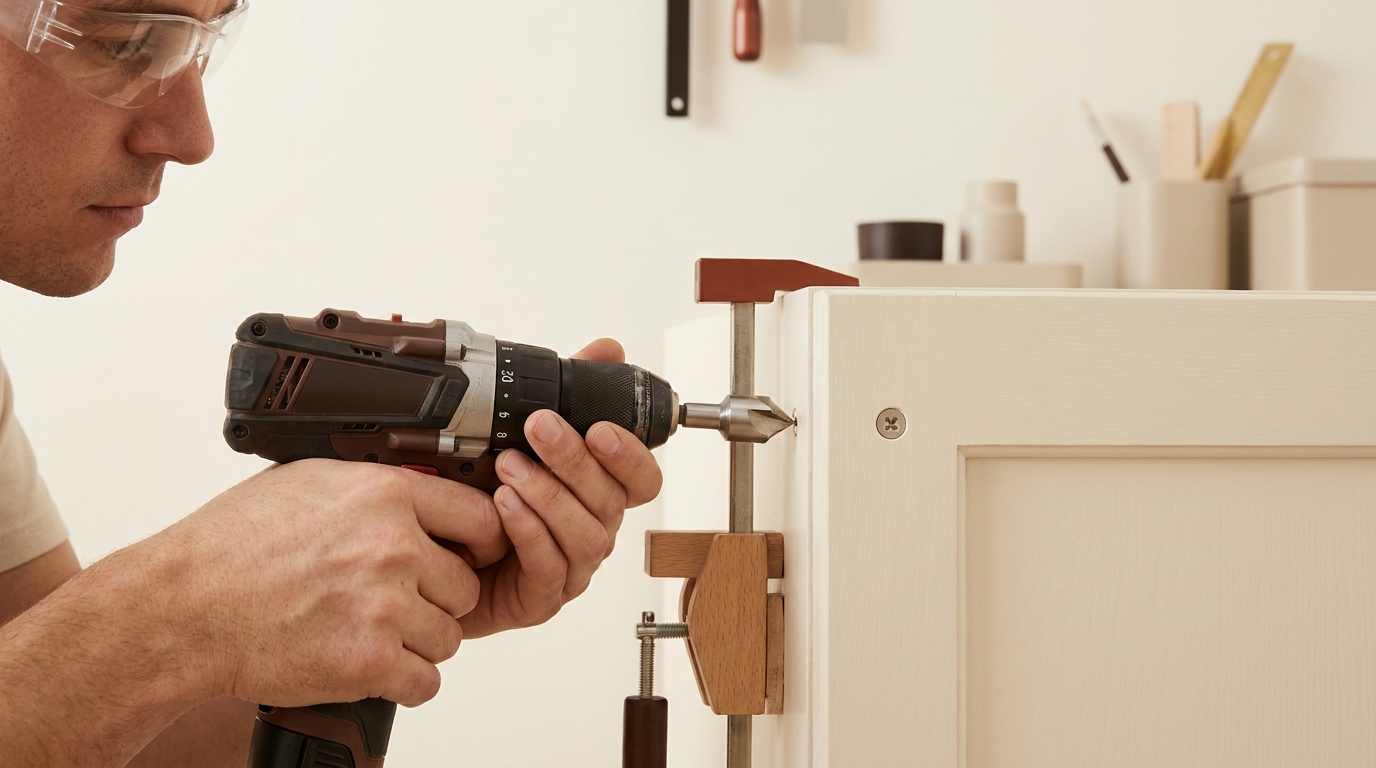
We use a countersink drill to cut a conical recess so a countersunk screw head sits flush or just below the wood surface, and to lightly chamfer a hole’s edge to remove burrs or splinters for a cleaner finish (RUKO: structure and application of countersinks).
What a countersink does for wood screws
A countersink is used after drilling to widen only the hole’s mouth. This lets a flat or tapered screw head bear evenly and finish level with the surface. Countersinks are also used for deburring: trimming sharp, raised edges left by drilling so parts and finishes sit cleanly (RUKO: structure and application of countersinks).
Match the bit’s cone angle to your screw: 90° is commonly used for countersunk screws, while 82° is the US standard for many flat-head wood screws (RUKO: structure and application of countersinks; Popular Woodworking: Countersink bits).
When to use one (and when not to)
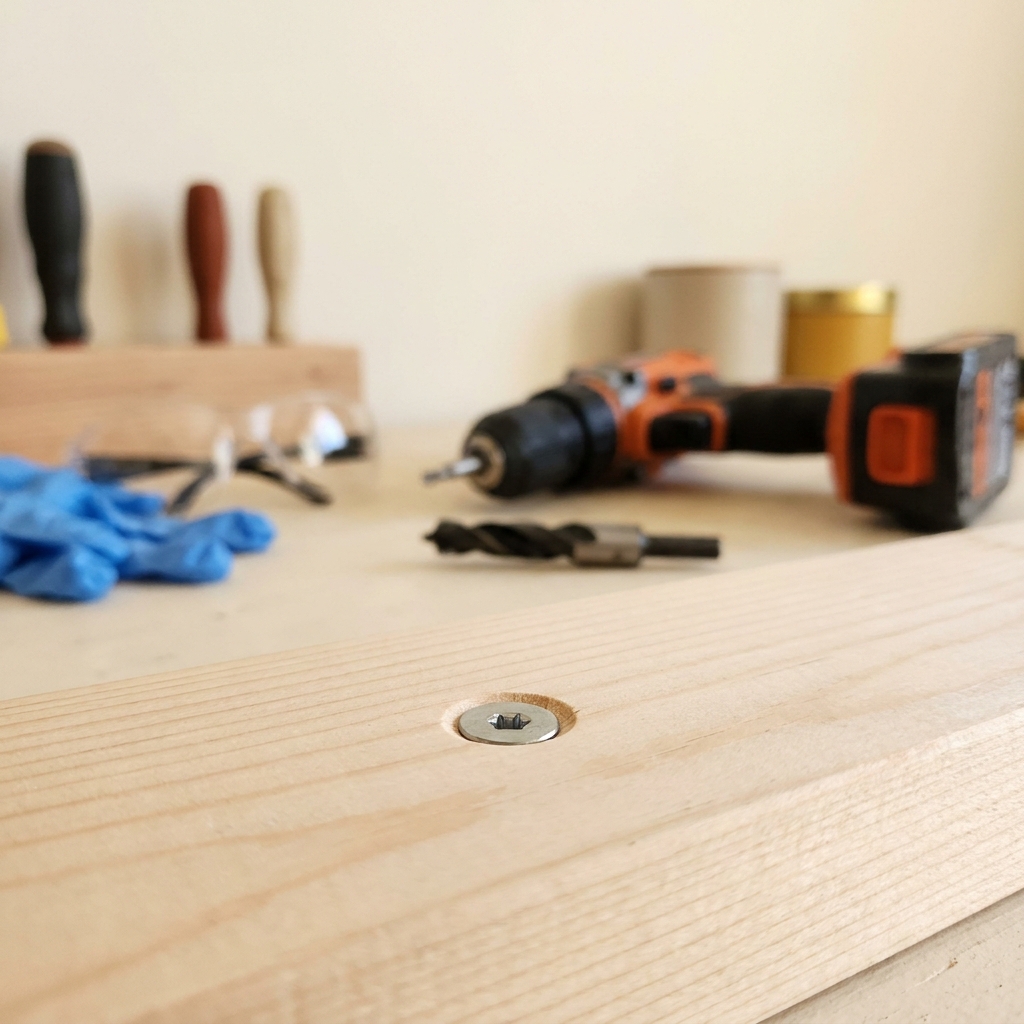
- Use a countersink when you want a flat-head/countersunk screw to finish flush or slightly below the surface, or when the hole edge needs a small chamfer to remove burrs/splinters (RUKO: structure and application of countersinks).
- Skip it when the screw is designed to sit proud (for example, round/pan heads), unless you are specifically creating a flat-bottom recess for those heads, which is a counterbore job (see below).
If you are laying out cabinet hardware or handles where visible screw heads and clean edges matter, a light countersink pass can improve the final look. For layout tips, see How to align cabinet handles.
How to countersink cleanly in wood
Secure the workpiece and use the protection specified for the drill and bit. Check screw and fitting instructions first: structural fixings, concealed hardware and screws with their own cutting features may require a different preparation. Do not remove material from those connections by guesswork.
A simple, reliable process
- Drill first. Make a pilot hole sized for the screw, and, when joining two boards, add a clearance hole through the top piece so its threads don’t grab and the head can pull the joint tight (Popular Woodworking: Countersink bits).
- Countersink lightly. Switch to a countersink bit that matches your screw head angle (82° or 90°). Run the drill slowly and use light pressure, especially in hardwoods, to avoid chatter and heat (RUKO: structure and application of countersinks).
- Test-fit. Stop, vacuum chips, and place the screw. If the head still stands proud, remove a little more and test again. Cut only to flush or just below flush (RUKO: How to countersink a screw).
Worked example
For a #8 flat-head wood screw in pine: drill a pilot hole in the lower piece, drill a clearance hole in the upper piece, then use an 82° countersink (typical for US flat-head screws) to make a shallow recess. Drive the screw; the head should finish flush. If a screw spins in an old hole, repair the wood first; see fixing a stripped screw hole in wood.
Choosing a countersink bit
- Angle match: Select 82° or 90° to match your screw head so the bearing is even (RUKO: structure and application of countersinks).
- Style: Traditional fluted countersinks work well in wood; “all‑in‑one” adjustable sets combine a pilot bit, countersink, and optional depth stop for convenience (Popular Woodworking: Countersink bits).
- Shank: Bit/3‑flat shanks help prevent slipping in hand drills (RUKO: structure and application of countersinks).
Countersink vs counterbore
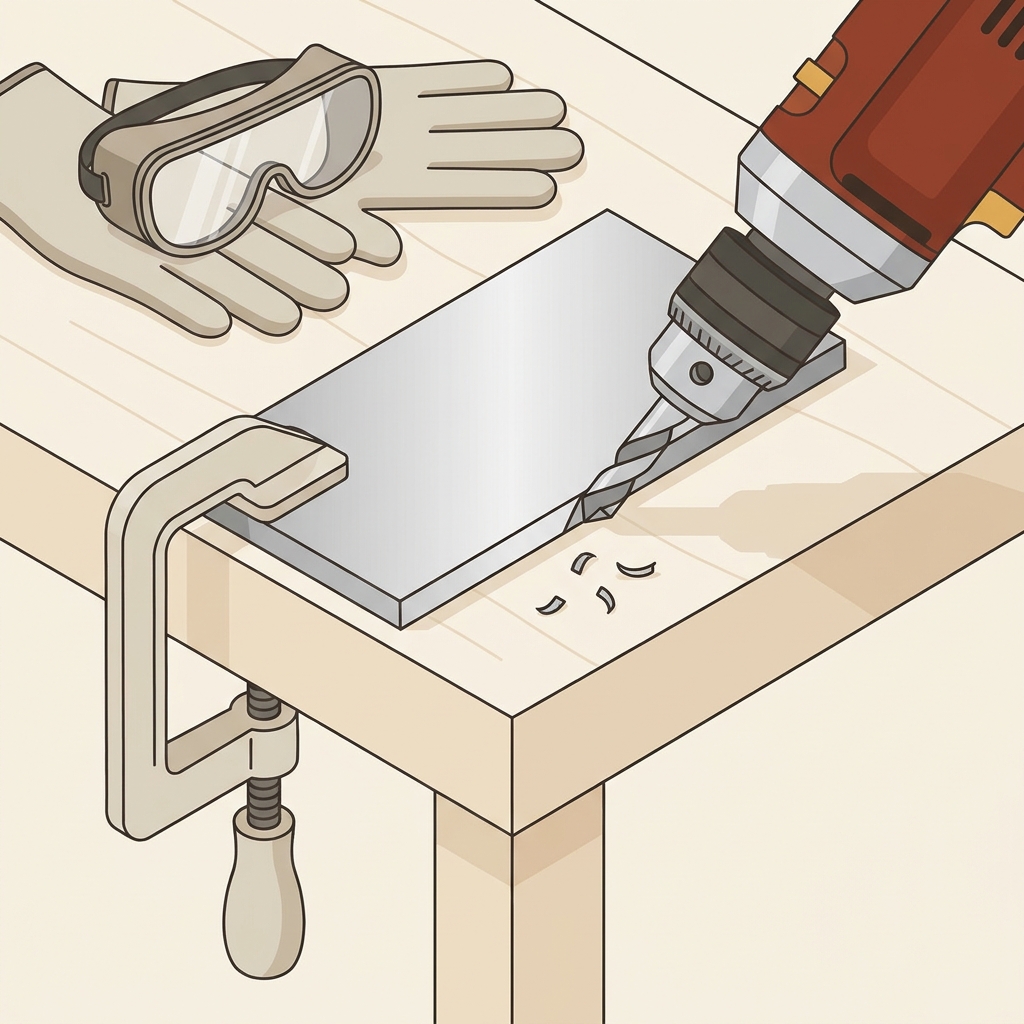
Use a countersink for tapered or flat countersunk heads. If you need a flat-bottom recess for pan, cylinder or hex heads (and for nuts), that is a counterbore made with a flat countersink/counterbore tool so those fasteners sit below the surface (RUKO: structure and application of countersinks; RUKO: How to countersink a screw).
Pre-drill and countersink for a flush wood screw
Short FAQ
Do I need to countersink every wood screw?
No. Countersinking is for screws intended to sit flush in a conical recess. Round, pan or hex heads are meant to sit proud unless you counterbore a flat-bottom pocket for them (RUKO: How to countersink a screw).
What drill speed should I use?
Use low speed and light pressure when countersinking, particularly in hardwoods, to avoid chatter and heat and to prolong tool life (RUKO: structure and application of countersinks).

Product options for this topic
As an Amazon Associate I earn from qualifying purchases. These are researched options, not hands-on test results. Check the exact size or model, current price and availability on Amazon.
| Product option | Fit and limits to check | Retailer |
|---|---|---|
| Klein Tools 32500 11-in-1 screwdriver | Several common bit shapes in one hand tool for household assembly. Match the bit to the fastener; this is not an insulated electrical-work tool. | View on Amazon |
| RYOBI PCL206B drill/driver, tool only | A cordless drill/driver option within the ONE+ system. This listing is tool-only: check compatible battery and charger requirements. | View on Amazon |